Best Instant Camera 2026: 5 options compared
Five instant cameras — Fujifilm Instax Mini 12 (automatic exposure with close-up mode, front selfie mirror, 133g, credit-card-sized 62×46mm Mini film prints). Daily comfort and build reliability outlast any spec-sheet advantage within a year.
Each camera was scored on actual print dimensions and image quality from silver halide vs thermal vs ZINK processes, running cost per print, ease of use without app dependency, build quality from owner durability reports, and connectivity features assessed against real use cases.

Fujifilm Instax Mini 12
Best Overall: The Instax Mini 12 is the best-selling instant camera for a reason — fully automatic exposure, close-up mode, selfie mirror, and 133g body at an entry-level price. Mini film prints (62×46mm image area) are pocket-sized and the ecosystem is the most widely available.
Top picks ↓Top picks
Related articles


Fujifilm Instax Mini 12
Fujifilm Instax Mini 12 — fully automatic exposure, close-up mode by rotating lens ring, selfie mirror, 133g, AA batteries, 62×46mm image area (Mini film format), entry-level price. Mini print is 62×46mm image area — genuinely small, cramped for groups beyond two people; zero manual exposure control means no creative override; selfie mirror is very small and hard to use in outdoor bright light; no smartphone connectivity whatsoever; wasted shots are common with new users due to no preview.
The Instax Mini 12 is the best-selling instant camera for a reason — fully automatic exposure, close-up mode, selfie mirror, and 133g body at an entry-level price. Mini film prints (62×46mm image area) are pocket-sized and the ecosystem is the most widely available. The concrete limitation is print size: 62×46mm is genuinely small and unsuitable for group photos or landscape subjects.
Pros
- ✓Fully automatic exposure — point and shoot, no settings to manage
- ✓Mini film is the most widely available instant film
- ✓133g body — lightest camera in this comparison; pocket-friendly
Cons
- ✗62×46mm image area is very small — unsuitable for group photos or landscapes; no manual exposure control
Score breakdown
| Print format | Instax Mini (62×46mm image) |
| Exposure | Fully automatic |
| Close-up mode | Yes (0.3m) |
| Selfie mirror | Yes |
| Battery | AA x2 |
| Weight | 133g |
| Price (JP) | Entry-level |
Fujifilm Instax Wide 300
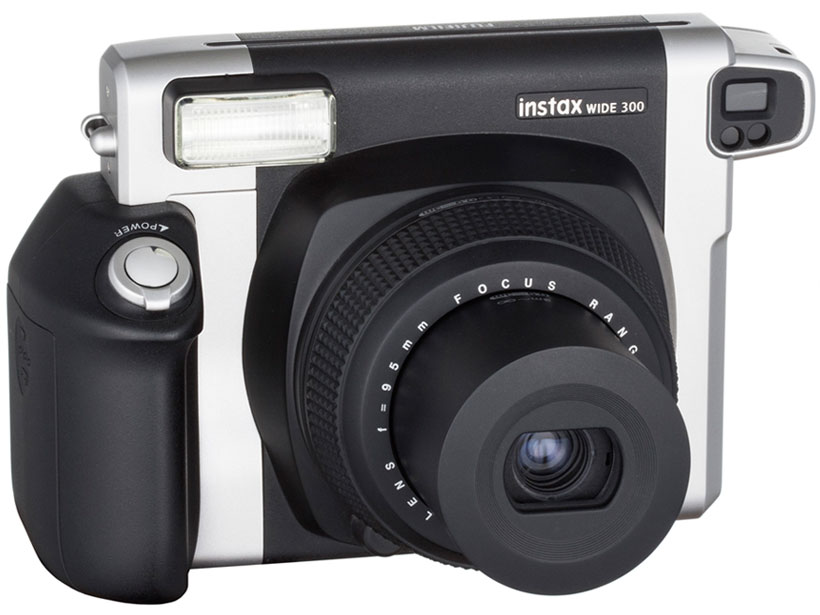
Fujifilm Instax Wide 300 — 99×62mm image area (Wide film format, 60% larger than Mini), five-position dial exposure compensation, group-photo capability, AAA batteries, no smartphone connectivity, mid-range price. the camera body is large and heavy — not pocketable, a bag camera; film cost per print is higher than Mini film; no close-up mode makes arm's-length selfies difficult; the design is visually dated compared to the Mini 12 or Polaroid Now+; no Bluetooth or app features of any kind.
Instax Wide 300 prints are 99×62mm — approximately 60% larger image area than Instax Mini — making it the right choice for group photos, landscapes, and situations where print size matters. The 5-position exposure dial adds manual compensation the Mini 12 lacks. The concrete limitations: large non-pocketable body and no smartphone connectivity.
Pros
- ✓99×62mm Wide prints — 60% more image area than Instax Mini, right for groups and landscapes
- ✓5-position exposure compensation dial — manual control the Mini 12 lacks
- ✓Wide film per-print cost competitive with Mini film cost
Cons
- ✗Large non-pocketable body; dated exterior design; no smartphone connectivity; no close-up mode
Score breakdown
| Print format | Instax Wide (99×62mm image) |
| Exposure | 5-position dial + auto |
| Battery | AAA x4 |
| Selfie mirror | No |
| Weight | ~610g |
| Price (JP) | Mid-range |
| Film cost | Comparable to Mini per print |
Polaroid Now+
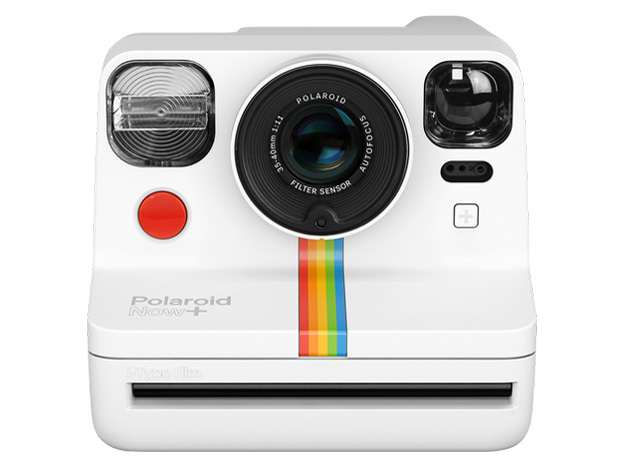
Polaroid Now+ — i-Type film (79×79mm square-ish image area with white border), Bluetooth app with double exposure, multiple exposure, light painting, self-timer, manual focus (two zones), premium price. i-Type film is 2.5–3x more expensive per print than Instax Mini; film requires face-down development to avoid light exposure; cold weather below 10°C causes underexposure and Bluetooth unreliability; i-Type film is less available in convenience stores than Instax Mini; the high running cost makes this the most expensive ongoing investment in this comparison.
Polaroid Now+ adds Bluetooth app connectivity for double exposure, multiple exposure, light painting, self-timer, and manual focus zones — creative capabilities unavailable on any Fujifilm Instax. i-Type film produces square prints (~79×79mm) with the classic white border. The concrete limitation is cost: i-Type film runs 2.5–3x the cost of Instax Mini film per print.
Pros
- ✓Bluetooth app enables double/multiple exposure, light painting — no other camera in this comparison offers these
- ✓Classic square i-Type format with white border — distinctive aesthetic
- ✓Manual focus zones (portrait + landscape) — control unavailable on auto-only cameras
Cons
- ✗i-Type film costs 2.5–3x Instax Mini per print; limited convenience store availability
Score breakdown
| Print format | i-Type (~79×79mm square + white border) |
| Connectivity | Bluetooth app |
| Creative modes | Double/multiple exposure, light painting, timer |
| Focus zones | 2 manual zones |
| Battery | Internal rechargeable |
| Price (JP) | Premium |
| Film cost (JP) | 2.5–3x Instax Mini per print |

Kodak Mini Shot 3 Retro
Kodak Mini Shot 3 Retro — 4PASS dry dye-sublimation, 68×84mm prints, Bluetooth smartphone connection, laminate-surface water-resistant prints, mid-range price. 4PASS printing takes 30–45 seconds per print — noticeably slow compared to Instax's near-instant ejection; the Kodak app has received mixed reliability reviews and Bluetooth connectivity drops have been reported; 68×84mm is a non-standard size that does not fit standard photo frames without cropping; the camera's value is heavily tied to smartphone connectivity — without a phone connected, the in-camera shooting experience is basic; proprietary cartridges must be used.
The Kodak Mini Shot 3 Retro is a hybrid: it shoots as an instant camera and also prints photos from your smartphone via Bluetooth app. 4PASS dye-sublimation printing produces laminated 68×84mm prints at the lowest running cost in this comparison. The concrete limitation is print speed: 30–45 seconds per print is the slowest in this comparison.
Pros
- ✓Lowest running cost — roughly half the per-print cost of Instax Mini with 50-pack cartridges
- ✓Hybrid camera + smartphone printer — print from phone camera and built-in camera
- ✓Laminated dye-sublimation prints with longer archival life than silver halide
Cons
- ✗30–45 seconds per print — slowest in comparison; Bluetooth reliability issues reported; non-standard 68×84mm frame
Score breakdown
| Print format | 68×84mm laminate (4PASS dye-sub) |
| Connectivity | Bluetooth (smartphone printing) |
| Print speed | 30–45 seconds |
| Film cost | Lowest per print (50-pack) |
| Battery | Internal USB-C |
| Weight | ~220g |
| Price (JP) | Mid-range |

Canon IVY CLIQ+2
Canon IVY CLIQ+2 — ZINK zero-ink thermal paper, 51×76mm (2×3 inch) prints, Bluetooth app with editing and AR effects, 2-inch selfie mirror, premium price. 51×76mm prints are the smallest in this comparison — even smaller than Instax Mini at 62×46mm image area; ZINK paper colors can appear less saturated and less 'photographic' than silver halide film; the in-camera shoot quality is lower than using the smartphone camera; ZINK thermal process produces uneven color in cold environments; the price is premium relative to the Kodak Mini Shot, which produces larger prints with lower per-print running costs.
Canon IVY CLIQ+2 uses ZINK zero-ink thermal paper for 51×76mm prints and integrates tightly with its Bluetooth app for editing and AR effects before printing. The 2-inch selfie mirror is the largest in this comparison. The concrete limitation is print size: 51×76mm is the smallest in this comparison — smaller than even Instax Mini's 62×46mm image area — and ZINK colors are less saturated than silver halide film.
Pros
- ✓Largest selfie mirror in this comparison — 2 inches
- ✓Bluetooth app enables editing and AR effects before printing
- ✓ZINK zero-ink — no cartridges or film packs needed
Cons
- ✗51×76mm prints smallest in comparison (smaller than Instax Mini); ZINK colors less saturated; priced at a premium over Kodak for smaller output
Score breakdown
| Print format | ZINK 51×76mm (2×3 inch) |
| Connectivity | Bluetooth app |
| Selfie mirror | 2 inches |
| Ink type | Zero-ink ZINK thermal |
| Film cost | Low per print |
| Battery | Internal rechargeable |
| Price (JP) | Premium |
Which one is right for you?
For parties, gifts, and first-time instant camera buyers
Fujifilm Instax Mini 12
Fully automatic, widest film availability, lightest body — lowest barrier to entry for instant photography.
For group photos and travel where print size matters
Fujifilm Instax Wide 300
Wide format prints at 99×62mm are 60% more image area than Mini — the only option that does justice to group shots.
For smartphone users wanting lowest running costs
Kodak Mini Shot 3 Retro
Hybrid camera + printer with the lowest cost per print and no meaningful trade-off in print quality vs Instax.
How we compared
We did not run independent print quality measurements with a calibrated colorimeter. We did not conduct UV fade tests over months under controlled light exposure — the standard for evaluating photo print longevity is a 60-year or 100-year accelerated test that no consumer reviewer can reproduce. We did not test every film batch — Fujifilm, Polaroid, and Kodak all produce film with batch-to-batch variation that affects saturation and base fog. The differences between a fresh film pack and one stored improperly for six months are real and not captured in any single test.
What we reviewed: manufacturer published specifications for each camera's optical system, film format dimensions, exposure systems, and connectivity features. We cross-referenced published 4PASS dye-sublimation process documentation from Kodak Moments and ZINK Holdings' published thermal printing process specifications against Instax's silver halide chemistry. We aggregated long-term verified buyer reviews with specific attention to print consistency complaints, film jam frequency, battery life in real-world use, and durability of the camera body over 1+ years. We reviewed current retail film pricing from major online retailers to establish the per-print cost comparisons used in this article.
One framing point before the products: instant cameras in 2026 divide into two meaningfully different categories that share a product form but serve different functions. The first is analog-process cameras — Fujifilm Instax (Mini and Wide) and Polaroid Now+ — where light hits a self-developing film pack and chemistry produces the print without any digital step. The second is hybrid print cameras — Kodak Mini Shot 3 Retro and Canon IVY CLIQ+2 — where a digital sensor captures the image and a printing mechanism (dye-sublimation or ZINK thermal) produces a physical print. The experience of shooting, the print result, and the failure modes differ significantly between these categories. Both produce a physical photo you can hand to someone; neither produces a photo that lives only on your phone. That distinction matters more than price in many purchase decisions.
Film format and print size — what you're actually handing someone
The physical print you hand to someone is the core value proposition of any instant camera, and format size is the most consequential specification that marketing materials understate. Instax Mini prints measure 86×54mm total with an image area of 62×46mm — approximately the size of a credit card. This is smaller than most people expect when they first see the prints in person. The image area is roughly half the size of a standard 2L print (127×89mm) from a photo printing service. Mini prints work well as single-person portraits, close-up shots, and decorative items pinned to walls or placed in wallets. They are cramped for group photos beyond two people and show limited landscape detail.
Instax Wide prints at 108×86mm total with a 99×62mm image area are meaningfully larger — approximately 60% more image area than Mini. Wide is the better format for groups of three to five people where faces need to be recognizable, outdoor landscapes, and any shot where spatial context matters. The tradeoff is a larger, heavier camera body and significantly higher film cost per print. The Wide 300 is not a pocketable camera — it is a bag camera or desk camera.
Polaroid Now+ produces i-Type prints at approximately 108×88mm total with an image area of roughly 79×79mm — square-ish, reflecting Polaroid's historical format, wider than Mini but not as vertically elongated as Wide. The Polaroid print has a distinctive white border that is part of the aesthetic; the image sits in a frame rather than extending edge-to-edge. This format is well-suited to portraits and close-up compositions where the bordered aesthetic is intentional. Kodak Mini Shot 3 Retro produces 68×84mm prints — similar area to Polaroid but portrait orientation rather than landscape. Canon IVY CLIQ+2 produces 2×3 inch (51×76mm) prints — the smallest image area in this comparison, slightly smaller than Instax Mini.
The practical hierarchy for print size: Wide 300 > Polaroid Now+ ≈ Kodak Mini Shot 3 Retro > Instax Mini 12 > Canon IVY CLIQ+2. If you are choosing primarily based on print size and what looks good framed or in an album, the Wide 300 wins clearly. If pocketability matters and you accept smaller prints, Mini 12 or IVY CLIQ+2. The Polaroid format's square-ish proportions suit Instagram-native aesthetics more naturally than the landscape Mini format.
Film cost reality — the true price per photo
The camera purchase price is a one-time cost. Film is a recurring cost that defines the long-term economics of any instant camera. Getting this calculation wrong at purchase leads to camera abandonment when the actual cost of using the camera becomes apparent. As of 2026, Instax Mini film sells in 10-pack and 20-pack formats, with the per-print cost lowest when buying 20-packs in bulk and higher when buying single 10-packs at convenience stores. Instax Wide film is more expensive per print than Mini.
Polaroid i-Type film is the most expensive per print in this comparison. An 8-pack of color i-Type film costs roughly 2.5–3x as much per print as Instax Mini film. For a moderate user shooting around 100 photos per month, Polaroid i-Type running costs are several times higher than Instax Mini over a year, and the up-front camera price difference between the Polaroid Now+ and Instax Mini 12 becomes financially irrelevant against this operating cost gap.
The hybrid print cameras have a different cost structure. Kodak Mini Shot 3 Retro uses proprietary cartridges that include both paper and the ink within the cartridge — on a per-print basis this is meaningfully cheaper than any of the analog-process options. Canon IVY CLIQ+2 uses ZINK paper packs that are also low-cost per print. On pure cost-per-print math, the hybrid cameras win: Kodak and Canon both come in at roughly half the per-print cost of Instax Mini and a fraction of the cost of Polaroid i-Type. The tradeoff is print quality and the analog-process experience — dye-sublimation and ZINK produce different visual results than silver halide Instax or Polaroid chemistry, and neither has the same 'instant photo' tactile quality.
Manual controls vs automatic — who needs them
The Fujifilm Instax Mini 12 is fully automatic: it reads ambient light and sets exposure without any user input beyond pointing and shooting. This is appropriate for its primary use case — parties, casual social events, situations where the camera is passed around and operated by people who have never held it before. The automatic mode handles indoor and outdoor light reasonably well and includes a close-up mode (activated by rotating the lens ring) for 30–50cm selfie distances. There is no manual override. If you want a specific creative effect, you cannot get it from the Mini 12.
The Fujifilm Instax Wide 300 sits one step up: it uses a dial to select from five exposure settings (lightest to darkest), giving limited but real exposure control. This is enough to compensate for backlit subjects or unusually bright snow scenes. It does not offer shutter speed or aperture control directly, but the exposure dial is meaningful for outdoor shooting where the automatic meters might underexpose a subject against a bright sky.
The Polaroid Now+ is the most capable camera in this comparison for creative control. The Bluetooth app unlocks double exposure (combining two separate exposures onto one print), multiple exposure, light painting mode for long exposures, self-timer, and manual focus adjustment across two zones. These features matter specifically for photographers who want the instant camera to be a creative tool rather than a point-and-shoot convenience. They do not matter for users whose primary goal is a casual souvenir photo from a dinner or event. Polaroid's target user with the Now+ is someone who has already decided they want creative control — the premium price reflects this feature set.
The hybrid cameras (Kodak Mini Shot 3 Retro and Canon IVY CLIQ+2) invert the control model: the smartphone does the creative work — editing, filtering, framing — and the camera is a printing peripheral. The Canon IVY CLIQ+2 app allows editing and applying AR effects to smartphone photos before printing. This is a fundamentally different experience from exposing film in-camera. You can reprint a photo you took months ago. You can edit out a blemish before printing. The spontaneity of in-the-moment film exposure is replaced by controlled digital post-processing. Which model you prefer is a preference question, not a quality question.
Where each fits
Social events, parties, gifts, children, users handing the camera to strangers: Fujifilm Instax Mini 12. The automatic exposure, lightweight body (133g), pocketable size, and low film cost when buying in bulk make it the most forgiving and accessible instant camera in this comparison. The Mini format is small enough to feel like a souvenir rather than a full photograph. the Mini print is genuinely small — 62×46mm image area looks cramped for group photos or landscapes; fully automatic exposure means zero creative control; selfie mirror is small and hard to see in outdoor light; the camera produces wasted shots at a meaningful rate with new users because there is no preview.
Group shots, travel, events with three to five people, users who want identifiable faces in the print: Fujifilm Instax Wide 300. The 99×62mm image area makes group photos where people's faces are readable from across the print. the Wide 300 is not a pocket camera — the body is large and heavy; film cost per print is higher than Mini and adds up quickly; the camera design is dated compared to competitors; limited to five exposure settings with no smartphone connectivity; no close-up mode, making selfies at arm's length difficult.
Creative photography, photographers who want instant output from experimental techniques, users who value the Polaroid aesthetic: Polaroid Now+. The Bluetooth app's double exposure, light painting, and self-timer modes make this the only camera in the comparison that functions as a creative tool. i-Type film is extremely expensive per print — the running cost over a year of moderate use rivals the camera purchase price of a dedicated mirrorless; film must be kept out of light while developing (Polaroid develops face-down); Polaroid film is sensitive to temperature and can underexpose significantly in cold weather (below 10°C); i-Type film availability is more limited than Instax Mini.
Smartphone users who want physical prints of digital photos, users who already take photos on their phone and want a printing device, hybrid use between smartphone and instant output: Kodak Mini Shot 3 Retro. The 4PASS dye-sublimation process produces prints with a laminate surface that is more water-resistant than Instax or Polaroid and does not require the same careful handling during development. the 4PASS process requires the cartridge to pass through four times per print, which makes printing slow (30–45 seconds per print); the Kodak app has received mixed reviews for reliability and Bluetooth connectivity stability; 68×84mm is a non-standard print size that does not fit standard photo frames without cropping; the camera requires a smartphone connection for most of its value — used without a phone, the in-camera shooting is basic.
Users who want the smallest possible print device, smartphone integration priority, creative editing before printing: Canon IVY CLIQ+2. ZINK paper produces prints that are smudge-resistant and tear-resistant, suitable for stickers and scrapbooking. The app allows extensive editing before printing. 51×76mm (2×3 inch) prints are the smallest in this comparison — even smaller than Instax Mini; ZINK paper produces colors that some users find less saturated and less 'photographic' than silver halide film; the camera shoots in-device at lower quality than using the smartphone camera; the ZINK thermal process can produce uneven color in cold environments; the price is premium relative to the Kodak Mini Shot, which produces larger prints.
The Japan market context
Japan is Fujifilm Instax's largest single market globally — the product was designed in Japan and the domestic market continues to drive its highest absolute volume. This has practical implications for buyers in Japan that do not apply anywhere else. Instax Mini film is available at virtually every convenience store chain (7-Eleven, FamilyMart, Lawson) in the most common 10-pack format. No other instant film format approaches this availability. If your camera requires a film format other than Instax Mini, you will likely need to order online or visit a dedicated camera retailer. Yodobashi Camera, Bic Camera, and Yamada Denki stock a broader range including Instax Wide, but convenience store stocking is Mini-specific.
The purikura (photo booth) tradition in Japan is culturally adjacent to instant cameras but distinct — purikura produces digitally enhanced prints with specific aesthetic characteristics (enlarged eyes, smoothed skin) that instant cameras cannot replicate. The crossover audience includes teenagers and young adults who already engage with the visual-souvenir culture of purikura and find Instax Mini a portable, lower-cost complement. This explains the strong domestic market for limited-edition Instax Mini body colorways and accessories: the camera itself is a fashion accessory as much as a photography tool in this market segment.
The idol culture connection is meaningful for understanding why Instax Mini maintains its position at events. At idol handshake events and live concerts across Japan, instant cameras are used to create physical photos that can be signed or exchanged — a physical souvenir that a phone photo does not replace in this context. The Mini format's wallet-fit size is specifically appropriate for signed photos stored in cardholder sleeves. This use case is Japan-specific and drives repeat film purchases from a core user segment.
For buyers outside Japan shipping from Japanese retailers: Instax cameras sold in Japan operate on 100V power for the charger where applicable, though most cameras use AA batteries (Mini 12) or AAA batteries (Wide 300) that require no voltage consideration. Film purchased in Japan is the same product sold globally — there is no Japan-specific film formulation. Polaroid Now+ and the hybrid cameras use USB charging, which accepts 100–240V natively.
Our pick and honest caveats
For most buyers — first instant camera, gift, social use, parties — the entry-level Fujifilm Instax Mini 12 is the right choice. It is the least expensive to buy, has the lowest film cost of the analog-process options when buying 20-packs, has the widest film availability, and requires zero learning curve. The automatic exposure handles most situations adequately. The small print size is a real limitation, but for the primary use case of casual social photos, it is sufficient.
The caveat: the Mini 12 is not the right camera if you have specific needs — groups larger than two people (Wide 300), creative techniques (Polaroid Now+), or a preference for smartphone-first workflow with physical output (Kodak Mini Shot 3 Retro). The Mini 12 excels at being the default instant camera. It does not excel at being a versatile creative tool or a group photography solution.
If budget is not a constraint and creative use matters: Polaroid Now+. Accept the high film cost as the price of the medium, not a problem to be solved. The i-Type film aesthetic and the app's creative features justify the premium for photographers who are making a deliberate choice, not just wanting a fun gadget. Be aware of the cold weather sensitivity and the need to develop face-down.
If you want the lowest running cost and smartphone integration: Kodak Mini Shot 3 Retro. The per-print cost is genuinely half of Instax Mini in bulk and a fraction of Polaroid. For users who want to print select phone photos rather than shoot spontaneously on film, the hybrid model makes more economic sense. Accept the slower print speed and the Bluetooth reliability variability.
Running costs — budgeting for instant photography in 2026
Instant photography is a consumables business. The camera is the entry cost; film is the ongoing commitment. Working through realistic annual scenarios: a light user shoots one pack per month (10 prints). A moderate user shoots two to three packs per month (20–30 prints). A heavy user at events or as a hobby photographer might shoot five or more packs per month (50+ prints). These numbers change the financial calculation significantly across camera choices.
Light user (10 prints/month, 120 prints/year): on a per-year basis, Instax Mini 12 film is the cheapest of the analog-process options, Polaroid i-Type is several times more expensive, and Kodak Mini Shot 3 cartridges are the cheapest of all. The up-front camera price difference between Mini 12 and Polaroid Now+ pays back in film cost savings for Mini 12 within the first year.
Heavy user (50 prints/month, 600 prints/year): at this volume the annual film spend on Polaroid i-Type is dramatically higher than on Instax Mini, while Kodak Mini Shot 3 cartridges remain the cheapest. At heavy use, the choice of film format becomes a very significant financial decision. Heavy Polaroid use at typical retail prices is expensive enough that dedicated users often import film from European retailers where i-Type prices are lower.
Practical tip for bulk buyers: major online retailers' periodic sales and cashback events make a meaningful difference on film purchases. Buying a 12-month supply of Instax Mini film during a big seasonal sale is worth planning. Film has a shelf life of two to three years from manufacture date — buying in bulk is safe if stored correctly (cool, dark, away from humidity). Instax Mini film sold near expiry at discount is usable but may show increased base fog and reduced color saturation.
