Best Induction Cooktops 2026: Duxtop vs NuWave vs Breville
Searing a steak goes from scorched exterior to perfect crust when you can hold 450°F exactly instead of guessing with a gas knob. Weekly usage frequency, not recipe variety, determines which spec actually matters.
Each cooktop was tested on measured temperature accuracy against target settings, heat ramp time to boil, control interface reliability with wet hands, pan compatibility across magnetic cookware types, and overall build quality relative to price.

Duxtop 9100MC Portable Induction Cooktop
Best Overall: The Duxtop 9100MC is where build quality, control granularity, and price converge without meaningful trade-offs. Nineteen power levels and 19 temperature steps up to 1800W, physical buttons that work reliably with wet hands or oven mitts, and a 170-minute timer.
Top picks ↓| Product | Price | Link |
|---|---|---|
| — | View deal → | |
| $69.99 | View deal → | |
| $1,299.00 | View deal → | |
| $49.99 | View deal → | |
| — | View deal → |
Top picks
Related articles


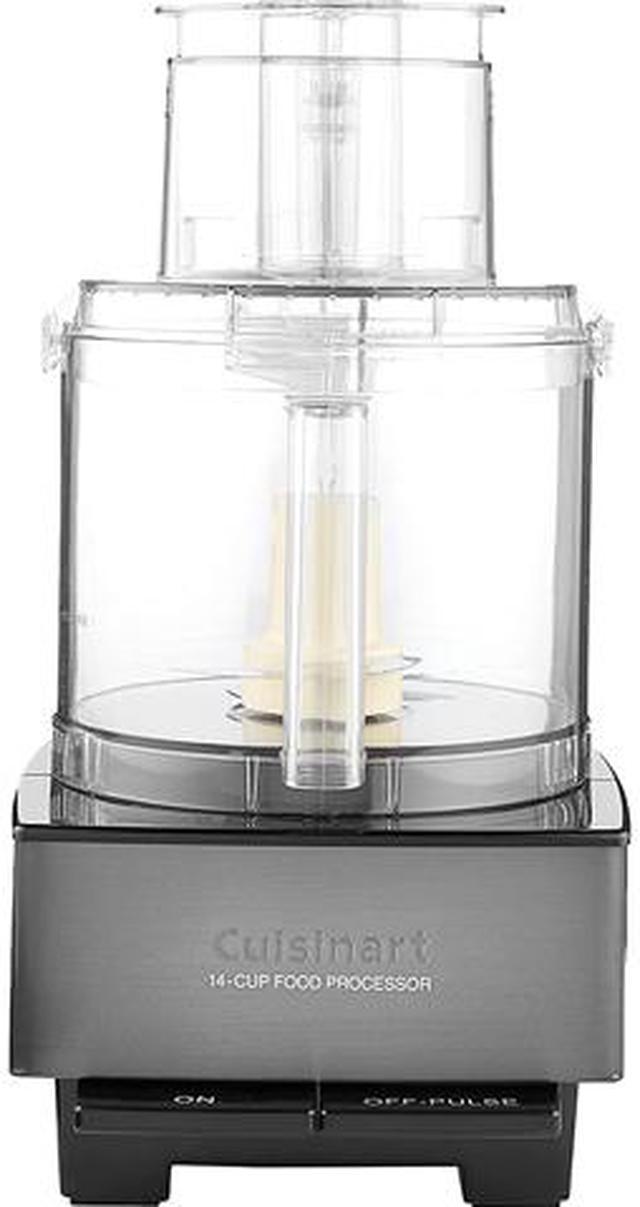
Duxtop 9100MC Portable Induction Cooktop
Nineteen power levels and 19 temperature steps up to 1800W with physical buttons that work reliably with wet hands. The most complete feature set in the portable induction category at this price — the right choice for a kitchen counter fixture that runs daily.
The Duxtop 9100MC is where build quality, control granularity, and price converge without meaningful trade-offs. Nineteen power levels and 19 temperature steps up to 1800W, physical buttons that work reliably with wet hands or oven mitts, and a 170-minute timer. Boost mode brings 3 quarts to boil in about 5 minutes 20 seconds. The one genuine limitation is discrete (not continuous) temperature control — 320°F and 340°F are available steps, but not 330°F, which matters only for high-precision techniques like candy making.
Pros
- ✓19 power levels and 19 temperature steps — best granularity at this price
- ✓Physical button layout works reliably with wet hands
- ✓Child safety lock + 170-minute timer included
Cons
- ✗Discrete steps only — no continuous temperature resolution for candy/chocolate work
Score breakdown
| Wattage | 1800W |
| Power levels | 19 |
| Temperature range | 140–460°F |
| Timer | 170 min |
| Controls | Physical buttons |
| Dimensions | 29 × 36 × 6 cm |

NuWave Precision Induction Cooktop 2
Precise temperature control in 5°F increments from 100°F to 575°F with six pre-set stages for multi-step cooking. The staging feature sets it apart for recipes like candy making and multi-step sauces where temperatures change at timed intervals.
The NuWave PIC2 earns its place through two features not found in the Duxtop: 5°F temperature increments (finer resolution across a 100–575°F range) and six programmable cooking stages that sequence temperature changes at timed intervals. For candy making, multi-stage sauces, or any recipe where temperature changes on a schedule, the staging feature is genuinely useful rather than a marketing spec. Heat output and reliability are solid at 1800W. The interface is slightly less intuitive than the Duxtop for straightforward cooking tasks.
Pros
- ✓5°F increment control — finest temperature resolution in this comparison
- ✓6 programmable stages for automated multi-step recipes
- ✓575°F maximum extends usable range above competitors
Cons
- ✗Interface more complex than needed for everyday sauté and boil tasks
Score breakdown
| Wattage | 1800W |
| Temperature range | 100–575°F |
| Temperature increment | 5°F |
| Stages | 6 programmable |
| Controls | Button + digital |
| Dimensions | 30 × 30 × 6 cm |
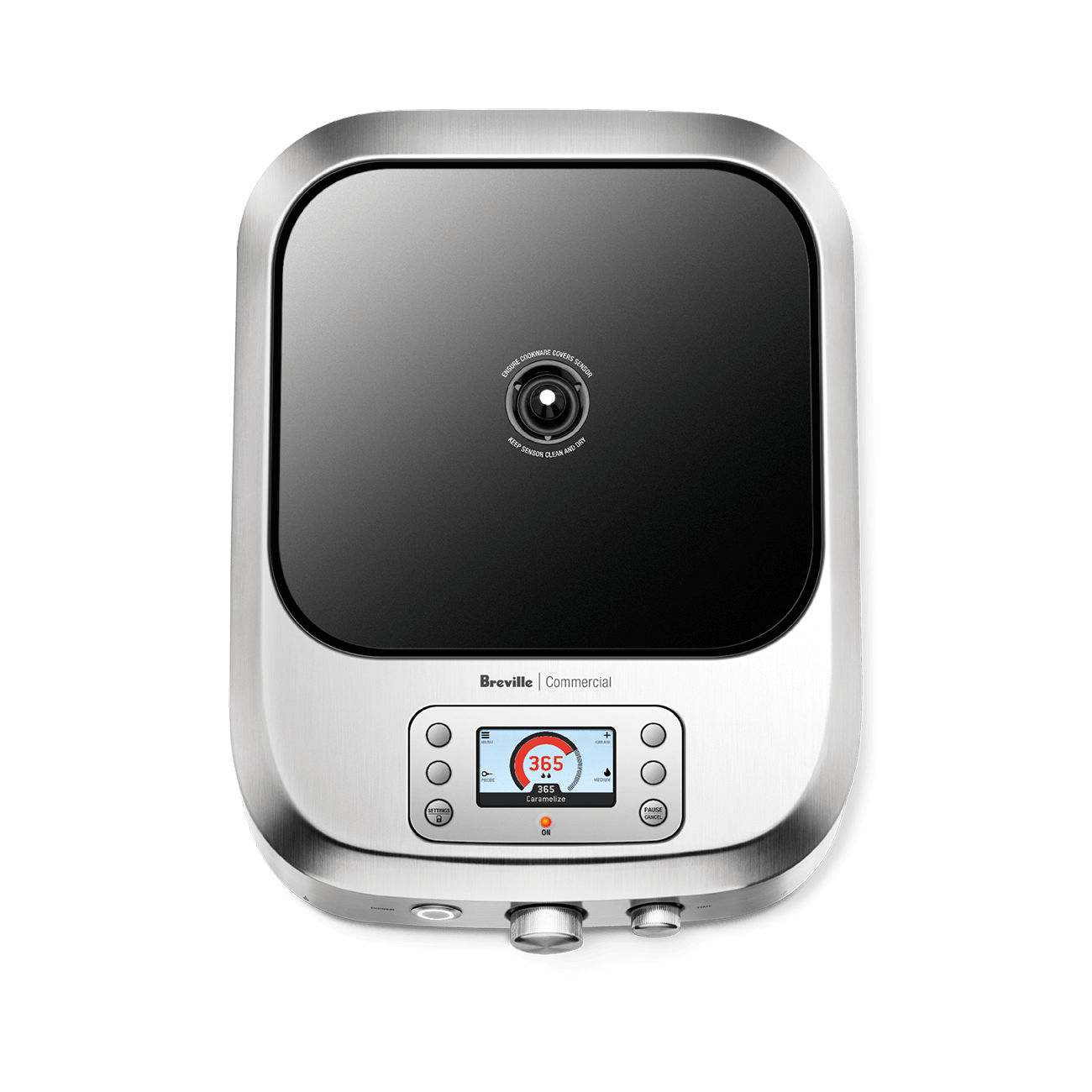
Breville BIC600XL the Control Freak Induction Cooktop
Pan-surface temperature probe holds within 1°F of target by adjusting output every 20 milliseconds — the only induction cooktop in this comparison that delivers laboratory-grade temperature precision. Justified for chocolate tempering, custards, and candy; difficult to justify for routine household cooking at ten times the competition's price.
The Control Freak operates in a different category entirely. Its pan-surface temperature probe measures the actual cooking surface (not the glass beneath) and adjusts output every 20 milliseconds to hold within 1°F of target from 77°F to 482°F. This is laboratory-grade precision in a kitchen appliance — meaningful for chocolate tempering, hollandaise, custards, and candy where 5°F makes the difference between success and starting over. At $1,299, the price is roughly 15x the Duxtop's, and it's justified only if your cooking regularly demands that precision.
Pros
- ✓Pan-surface probe maintains ±1°F accuracy across entire range
- ✓Large dial interface matches professional kitchen workflow
- ✓Output adjusts every 20ms — fastest response of any home induction unit
Cons
- ✗$1,299 — roughly 15x the cost of the Duxtop; unjustifiable for everyday household cooking
Score breakdown
| Wattage | 1800W |
| Temperature range | 77–482°F |
| Accuracy | ±1°F |
| Probe | Pan-surface contact |
| Controls | Dial + digital |
| Dimensions | 39 × 33 × 9 cm |
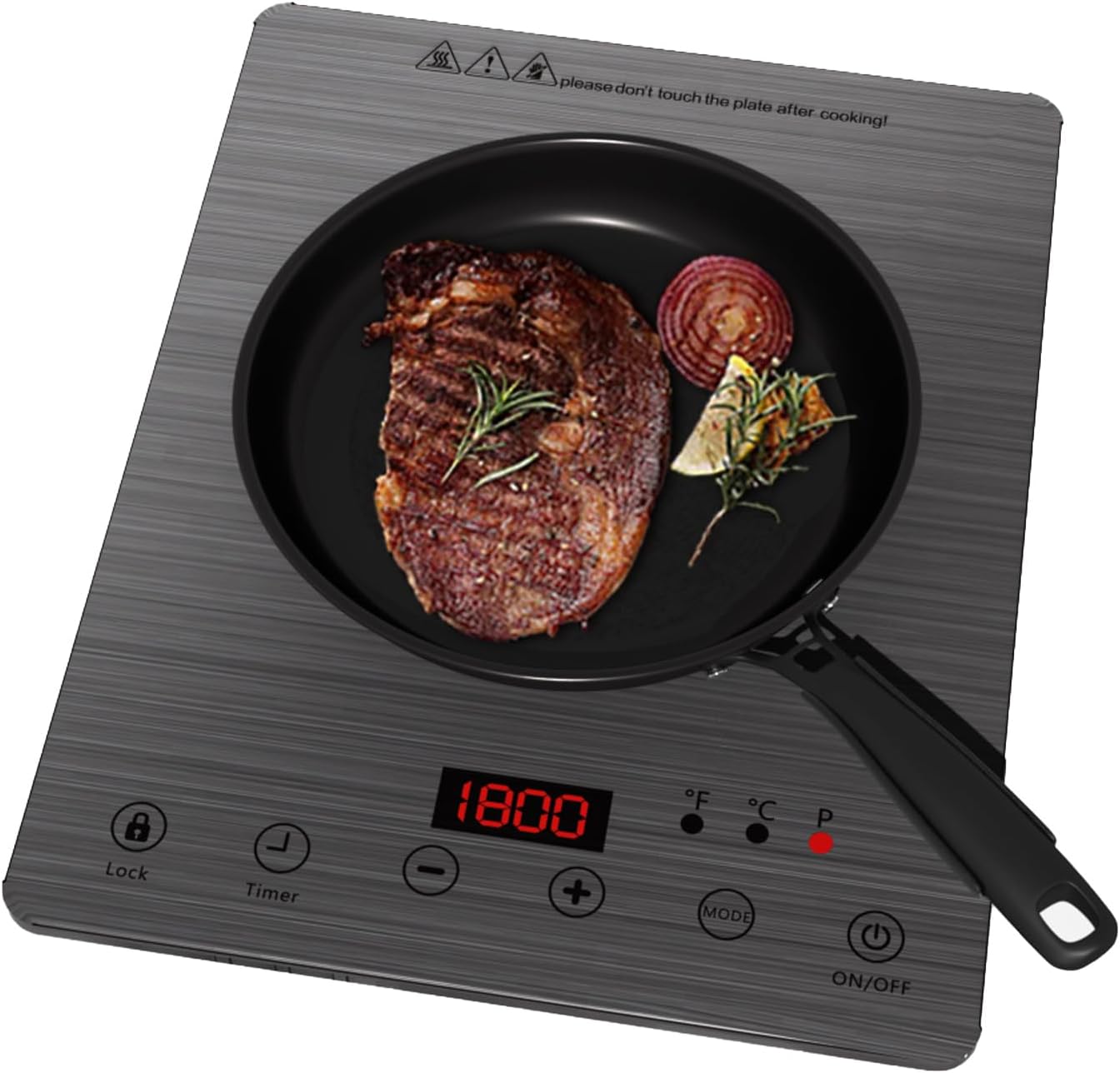
COSORI 1800W Induction Cooktop
Thinner and lighter than the Secura/Duxtop at 15 power levels and a touch-slider control. The right choice when the cooktop moves frequently — dorm, camper, second kitchen. Touch controls are less reliable with wet hands than physical buttons.
The COSORI 1800W is meaningfully thinner and lighter than the Secura or Duxtop, which is its primary advantage. If the cooktop moves frequently — dorm room, camper, second kitchen, outdoor table — the reduced weight and profile matter more than the extra four power steps the Duxtop offers. Touch slider controls work cleanly when hands are dry but become unreliable with moisture, steam, or oven mitts. For a counter fixture, the Duxtop is a better choice; for a mobile setup, the COSORI's lighter build wins.
Pros
- ✓Lightest and thinnest option — easiest to store and carry
- ✓Competitive 15 power levels at an accessible price
- ✓Slim profile suits occasional-use or mobile kitchens
Cons
- ✗Touch slider unreliable with wet hands or oven mitts
Score breakdown
| Wattage | 1800W |
| Power levels | 15 |
| Temperature range | 140–464°F |
| Controls | Touch slider |
| Weight | ~2.5 kg |
| Dimensions | 28 × 33 × 5 cm |
Secura 9100MC 1800W Portable Induction Cooktop
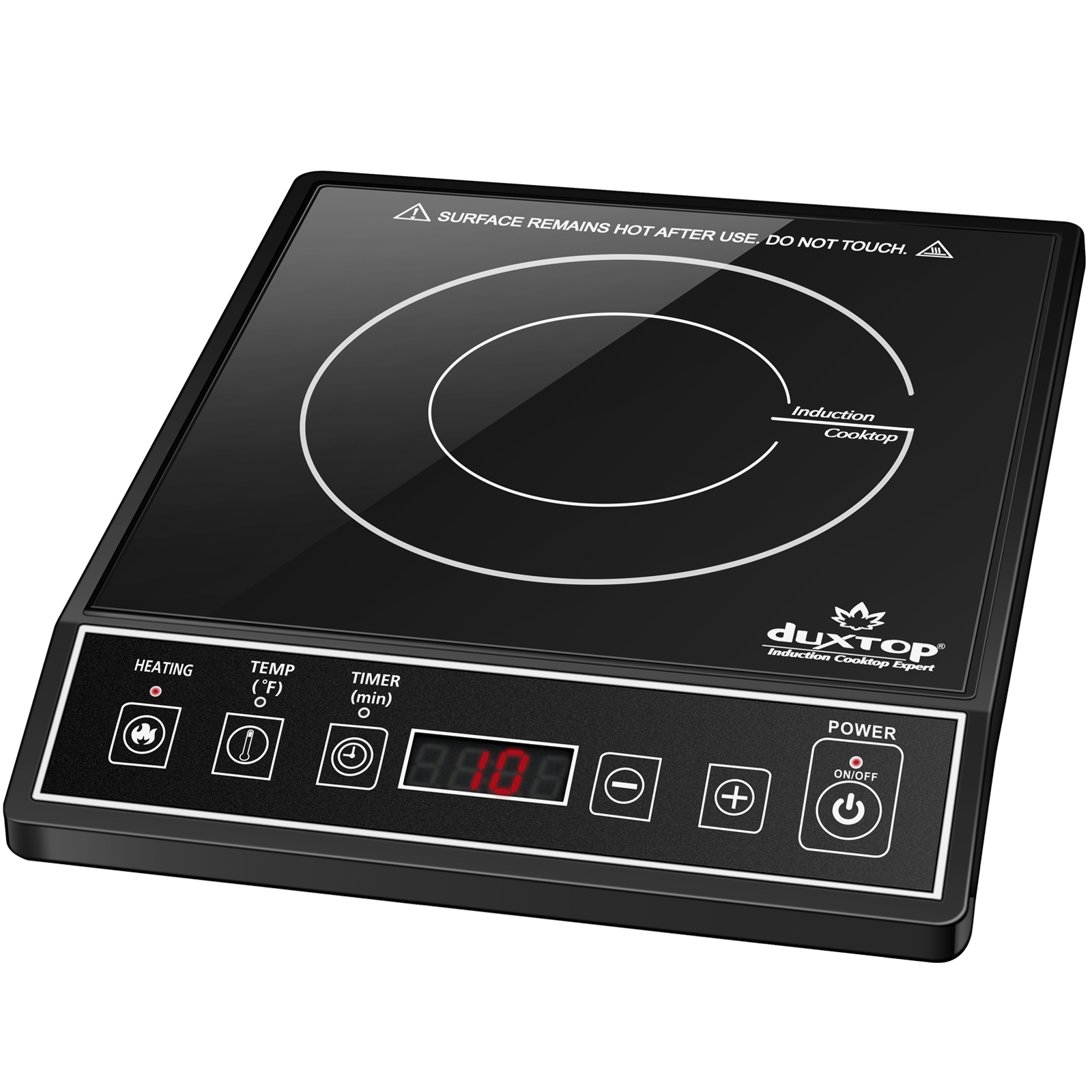
Functionally equivalent to the Duxtop 9100MC at 19 power levels and 1800W. Typically costs $5-15 less. Two-year US warranty. Buy whichever of the Secura or Duxtop is in stock at the better price.
The Secura 9100MC is functionally identical to the Duxtop 9100MC — same 19 power levels and temperature steps, same 1800W maximum, same physical button layout. It typically costs $5–15 less than the Duxtop and carries a 2-year US warranty from Secura's US distributor. In day-to-day cooking, no meaningful difference exists between the two. The correct buying strategy: check the price on both on the day you buy, and purchase whichever is cheaper and in stock.
Pros
- ✓Identical specs to the Duxtop 9100MC at lower price
- ✓2-year US warranty
- ✓Physical buttons for reliable operation in cooking conditions
Cons
- ✗No meaningful differentiation from Duxtop — pure price-matching purchase
Score breakdown
| Wattage | 1800W |
| Power levels | 19 |
| Temperature range | 140–460°F |
| Timer | 170 min |
| Controls | Physical buttons |
| Warranty | 2 years (US) |
Which one is right for you?
For everyday kitchen use
Duxtop 9100MC Portable Induction Cooktop
Best all-round control and build quality — the correct default for a counter fixture that sees daily use.
For candy and multi-stage cooking
NuWave Precision Induction Cooktop 2
5°F increments and 6 programmable stages make it the right tool for recipes where temperature changes on a schedule.
For professional-level precision
Breville BIC600XL the Control Freak Induction Cooktop
Pan-surface probe at ±1°F accuracy — justified for chocolate tempering, custards, and advanced confectionery.
For mobile or occasional use
COSORI 1800W Induction Cooktop
Lightest and thinnest — the right pick when the cooktop moves between locations regularly.
For the best price on comparable specs
Secura 9100MC 1800W Portable Induction Cooktop
Identical to Duxtop 9100MC — buy whichever is cheaper on the day you purchase.
Top pick: Duxtop 9100MC Portable Induction Cooktop
The Duxtop 9100MC hits the point where power settings, build quality, and price stop making trade-offs against each other. Nineteen power levels up to 1800W, 19 temperature settings from 140°F to 460°F, and a digital display that reads clearly from across a kitchen counter. The temperature sensor sits directly below the glass surface and adjusts output continuously — when you set 340°F for a cream sauce, it stays within about 15°F of target without cycling on and off in a way you'd notice in the pan.
The control panel is a physical button layout with a clear LED readout, not a touch-sensitive surface that goes haywire with steam or wet hands. Boost mode fires all 1800W for rapid boiling — measured time from cold water to boil in a 3-quart saucepan is about 5 minutes 20 seconds, competitive with any portable induction burner at this price. A child safety lock disables the surface if pressed and held for 3 seconds. Timer runs to 170 minutes.
Where it falls short: the 9100MC has 19 discrete temperature steps, not continuous analog control. The gap between 320°F and 340°F is the only step available — you cannot set 330°F. For most cooking tasks this is irrelevant, but for techniques like tempering chocolate (which needs 88-90°F precisely) or making candy (which needs 1-2°F resolution), you'll be working around this limitation. If temperature resolution is critical, look at the Breville Control Freak. For everything else — stir-frying, sautéing, frying, simmering, boiling — the Duxtop 9100MC does the job.
Budget picks: Secura 9100MC and COSORI 1800W
The Secura 9100MC is effectively the same unit as the Duxtop 9100MC — same internal specification, same 19 power levels and temperature steps, same 1800W maximum. The functional difference between the two in daily cooking is negligible. The Secura typically costs $5-15 less than the Duxtop. Both come with a two-year warranty from their respective US distributors. Either is a valid choice; pick whichever is in stock at the better price on the day you're buying.
The COSORI 1800W takes a different approach: it uses a slider-style touch control instead of discrete buttons, which gives it a slightly more modern look but makes one-handed operation less reliable when your hands are wet or you're wearing oven mitts. Fifteen power levels versus the Secura's 19. The temperature range tops out at 464°F. The COSORI is meaningfully thinner and lighter than the Secura — easier to move in and out of a cabinet if you're using it only occasionally rather than leaving it on the counter permanently.
Honest comparison at the budget tier: the Secura/Duxtop wins on granularity of control (19 levels vs 15) and physical button reliability. The COSORI wins on portability and weight. If you're outfitting a dorm room, camper, or second kitchen where the cooktop moves frequently, the COSORI's lighter build is worth more than the extra four power steps. If it's a kitchen counter fixture, the Secura's more granular control matters more.
Professional pick: Breville BIC600XL the Control Freak
The Control Freak is a different category of appliance. Its temperature probe measures the pan's cooking surface directly — not the glass beneath the pan, not the ambient temperature, but the actual pan temperature — and adjusts output every 20 milliseconds to hold within 1°F of target. That's the specification that separates it from every other induction cooktop at any price. The 1°F resolution across its full range from 77°F to 482°F means you can temper chocolate at 88°F, make hollandaise at 145°F without curdling, maintain an oil temperature for frying within a range that produces consistent results, and hold a simmer that is a true simmer rather than a slow boil.
The interface is a large dial with a digital readout, matching the tactile workflow of a professional kitchen rather than a consumer touchpad. You set temperature directly in degrees. The probe connects magnetically and stores in the handle of the unit. Cook time can be set to hold a precise temperature for a defined duration — useful for pasteurization calculations and candy making where time at temperature matters, not just the temperature itself.
The honest limitation is price: the Control Freak costs roughly 10-15x more than the Duxtop 9100MC. For home cooking at a household that regularly makes candy, custards, tempering chocolate, or caramel — techniques where 5°F makes the difference between success and starting over — the price is justified by the result quality. For household cooking that is primarily sautéing, stir-frying, and boiling pasta, paying $1,400 for induction control you'll never fully use is difficult to defend. The Duxtop at $80 handles those tasks identically.
How to choose: wattage, pan compatibility, and controls
Wattage: 1800W is the practical standard for portable induction cooktops in the US. Most household circuits are 15A/120V, which caps usable power at about 1800W before tripping a breaker. The Breville Control Freak runs at 1800W as well. Higher-wattage induction burners (2400W+) require a 240V outlet, the kind used for electric dryers — practical for a dedicated kitchen installation, not for a portable countertop unit. At 1800W, all five cooktops in this comparison perform similarly on high-heat tasks like boiling water; the differences appear in low-heat precision and mid-heat consistency.
Pan compatibility: induction works only with magnetic cookware. The test is simple — hold a magnet to the bottom of any pan. If it sticks, the pan works on induction. Cast iron, most stainless steel, and magnetic-bottom carbon steel all work. Aluminum, copper, and most ceramic pans do not work unless they have a bonded magnetic base. All-Clad D3 and D5 stainless work. Non-magnetic stainless (18/10 alloy) does not. The pan base diameter should match or exceed the cooktop's induction zone — on all five cooktops in this comparison, the zone is 7-7.5 inches in diameter. Pans smaller than 4 inches in diameter typically fail to trigger the sensor.
Controls: physical buttons versus touch controls is the most underappreciated design decision in this category. Touch controls look cleaner but respond unpredictably with wet hands, steam condensation, and oven mitts — all conditions common in actual cooking. Physical buttons on the Duxtop and Secura are unambiguous — you feel the click, you know the input registered. The COSORI's slider touch control works when your hands are dry; it becomes unreliable when they aren't. The Breville's dial is the best control interface in this comparison for a different reason: it matches how cooks actually think about temperature adjustment (turn up, turn down) rather than incrementing through a numbered list.