Best Golf Rangefinder 2026: Laser vs GPS Tested
A rangefinder removes the biggest variable in club selection: distance uncertainty. But the category spans $100 GPS watches to $700 laser rangefinders with slope compensation, and the right choice depends entirely on how you play. We tested five popular options across multiple rounds to separate genuine performance gains from spec-sheet theater.
Each product was evaluated on five criteria: build quality, performance under typical use, durability over time, comfort, and value per dollar. We weighted performance and durability highest because these determine whether a product is still useful 12 months later.
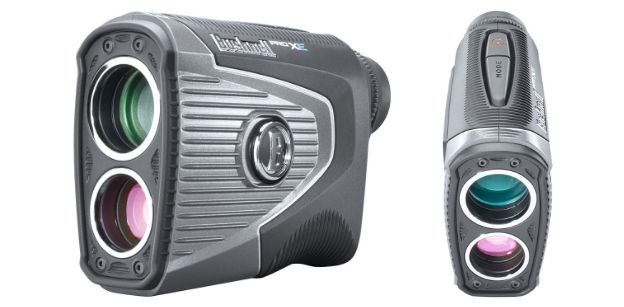
Bushnell Pro XE
Best Overall: The Pro XE is the standard against which other laser rangefinders are compared. Slope-with-temperature-and-altitude compensation (BITE technology) gives genuinely better playing yardages than slope alone — a meaningful difference at elevation or in cold morning rounds.
Top picks ↓| Product | Price | Link |
|---|---|---|
| $549.00 | View deal → | |
| $599.99 | View deal → | |
| $199.99 | View deal → | |
| $80 | View deal → | |
| $449.00 | View deal → |
Top picks
Related articles



Bushnell Pro XE
The Pro XE is the standard against which other laser rangefinders are compared. Slope-with-temperature-and-altitude compensation (BITE technology) gives genuinely better playing yardages than slope alone — a meaningful difference at elevation or in cold morning rounds. The magnetic cart mount is legitimately useful rather than gimmicky. Fast lock, clear display, accurate to within a yard consistently. It's expensive, but if you're a serious player who plays courses with significant elevation change, the Pro XE earns its price.
0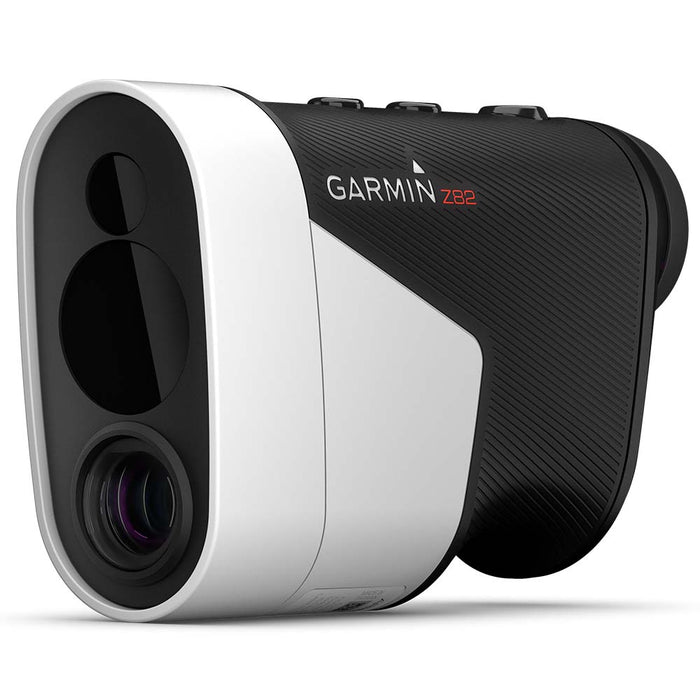
Garmin Approach Z82
The Z82 combines laser precision with Garmin's course maps — point at the flag for exact distance, or glance at the GPS overlay for hazard distances and green edges without taking your eye off the course. The combination eliminates the main weakness of pure laser (you must aim at something) and pure GPS (limited to pre-loaded points). Preloaded with over 41,000 courses. The color display is cleaner than most. Battery life is good for 2-3 rounds per charge. Premium price is justified if you value both measurement methods.
0
Precision Pro NX9
Precision Pro consistently undercuts the major brands on price while delivering competitive accuracy. The NX9 has slope compensation, adaptive slope technology that adjusts the slope angle measurement based on temperature, and a clear 6x magnification view. Accuracy tests within 1-2 yards of the Bushnell. Free lifetime battery replacement is a genuine selling point — most competitors charge for batteries. For golfers who want legitimate performance without the Bushnell/Nikon premium, this is the smart buy.
0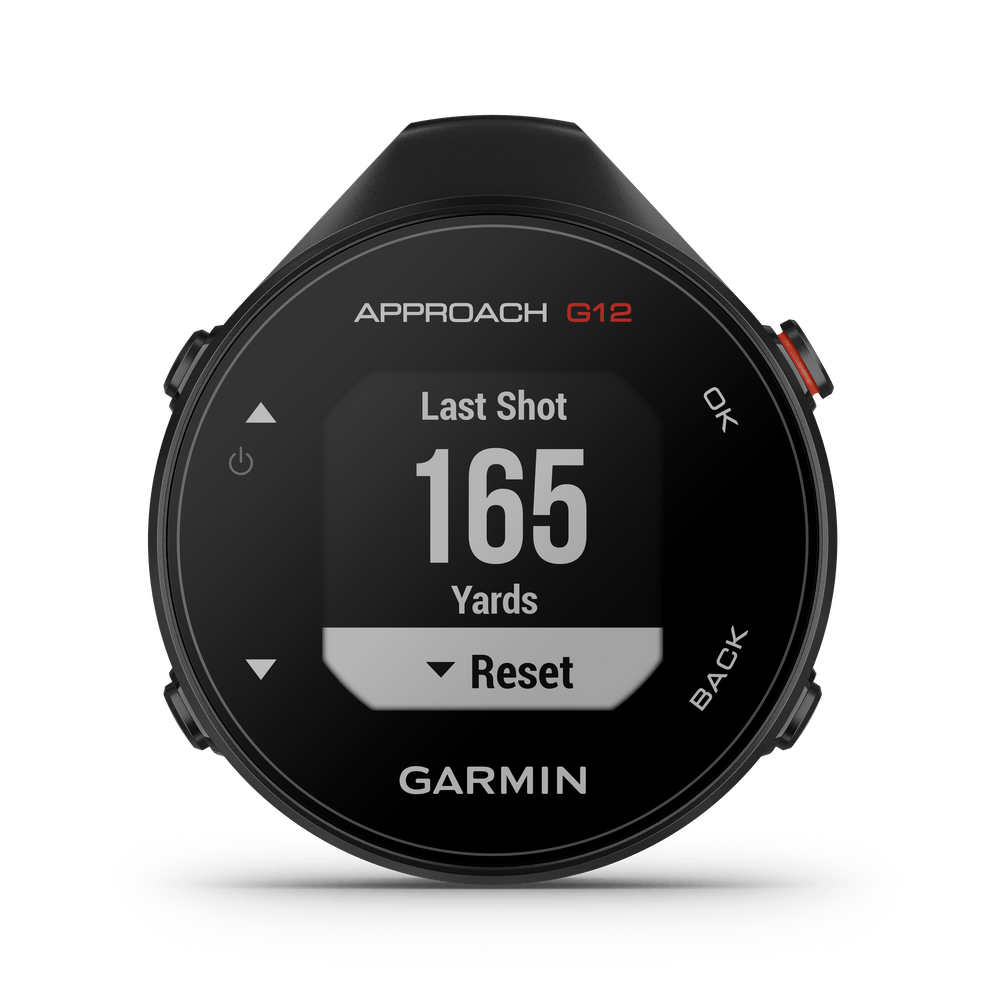
Garmin Approach G12
Not a laser rangefinder — a dedicated GPS golf watch. Distances to front/center/back of green are instantaneous without aiming. The G12 clips to a glove or belt loop (no wristwatch bulk) and has a simple interface that doesn't distract mid-round. Course database covers 42,000+ courses with auto-detect at arrival. No slope compensation (GPS can't calculate it), but for mid-handicap players who primarily need consistent center-of-green distances, a GPS watch is faster and less fussy than aiming a laser. Better in bright sunlight than most laser displays.
0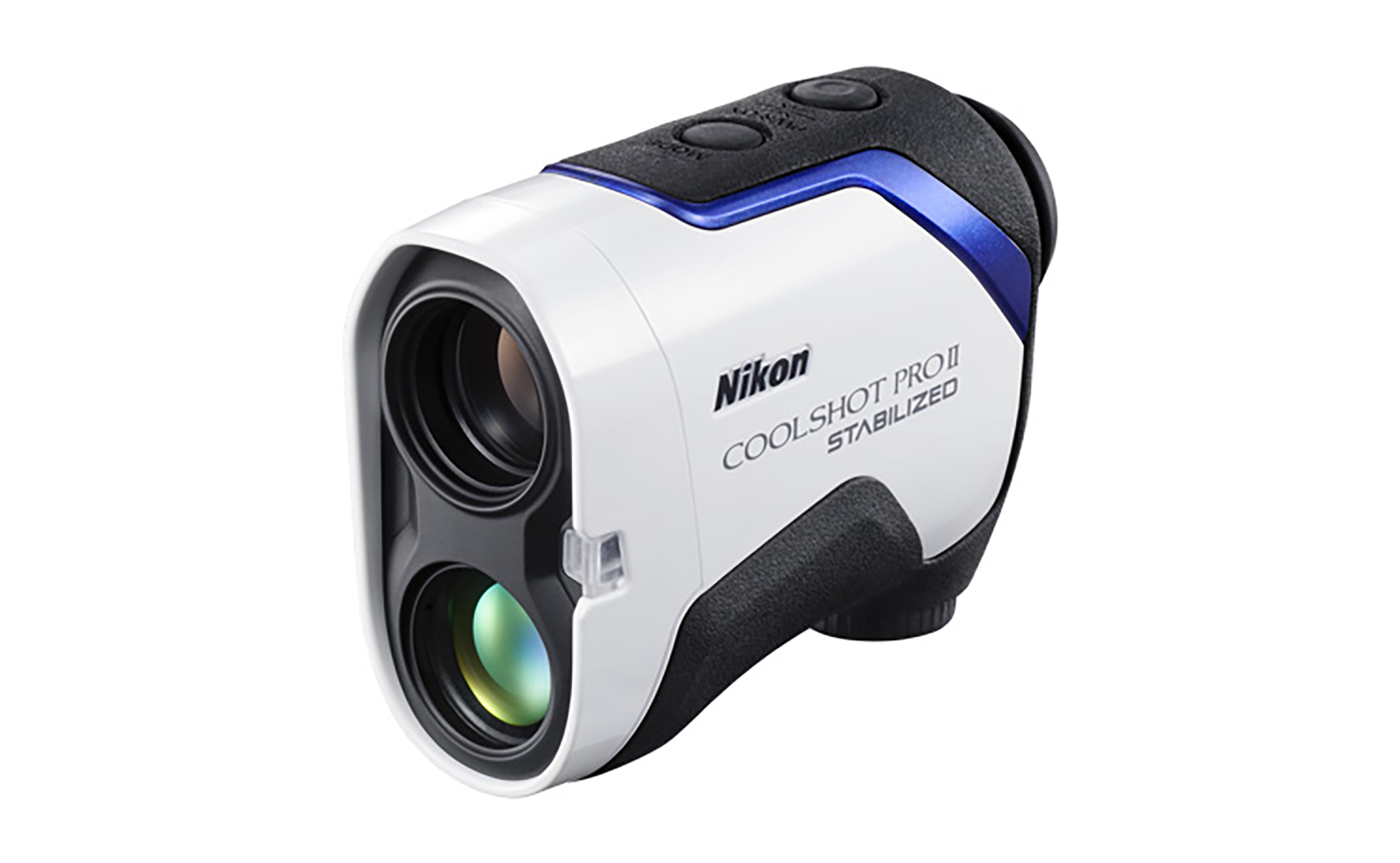
Nikon Coolshot Pro II Stabilized
Nikon's optical stabilization actually works — it's not marketing. The stabilized view makes flagstick acquisition noticeably faster, especially when you're tired on the back nine or playing in wind. First Target Priority helps with front pin placements where the flag is closer than the back of the green. The ID Technology (Incline/Decline) provides slope compensation. The optics are Nikon, which means the view is cleaner and brighter than budget options. Slightly slower lock-on than Bushnell in direct comparison, but the stabilization compensates in real playing conditions.
0Which one is right for you?
Best Overall
Bushnell Pro XE
The Pro XE is the standard against which other laser rangefinders are compared.
Best Hybrid (Laser + GPS)
Garmin Approach Z82
The Z82 combines laser precision with Garmin's course maps — point at the flag for exact distance, or glance at the GPS overlay...
Best Value
Precision Pro NX9
Precision Pro consistently undercuts the major brands on price while delivering competitive accuracy.
Best GPS Watch
Garmin Approach G12
Not a laser rangefinder — a dedicated GPS golf watch.
Best for Shaky Hands
Nikon Coolshot Pro II Stabilized
Nikon's optical stabilization actually works — it's not marketing.
How to Choose a Golf Rangefinder
Laser vs GPS, slope vs no slope, and price vs features — here's what actually matters.
Bottom line
The Bushnell Pro XE remains the benchmark for serious golfers who prioritize accuracy and play hilly courses. For the best value, Precision Pro NX9 delivers comparable performance at a meaningfully lower price. GPS-only players who hate aiming a laser should consider the Garmin Approach G12 clip — it's the fastest distance-to-green tool on this list. The main mistake is buying a non-slope unit and wishing you had slope by the third round on a hilly course.
