Best Glute Machines 2026: 5 Tested & Compared
Glute training has specific equipment requirements because the glutes respond to different resistance curves than most muscle groups. Weight range and build quality determine long-term value far more than feature lists.
Each product was evaluated on five criteria: build quality, performance under typical use, durability over time, comfort, and value per dollar. We weighted performance and durability highest because these determine whether a product is still useful 12 months later.
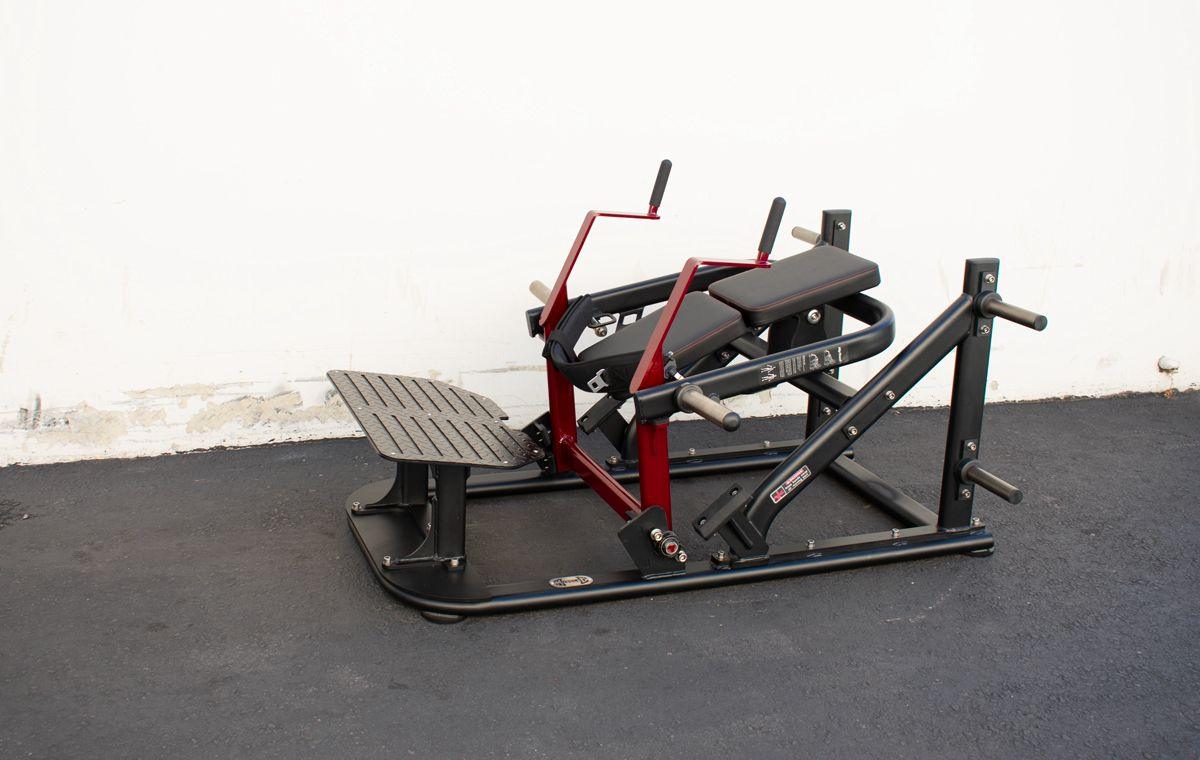
Prime Fitness Hip Thrust Machine
Best Dedicated Hip Thrust: The Prime Fitness Hip Thrust Machine is a single-exercise specialist that does its one job better than any improvised barbell-and-bench setup. A padded upper-back platform replaces the bench-edge dig that bar-thrust users learn to tolerate, and the weighted lever arm crosses the hips through a padded sleeve that removes the bar-on-pelvis bruising entirely.
Top picks ↓| Product | Price | Link |
|---|---|---|
| $800 | View deal → | |
| $400 | View deal → | |
| $500 | View deal → | |
| $20 | View deal → | |
| $25 | View deal → |
Top picks
Related articles
.png?v=1640040616)

Prime Fitness Hip Thrust Machine
Purpose-built hip thrust station, padded lever arm, back pad height adjustment. $800-1,200. Best hip thrust machine — eliminates setup time, comfortable lever arm padding. Specialty purchase for glute-focused home gyms. Same exercise stimulus as barbell + bench setup at much higher cost.
The Prime Fitness Hip Thrust Machine is a single-exercise specialist that does its one job better than any improvised barbell-and-bench setup. A padded upper-back platform replaces the bench-edge dig that bar-thrust users learn to tolerate, and the weighted lever arm crosses the hips through a padded sleeve that removes the bar-on-pelvis bruising entirely. Setup time drops to zero — no bench repositioning, no plate-rolling, no padding to fold around a bar. The back-pad height adjustment accommodates different torso lengths, which matters because hip thrust mechanics are sensitive to shoulder placement. For glute-focused training programs, the comfort and setup-time savings compound across sessions.
Pros
- ✓Padded lever arm eliminates barbell-on-hip discomfort
- ✓Zero setup time between sets — no bench or bar to reposition
- ✓Back-pad height adjustment fits different torso lengths
- ✓Purpose-built geometry locks the movement plane
Cons
- ✗Single-exercise specialist — does only the hip thrust
- ✗Significant cost versus a barbell, bench, and hip thrust pad

REP Fitness Glute-Ham Developer (GHD)
Glute-ham raises, back extensions, hyperextensions, reverse hypers. $400-600. Best posterior chain development machine — trains hamstrings through both functions simultaneously. Correct for athletes wanting comprehensive posterior chain work without dedicated leg curl machine.
The REP Fitness GHD covers more posterior chain ground than any other piece in this lineup: glute-ham raises, back extensions, hyperextensions, and reverse hypers all run on the same frame. The footplate and ankle-anchor geometry holds the lower body solid through the GHR range of motion, and the hip pad accommodates both standard hyperextension and full GHR positioning. For lifters who want comprehensive hamstring and glute work without buying a separate leg curl machine, the GHD is the single-purchase answer. Construction is heavier than a basic hyperextension bench, which is necessary because the GHR generates significant torque at the foot anchors.
Pros
- ✓Trains GHR, back extension, hyperextension, and reverse hyper
- ✓GHR is one of the most effective hamstring exercises available
- ✓Solid foot-anchor geometry holds form through full ROM
- ✓Single purchase replaces a separate leg curl machine
Cons
- ✗Takes meaningful floor space versus a pad-only solution
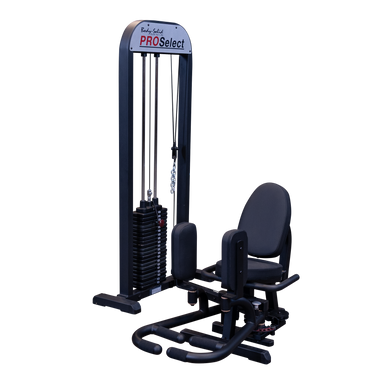
Body-Solid Hip Abductor Machine
Seated hip abduction, loads gluteus medius and minimus. $500-800. Best for hip abductor isolation — commercial gym quality for home use. Hip abductor training improves knee stability. Resistance bands provide similar stimulus at much lower cost for most athletes.
The Body-Solid Hip Abductor Machine isolates the gluteus medius and minimus through a seated abduction pattern — the same pattern as a commercial gym's abductor machine, scaled to home gym proportions. Hip abductor strength matters for knee tracking during squats and running, and dedicated loading is hard to replicate with barbells. The seated position locks the hip angle, which keeps the load on the abductors rather than letting the larger glute max compensate. For home gyms specifically training around knee-tracking issues or building runner-specific hip stability, the machine fills a gap that bands and clamshells can't fully match at the same load.
Pros
- ✓Isolates gluteus medius and minimus with consistent loading
- ✓Seated position locks the hip angle for clean abductor work
- ✓Commercial-gym function in a home gym footprint
- ✓Targets a weak link many lifters can't load effectively otherwise
Cons
- ✗Resistance bands and clamshells cover much of the same function at far lower cost
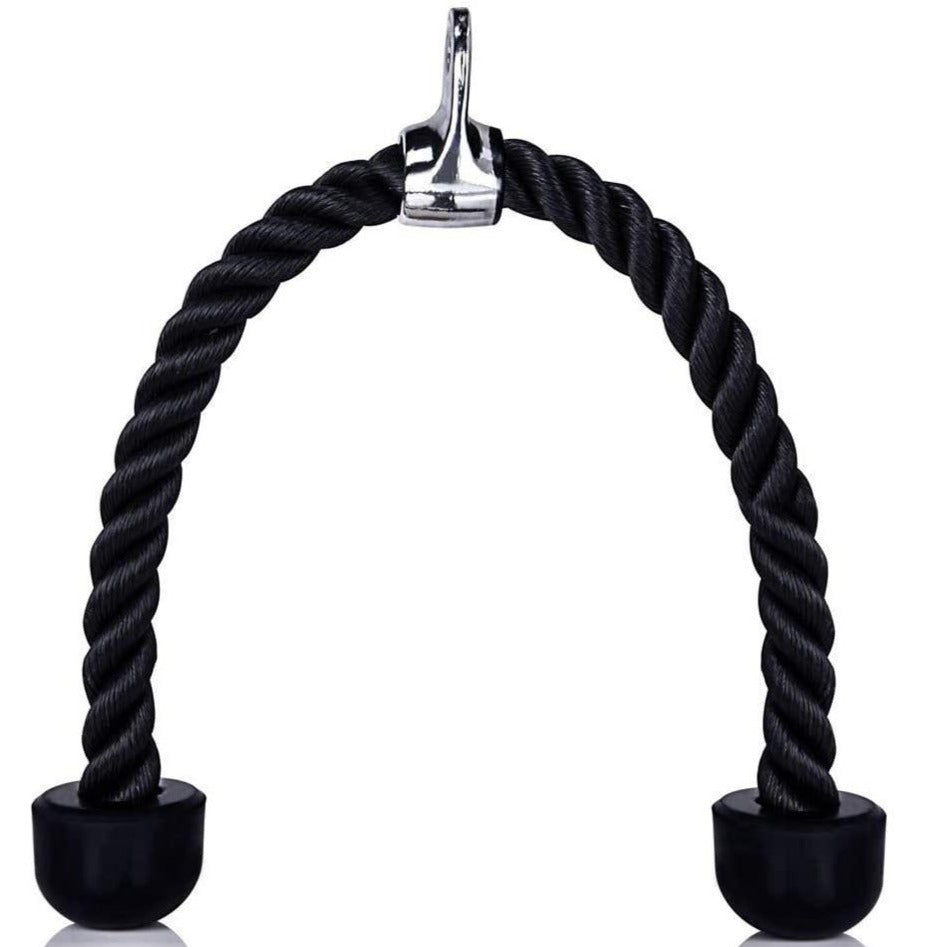
Cable Pull-Through Setup (Rope Attachment)
Cable machine + rope attachment at ankle height. Cost of rope attachment only ($20-30). Best cable glute exercise — constant tension through full hip extension, no additional machine purchase if you have a cable machine. Most cost-effective targeted glute loading option.
The cable pull-through is the most cost-effective glute isolation in this lineup because it adds zero machine cost if you already own a cable rig — only a rope attachment is required. Set the cable at ankle height, hinge at the hips, and the rope provides constant tension through the full hip extension range. The movement pattern keeps the load on the glutes and hamstrings without quad compensation, which is hard to achieve with free weight movements. For lifters with a cable machine in their gym, the pull-through is the highest-leverage glute exercise you can add without buying anything substantial.
Pros
- ✓Zero added cost if a cable machine is already in the gym
- ✓Constant tension through the full hip extension range
- ✓Pattern keeps load on glutes and hamstrings without quad compensation
- ✓Pairs well with hip thrusts as a higher-rep accessory
Cons
- ✗Requires an existing cable machine — not standalone equipment
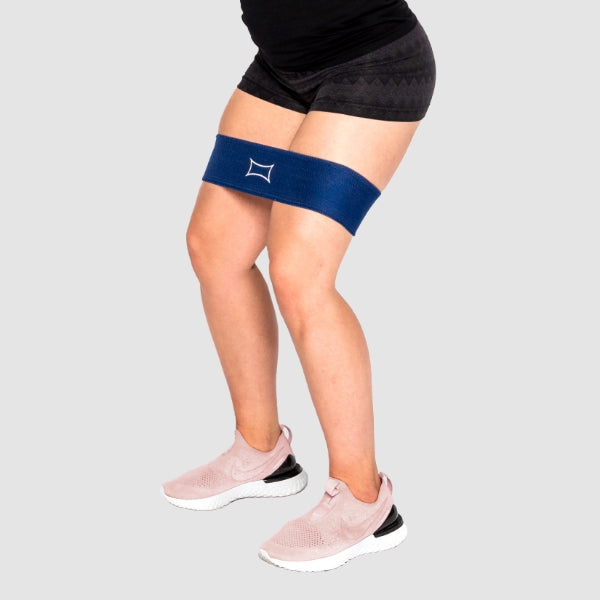
Sling Shot Hip Circle Band
Resistance band loop worn above knees. $25-35. Best low-cost glute supplement — increases glute medius activation during squats, hip thrusts, and lateral walks. Effective warm-up tool and glute engagement enhancer at negligible cost.
The Sling Shot Hip Circle is a fabric resistance loop worn just above the knees during compound lower-body work, and it punches well above its price tag for what it actually delivers. The band creates continuous hip abductor tension during squats, hip thrusts, and lateral band walks, which increases gluteus medius activation throughout the lifts you're already doing. Many strength athletes use it as a warm-up tool to wake up the glutes before heavy compound work, and the cost is negligible compared to any dedicated machine. For home gyms that already own the basics, the hip circle is the single best low-cost add-on for improving glute engagement.
Pros
- ✓Increases glute medius activation during squats and hip thrusts
- ✓Effective warm-up tool before heavy compound work
- ✓Fabric construction doesn't roll up like rubber bands
- ✓Negligible cost relative to any dedicated machine
Cons
- ✗Supplemental tool — not a replacement for loaded glute work
Which one is right for you?
For glute-focused training programs
Prime Fitness Hip Thrust Machine
Padded lever arm and zero setup time make high-volume hip thrust work practical in a way that barbell-and-bench setups don't.
For comprehensive posterior chain training
REP Fitness Glute-Ham Developer (GHD)
Covers GHR, back extension, hyperextension, and reverse hyper on one frame — single purchase replaces multiple pieces.
For knee tracking and runner-specific hip work
Body-Solid Hip Abductor Machine
Seated isolation loads the gluteus medius and minimus consistently in a way bands and clamshells can't fully match at higher loads.
For home gyms with an existing cable machine
Cable Pull-Through Setup (Rope Attachment)
Zero added cost beyond a rope attachment, and constant tension through the full hip extension range produces clean glute and hamstring loading.
For improving glute engagement during compounds
Sling Shot Hip Circle Band
Continuous abductor tension during squats and hip thrusts increases gluteus medius activation at negligible cost — the best add-on per dollar.
Why hip thrusts are the primary glute-building exercise
Hip thrust mechanics: shoulders rest on a bench, feet flat on floor, barbell across the hips. Drive through the heels to extend the hips upward until the body forms a straight line from knees to shoulders. The hip thrust places peak resistance at full hip extension — exactly where the glute reaches maximum contraction. EMG studies consistently show higher glute max activation in hip thrusts than in squats, deadlifts, or lunges. This is because the resistance (gravity pulling the barbell down) is highest when the glutes are most contracted, which is the opposite of squats where gravity creates the most resistance in the deep squat position (where the glutes are less activated).
The loading challenge: standard hip thrusts require a barbell, weight plates, and a bench at the right height. The barbell sits across the hip crease, which is uncomfortable without padding. A dedicated hip thrust machine solves both the setup problem (no bench repositioning) and the comfort problem (padded lever arm). The trade-off is cost and floor space.
For home gyms without a dedicated hip thrust machine, the barbell hip thrust with a bench and barbell remains the most effective setup. A barbell hip thrust pad ($20-30) solves the comfort issue. The hip thrust machine is a convenience and comfort upgrade, not a strength training upgrade — the exercise stimulus is the same.
Prime Fitness hip thrust machine: dedicated equipment
Prime Fitness Hip Thrust Machine ($800-1,200) is a purpose-built hip thrust station — a padded platform for your upper back, a weighted lever arm across the hips, weight storage pegs, and a seat adjustment. The machine eliminates the setup time of repositioning a bench and loading a barbell hip thrust for each set. The padded lever arm is significantly more comfortable than a bare barbell.
At $800-1,200, the Prime Fitness hip thrust machine is a speciality purchase — it does one exercise well. For home gyms focused primarily on glute development, athletes who do multiple sets of hip thrusts per session, or coaches with client populations that prioritize glute training, the machine's setup convenience and comfort are worth the cost. For general home gym setups, a barbell, a bench, and a hip thrust pad produce the same exercise stimulus at a fraction of the cost.
Alternative brands (Bells of Steel, Titan Fitness) offer similar hip thrust machines at $600-1,000. The key specifications to evaluate: loaded weight capacity (look for 400+ lb), lever arm diameter and padding, and back pad height adjustment range (to accommodate different torso lengths).
REP Fitness GHD: glute-ham developer
REP Fitness Glute-Ham Developer ($400-600) is a specialized piece of equipment for glute-ham raises — a movement where you're anchored at the feet and lower the upper body forward while maintaining a neutral spine, then use hamstring and glute force to return to the starting position. The GHD is also used for back extensions, hyperextensions, and reverse hypers.
Glute-ham raises are one of the most effective hamstring exercises available — they train the hamstring through both hip extension and knee flexion simultaneously (the hamstring's two functions). EMG data shows glute-ham raises produce high hamstring activation throughout the full range of motion. For athletes who want to develop both hamstrings and glutes without a dedicated leg curl machine, the GHD is a versatile single-purchase solution.
GHD back extensions and hyperextensions are also excellent posterior chain exercises that can be loaded progressively (holding a weight plate against the chest). At $400-600, the REP Fitness GHD is the correct choice for home gym athletes who want comprehensive posterior chain training (hamstrings + lower back + glutes) in one apparatus.
Cable pull-through and hip circle: targeted glute isolation
Cable pull-through (using a cable machine with a rope attachment set at ankle height) is one of the best glute isolation exercises — the cable provides constant tension through the full hip extension range, and the movement pattern specifically targets the glutes and hamstrings without significant quad involvement. If you have a cable machine, the pull-through costs nothing additional — it's performed with the cable machine you already own and a rope attachment.
Body-Solid Hip Abductor Machine ($500-800) trains the hip abductors (gluteus medius and minimus) — the muscles on the outer hip responsible for moving the leg away from the body. While these muscles are smaller than glute max, hip abductor strength is important for knee stability during squatting and running movements. Dedicated hip abductor machines are more common in commercial gyms; for home gyms, resistance band hip abduction and clamshells provide adequate stimulus at much lower cost.
Sling Shot Hip Circle Band ($25-35) is a resistance band loop designed to be worn just above the knees during squats, hip thrusts, and lateral band walks. The band creates continuous hip abductor tension throughout lower-body exercises, increasing glute medius activation. Used by many strength athletes as a warm-up tool and to improve glute engagement during compound movements. At $25-35, the hip circle provides meaningful glute training stimulus at negligible cost compared to any dedicated machine.