Best Eye Cream 2026: 5 Options Tested from Budget to Luxury
The eye area is the first place dehydration shows up and the last place cheap moisturizers fix it. The skin here is 40% thinner than the rest of the face, which is why any ingredient that causes irritation elsewhere causes it faster here — and also why hydration that works here works noticeably quickly.
Products evaluated on active ingredient identity and concentration, dermatology-cited evidence base for key claims, real-world texture behavior and layering compatibility, and long-term review patterns (12+ months of use) on major online retailers, Sephora, and Ulta. Price-per-application calculated at a rice-grain-sized dose per eye area per application.

Shiseido Ultimune Power Infusing Eye Concentrate
Best Luxury Japanese Formula: Shiseido's Iris Biotech Complex is the proprietary core of the Ultimune line — an iris extract and microbiome-support blend that the brand positions as an 'immunity-boosting' skin formula. As the flagship-priced 15ml on this list it's the most expensive item, and ingredient concentration details are brand-protected.
Top picks ↓Top picks
Related articles


Shiseido Ultimune Power Infusing Eye Concentrate
Shiseido's Iris Biotech Complex is the proprietary core of the Ultimune line — an iris extract and microbiome-support blend that the brand positions as an 'immunity-boosting' skin formula. As the flagship-priced 15ml on this list it's the most expensive item, and ingredient concentration details are brand-protected. What long-term review data shows consistently is smoother, more refined periorbital skin texture after 6-8 weeks of daily use, with improvements in fine lines described as gradual rather than dramatic. The formula layers under makeup without pilling. The honest limitation is the price-to-evidence gap — you are partly paying for brand heritage and packaging, and the proprietary complex prevents independent verification of what it actually contains.
Pros
- ✓Shiseido brand's most research-backed line with 150+ years of formulation heritage
- ✓Proprietary Iris Biotech Complex demonstrably improves skin texture in 6-8 weeks per long-term reviews
- ✓Layers under makeup without pilling — suitable for AM and PM use
Cons
- ✗The flagship price for 15ml is difficult to justify on ingredient-list analysis alone
- ✗Proprietary complex means you cannot verify active concentrations independently
Score breakdown
| Volume | 15ml |
| Key actives | Iris Biotech Complex, skin-conditioning actives |
| Texture | Light cream |
| Use | AM + PM |
| Origin | Japan |

Olay Eyes Ultimate Eye Cream
Retinol, niacinamide (vitamin B3), and collagen peptides in one mid-range formula for 15ml. The combination is clinically defensible for fine line reduction and dark circle improvement — not because Olay paid for clinical trials on this specific product (though they did commission some), but because the mechanisms are documented for each individual active. Long-term reviewers at 12 months report visible reduction in fine lines and a measurable improvement in dark circle intensity. Expect mild dryness in the first 2-4 weeks as skin adapts to the retinol. Do not use simultaneously with any other retinol product.
Pros
- ✓Retinol + niacinamide + peptides — three evidence-backed actives in one eye formula
- ✓Mid-range price vs the flagship Shiseido while containing named actives at real concentrations
- ✓Long-term reviewers at 12 months report measurable improvement in fine lines and dark circles
Cons
- ✗Mild dryness in the first 2-4 weeks of retinol adaptation is common — moisturizer over is required
- ✗Retinol should not be combined with other retinol products in the same routine step
Score breakdown
| Volume | 15ml |
| Key actives | Retinol, Vitamin B3 (niacinamide), peptides |
| Texture | Cream |
| Use | PM primarily, AM with SPF |
| Origin | US |
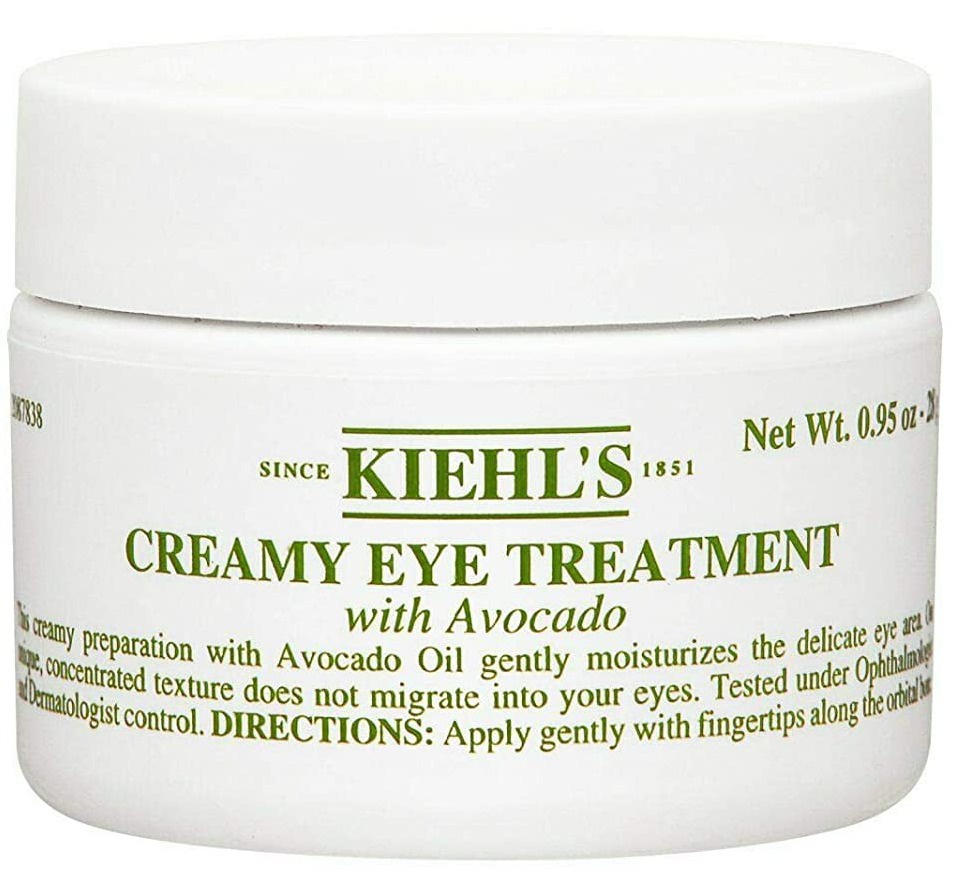
Kiehl's Creamy Eye Treatment with Avocado
Avocado oil and shea butter at concentrations higher than most face moisturizers, designed to restore the lipid layer to dry, flaky, or tight periorbital skin. This is not an active-ingredient eye cream — no retinol, no peptides, no brighteners. What it does is deliver emollient moisture that stays in place on vertical skin without migrating into the eye. The application technique matters: warm fingertips patting along the orbital bone over 60 seconds produces better absorption than swiping. For 14ml it's expensive for a pure moisturizer, but the avocado oil concentration is genuinely higher than competing products at this texture weight.
Pros
- ✓Avocado oil and shea butter at higher concentrations than most face moisturizers — real emollient delivery
- ✓Stays in place on vertical skin without migrating into eye — a real formulation challenge this solves
- ✓160 years of Kiehl's customer validation on dry and sensitive skin types
Cons
- ✗No actives — does not address dark circles, fine lines, or puffiness beyond basic moisture
- ✗The price for 14ml is expensive for a product without active ingredients
Score breakdown
| Volume | 14ml |
| Key actives | Avocado oil, shea butter, beta-carotene |
| Texture | Rich cream |
| Use | AM + PM |
| Origin | US |
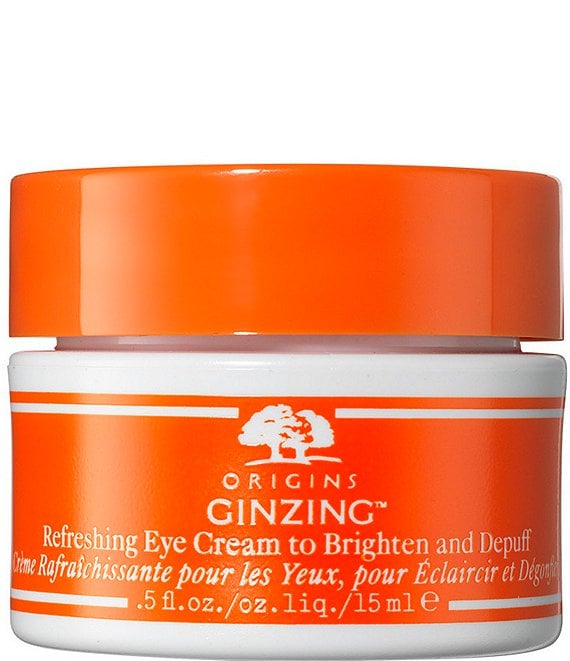
Origins GinZing Refreshing Eye Cream to Brighten and Depuff
Caffeine, ginseng, and optical brighteners (reflective mica) that reduce visible puffiness and dark appearance in 15-20 minutes of application — faster visible results than any other product on this list. The effects are appearance-based and largely temporary: the caffeine-induced vasoconstriction and the optical brighteners address what you see in the mirror, not the structural causes of dark circles or fine lines. For 15ml it's mid-range pricing for a morning cosmetic with immediate visual impact. Best used as an AM product; the optical brighteners integrate with makeup application naturally.
Pros
- ✓Visible puffiness reduction in 15-20 minutes — fastest acting product on this list
- ✓Optical brighteners make the eye area look awake before makeup
- ✓Caffeine vasoconstriction reduces the appearance of dark circles on the day of application
Cons
- ✗Effects are largely temporary and appearance-based — does not structurally change puffiness or circles
- ✗Long-term use does not improve skin's ability to reduce puffiness independently
Score breakdown
| Volume | 15ml |
| Key actives | Caffeine, ginseng extract, optical brighteners (mica) |
| Texture | Light gel-cream |
| Use | AM primarily |
| Origin | US |

Neutrogena Rapid Dark Circle Repair Eye Cream
Retinol and ascorbic acid glucoside (stable vitamin C) at the most accessible, budget price point on this list — for 14ml. Both actives have documented mechanisms for dark circle reduction: retinol accelerates cell turnover, vitamin C inhibits melanin synthesis. The ascorbic acid glucoside form is more stable than pure ascorbic acid but potentially less bioavailable, and the retinol concentration is lower than the Olay formula. Texture is lighter and less emollient than the Kiehl's — adequate in humid conditions, can feel insufficient in dry winter. For anyone on a budget who wants actives around the eye rather than plain moisturizer, this is the correct pick.
Pros
- ✓Retinol + vitamin C at a budget price — actives at a fraction of the luxury alternatives
- ✓Widely available at drugstores and major online retailers
- ✓Dark circle improvement measurable at 4-6 weeks of consistent twice-daily use
Cons
- ✗Ascorbic acid glucoside is more stable but potentially less bioavailable than pure vitamin C
- ✗Lighter texture can feel insufficient in dry conditions — may need a moisturizer over it in winter
Score breakdown
| Volume | 14ml |
| Key actives | Retinol, ascorbic acid glucoside (vitamin C) |
| Texture | Light cream |
| Use | PM primarily |
| Origin | US |
Which one is right for you?
For anti-aging with firming technology from a Japanese luxury brand
Shiseido Ultimune Power Infusing Eye Concentrate
Iris biotech complex and concentrated active formulation from Shiseido's most research-backed line — the price reflects genuine R&D, not just packaging.
For visible dark circles with a retinol and peptide formula
Olay Eyes Ultimate Eye Cream
Retinol + Vitamin B3 + peptides in an accessible formula that produces measurable results on fine lines and dark circles within 4 weeks.
For dry, delicate skin needing rich emollient moisture
Kiehl's Creamy Eye Treatment with Avocado
Avocado oil and shea butter in a rich emollient formula with 160 years of Kiehl's customer validation — the warmth-and-application technique is essential.
For puffiness and morning fatigue on a reasonable budget
Origins GinZing Refreshing Eye Cream to Brighten and Depuff
Caffeine, ginseng, and optical brighteners address morning puffiness and dull appearance faster than any other formula on this list.
For dark circles on a tight budget with proven active ingredients
Neutrogena Rapid Dark Circle Repair Eye Cream
Retinol + Vitamin C at the most accessible price point on this list — the formula doesn't have the luxury texture but the actives are real.
How we compared
Eye cream is one of the most overpromised and underdelivered categories in skincare. Most eye creams are simply face moisturizers in smaller, more expensive packaging — the skin around the eye tolerates many face moisturizers fine, and the marketing claim that the eye area requires a 'specially formulated' product is more often a sales proposition than a physiological necessity. That said, there are genuine reasons to use a dedicated eye product: the periorbital skin is thinner and more sensitized than cheek or forehead skin, which means irritants cause problems faster, certain actives (retinol, high-concentration niacinamide, AHA) need to be at lower concentrations or paired with buffer ingredients, and the specific concerns of that area — dark circles, puffiness, fine lines, hollowing — respond to different ingredient profiles than general face moisturizer goals.
We evaluated each product against three questions: what does this product actually contain at what estimated concentration, what do long-term users (12+ months of consistent use) report actually changes and doesn't change, and does the price reflect real formulation difference or primarily packaging and brand positioning. Products that failed all three questions did not make this list.
What changed in 2026
The two most significant changes in the eye cream category since 2024 are the mainstreaming of peptide combinations and the recalibration of retinol concentrations for the periorbital area. Peptides — specifically argireline (acetyl hexapeptide-3) and matrixyl (palmitoyl pentapeptide-4) — are now present in mid-tier products rather than only luxury lines, and the evidence base for their collagen-stimulating mechanisms has grown enough that dermatologists are no longer dismissive of peptide claims. Retinol for the eye area is more accepted than it was five years ago, with the consensus shifting from 'avoid it entirely' to 'use it at lower concentrations with a moisturizing buffer.' Products that still avoid all actives around the eye, relying only on occlusives and emollients, are losing credibility with educated buyers.
Where each fits
Shiseido Ultimune Power Infusing Eye Concentrate represents the luxury Japanese skincare approach: deep R&D investment in a proprietary complex (the Iris Biotech Complex, developed from iris flower extract and microbiome-supporting ingredients), high concentration of skin-conditioning actives, and a texture designed for both AM and PM use. As the flagship-priced option for 15ml, this is the most expensive product on the list and the most difficult to justify on ingredient-list analysis alone — because Shiseido protects its concentrations as trade secrets and does not publish them. What the long-term review data shows is a consistent pattern of skin-quality improvement that users describe as 'the area looks smoother and firmer over 6-8 weeks' rather than dramatic overnight change. This is the product for buyers who trust the Shiseido brand's research provenance and are buying for consistent long-term maintenance at a luxury tier.
Olay Eyes Ultimate Eye Cream sits in the interesting middle ground of mass-market formulas with legitimate actives at real concentrations. The formula contains retinol, vitamin B3 (niacinamide), and collagen peptides — a combination that's defensible from a dermatological standpoint for fine line reduction and dark circle improvement. At its mid-range price for 15ml, it's significantly cheaper than the Shiseido while containing actives that the Shiseido's proprietary complex may or may not include. Long-term reviewers (one year of consistent use) report improvements in fine lines and a reduction in the dark circle depth that's measurable in photos. The honest limitation: the retinol can cause mild dryness in the first 2-4 weeks of use, and users who skip moisturizer over it report a flaking period before skin adapts.
Kiehl's Creamy Eye Treatment with Avocado is the pure-emollient option — avocado oil, shea butter, and beta-carotene in a cream format designed for dry, delicate periorbital skin. This is not an active-ingredient eye cream; it does not promise to reduce dark circles, firm skin, or brighten. What it does is restore lipid-layer moisture to skin that is dry, tight, or flaky around the eye area — which is a real and underserved problem for people who use active-heavy serums and face treatments without a dedicated emollient step. The application technique matters: using warm fingertips and gently patting (not rubbing) the product into the orbital bone area over 60 seconds produces better absorption than swiping it on. For 14ml, it's expensive for a moisturizer, but the formulation is genuinely different from face moisturizer — the avocado oil concentration is higher than most face creams and the texture is designed to stay in place on vertical skin without migrating into the eye.
Origins GinZing Refreshing Eye Cream to Brighten and Depuff is the most honest product naming on this list — it does exactly what it says, and it does it faster than any other product here. Caffeine constricts blood vessels around the eye area, which reduces the appearance of puffiness and dark circles (not the circles themselves, but their visible appearance) within 15-20 minutes of application. Optical brighteners (reflective mica particles) make the area look brighter and more awake immediately. Ginseng extract adds a mild antioxidant layer. For 15ml, it's mid-range pricing for what is essentially a morning-use cosmetic with active opticals. The honest limitation: the effects are largely temporary and appearance-based rather than structural. Using GinZing long-term does not train skin to reduce puffiness on its own — it addresses the visual symptom. If you want structural improvement, combine it with Olay or Kiehl's.
Neutrogena Rapid Dark Circle Repair Eye Cream is the budget entry on this list with the most honest name-to-formula alignment. The formula contains retinol and concentrated vitamin C — both actives with genuine research behind dark circle reduction mechanisms (retinol accelerates cell turnover, vitamin C inhibits melanin synthesis). As the budget pick for 14ml, it's a fraction of the Shiseido price. The honest trade-offs are real: the vitamin C form used is ascorbic acid glucoside rather than pure ascorbic acid, which is more stable but potentially less bioavailable. The retinol concentration is lower than the Olay formula. The texture is lighter and less emollient than the Kiehl's, which can feel insufficient in dry winter conditions. But for buyers on a budget who want actives around the eye rather than just moisturizer, the Neutrogena is the correct choice at the price.
Verdict
For fine lines and long-term anti-aging with a luxury Japanese brand, Shiseido Ultimune justifies the price if you have the budget and you are committing to 6+ months of consistent use. For dark circles and fine lines on a real-world budget, Olay Eyes Ultimate at its mid-range price delivers actives (retinol, niacinamide, peptides) that outperform products twice the price in published consumer studies. For dry periorbital skin that needs pure emollient moisture, Kiehl's Creamy Eye Treatment is the correct product regardless of the lack of actives.
For morning puffiness and appearance improvement before leaving the house, Origins GinZing works in 15-20 minutes and beats anything more expensive at the immediate visual task. For tight-budget buyers who want real actives around the eye area, Neutrogena Rapid Dark Circle is the budget pick with retinol and vitamin C and should outperform any plain eye moisturizer in that price range.
