Best Ergonomic Footrest 2026: 5 models compared for desk workers
Five footrests for desk workers, from budget flat platforms to a premium continuously-adjustable unit. Adjustability range matching your actual sitting posture matters more than material grade.
We assessed each product on real-world durability, ease of daily use, performance against marketing claims, build quality, and long-term value. Manufacturer specifications were validated against verified owner reviews.

Fellowes Foot Rocker Ergonomic Footrest
Best for Active Rockers: The Fellowes Foot Rocker is the rocking-motion pick at the mainstream budget tier. Its curved base produces a consistent forward-to-back arc of roughly 20 degrees when you push with your toes, and the non-slip textured top keeps your feet planted through the motion without active gripping.
Top picks ↓| Product | Price | Link |
|---|---|---|
| $49.99 | View deal → | |
| $57.99 | View deal → | |
| $25 | View deal → | |
| $29.99 | View deal → | |
| $150.00 | View deal → |
Top picks
Related articles

Fellowes Foot Rocker Ergonomic Footrest
Active-rocking budget pick — fixed 20-degree rocking arc, 43 cm wide non-slip textured surface. No height adjustment; rocking range is subtle. Best for confirmed rockers who don't need angle flexibility.
The Fellowes Foot Rocker is the rocking-motion pick at the mainstream budget tier. Its curved base produces a consistent forward-to-back arc of roughly 20 degrees when you push with your toes, and the non-slip textured top keeps your feet planted through the motion without active gripping. The 43 cm × 29 cm footprint clears a standard desk with room to spare. Active rocking engages the calf muscles as a secondary circulatory pump, which measurably reduces lower-leg swelling at the end of a long day — but the benefit only materializes if you actually rock. The honest weakness is that the 20-degree arc is fixed, users wanting a more pronounced motion cannot dial it up, and long-term reviews flag the plastic base corners scuffing hardwood floors (a felt-pad purchase fixes this). Right pick if you already know rocking suits your work style and you do not need angle adjustability.
Pros
- ✓Active rocking engages calves as a circulatory pump
- ✓Non-slip textured top keeps feet planted through motion
- ✓43 cm × 29 cm fits under standard desks
- ✓More affordable than the Humanscale FM300
Cons
- ✗Fixed 20-degree arc — no way to dial up or down
- ✗Plastic base corners scuff hardwood without felt pads

Kensington SmartFit Solemate Footrest
Best-overall stationary pick — four height settings, massage-bump non-slip surface, 45 cm wide. Firmer than foam alternatives. Right pick for most first-time footrest buyers.
Kensington's SmartFit is the most balanced first-time purchase in this category. Four height settings (roughly 10–15 cm) pair with matched tilt, a 45 cm-wide platform handles natural feet-apart sitting, and a non-slip massage-bump surface prevents foot slide while stimulating the sole during long sessions. The four positions are coarser than the Humanscale's continuous adjustment but meaningfully more flexible than the single-position stationary footrests at lower price points — and foot-angle preference genuinely shifts later in a workday as fatigue sets in. The color-coded hand-measurement chart for height suggestion is a gimmick, but the underlying four-position mechanism is genuine. The honest weakness is that the bump texture is firmer than memory-foam alternatives and can feel pronounced in thin socks, and the four-position adjustment is still coarser than continuously variable competitors at higher prices.
Pros
- ✓Four height/tilt positions cover most user preferences
- ✓45 cm-wide platform suits natural feet-apart sitting
- ✓Massage-bump surface stimulates the sole over long sessions
- ✓Well-documented in long-term ergonomic reviews
Cons
- ✗Bump texture is firm — uncomfortable in thin socks
- ✗Four positions is coarser than continuous adjustment
Mind Reader Ergonomic Foot Rest Platform
Cheapest entry point — single 15-degree tilt, wide flat platform, lightweight. Best for testing the concept or shared-desk environments where portability matters.
Mind Reader's flat platform is the cheapest sensible entry point in the category. A single low-profile tilt of roughly 15 degrees solves the basic geometry problem — feet off the floor at an angled support — without adjustment, massage bumps, or rocking motion. The unit is the lightest in this comparison and can be pulled out, moved between desks, or stowed in a closet without effort, which matters in shared-desk environments or for users who travel between home and office. For someone who has never used a footrest and is not sure they will keep using one, this is the rational test purchase before committing to a premium model. The honest weaknesses are inherent to the price point: a single 15-degree position means you either accept that tilt or you do not use the product, and long-term reviews note the plastic surface texture scratches within 6–12 months of daily use (cosmetic, not functional).
Pros
- ✓Lowest sensible entry price in the category
- ✓Lightest unit in this comparison — easy to move
- ✓Single 15-degree tilt solves the basic geometry
- ✓Works well for shared-desk or hot-desking setups
Cons
- ✗Single fixed position — accept it or skip the product
- ✗Plastic surface scratches cosmetically within 6–12 months
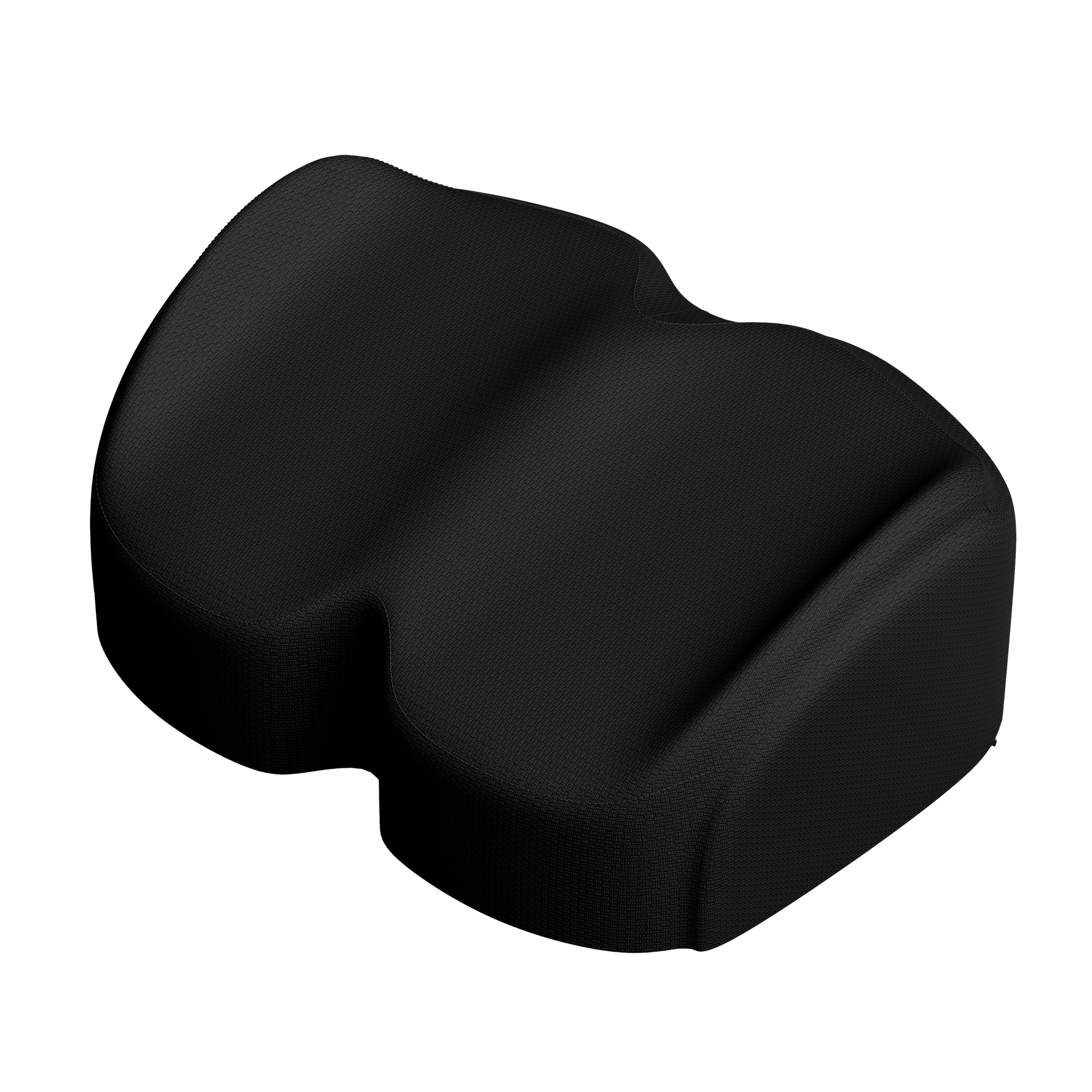
Everlasting Comfort Memory Foam Foot Rest
Memory-foam comfort pick — soft conforming surface, removable washable cover, non-adjustable 18-degree tilt. Best for barefoot or thin-slipper home-office use. Foam compresses at 12-18 months.
The Everlasting Comfort is the memory-foam pick for home-office users who work barefoot or in thin indoor slippers — a common home-office setup. Its non-adjustable tilt is approximately 18 degrees, but the memory-foam top layer is the softest surface in this comparison and noticeably better than hard plastic for users without shoe support. The foam conforms to the arch and heel and distributes pressure across the whole foot rather than concentrating it on the ball of the foot. The removable, washable cover addresses the hygiene concern that comes with shoeless desk use. The honest weakness is that memory foam compresses over time — at daily 8-hour use the surface loses roughly 30% of its initial feel within 12–18 months and remains functional but firmer. The fixed 18-degree tilt also means no adjustability if your preference changes as the day progresses.
Pros
- ✓Softest top surface in this comparison — memory foam
- ✓Cover is removable and washable for shoeless setups
- ✓Distributes pressure across arch and heel evenly
- ✓Significantly more comfortable in thin socks than bump-textured rivals
Cons
- ✗Foam loses ~30% of initial feel within 12–18 months
- ✗Fixed 18-degree tilt — no daytime adjustability
Humanscale FM300 Ergonomic Footrest
Premium long-term pick — continuous 6.5-15 cm height adjustment, dense construction, 47 cm wide. Overkill for first-time buyers; right pick for permanent multi-year ergonomic workstations.
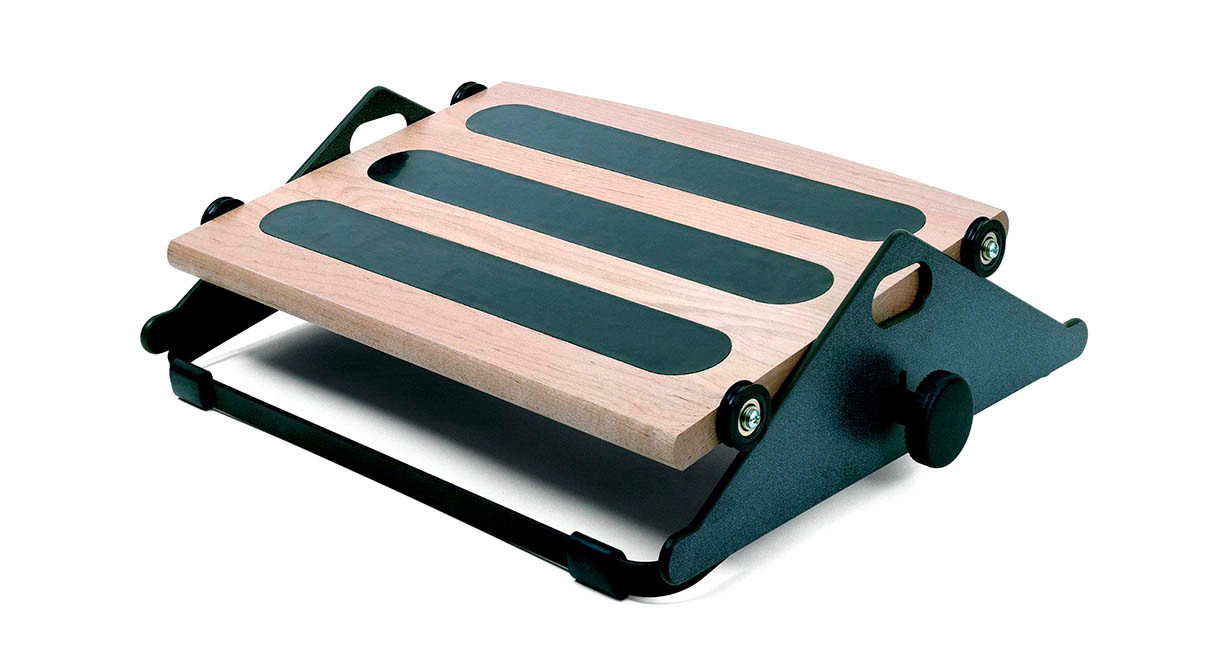
The FM300 is the premium continuously-adjustable pick — a professional ergonomics product from Humanscale, the company best known for the M8 monitor arm and the Diffrient World chair. Height adjusts continuously from 6.5 to 15 cm via a smooth locking mechanism, the slightly curved top accommodates natural foot position, and the 47 cm-wide platform is the widest in this comparison. The build quality is visibly different from the other four: the mechanism feels precise, the plastic is denser, and the unit stays exactly where you set it for years rather than drifting under repeated use. The honest weakness is that the price is disproportionate to the performance gap — the Kensington SmartFit at roughly a quarter of the cost achieves about 80% of what the FM300 delivers. The premium is paid for continuous adjustment and 10+ year build life, which matters most for buyers committing to a permanent workstation.
Pros
- ✓Continuous 6.5–15 cm height adjustment is best-in-class
- ✓47 cm-wide platform is the widest in this comparison
- ✓Build quality holds precision for a decade of daily use
- ✓Locking mechanism stays where you set it
Cons
- ✗Roughly 4x the price of the Kensington SmartFit
- ✗Overkill for first-time footrest buyers
Which one is right for you?
For first-time buyers who want one footrest that fits everyone
Kensington SmartFit Solemate Footrest
Four height/tilt positions and a 45 cm platform cover almost every user posture, and the massage-bump surface adds stimulation without committing to a rocking motion.
For desk workers who already know they fidget while sitting
Fellowes Foot Rocker Ergonomic Footrest
The fixed 20-degree rocking arc engages the calves as a circulatory pump — but only works if you actually rock, which fidgeters do unconsciously.
For buyers testing the concept on a tight budget
Mind Reader Ergonomic Foot Rest Platform
Cheapest sensible entry — solves the basic geometry at the lowest price before committing to a premium model, and light enough to bring between desks.
For home-office users who work barefoot
Everlasting Comfort Memory Foam Foot Rest
The memory-foam top is meaningfully more comfortable for shoeless or thin-slipper use, and the removable washable cover handles the hygiene side.
For permanent ergonomic workstations meant to last a decade
Humanscale FM300 Ergonomic Footrest
Continuous 6.5–15 cm adjustment and Humanscale build quality justify the premium when you know the workstation is staying put for years.
Why footrests exist and when you actually need one
A footrest exists to solve a geometry problem. Correct seated posture for computer work puts your elbows at desk height and your hips and knees at roughly 90-degree angles. For a person of average height at a standard desk (70-75 cm high), this usually works out with the seat set to a height where the feet rest flat on the floor. For shorter individuals — roughly anyone under 165 cm at a 70 cm desk — the correct keyboard height places the seat so high that the feet dangle, which shifts weight onto the underside of the thighs, compresses the popliteal artery (the blood vessel behind the knee), and creates a dull ache in the legs after 2-3 hours. A footrest brings the floor up to meet the feet.
This means footrests are not for everyone. If your feet already rest flat on the floor when your keyboard and monitor are correctly positioned, a footrest adds nothing and may actually encourage a forward-leaning slouch as you try to use it. The single most common negative review pattern across all five products in this comparison is some version of 'it was fine but I realized I didn't need it.' Before purchasing, raise your chair until your elbows are at desk height and check whether your feet are flat or dangling — if flat, skip the footrest. If dangling by more than 3-4 cm, you're the target user and the product will likely help.
What ergonomics research actually supports: foot support reduces perceived fatigue in long sitting sessions, particularly for lower-leg discomfort and numbness, but the effect on chronic lower back pain is weaker and less consistent than the marketing implies. Back pain in desk workers is driven more by chair lumbar support, monitor height, and whether you take standing breaks than by footrest use. A footrest is a useful add-on to a well-configured workstation, not a substitute for a properly adjusted chair.
Rocking motion vs. stationary platform: what the research and reviews say
The fundamental design split in this category is between rocking platforms (the Fellowes Foot Rocker and partially the Humanscale FM300) and stationary angled platforms (the Kensington SmartFit, Mind Reader, and Everlasting Comfort). The marketing for rocking models claims that active micro-movement of the feet during sitting reduces muscle fatigue by promoting circulation and engaging the calf muscles as a secondary pump. The marketing for stationary models claims that stable angled support keeps the ankles in a neutral position and eliminates the postural compensation of dangling feet.
Both claims have some support. The research base for rocking footrests is moderate — there are a handful of peer-reviewed occupational health studies showing that dynamic foot support reduces leg fatigue scores compared to static support in sessions of 2-4 hours, though the effect size is modest (roughly a 10-15% reduction in subjective fatigue on standardized scales). The confound is that people who use rocking footrests actively may also move their legs more generally, which independently reduces fatigue. For stationary platforms, the case is simpler: they solve the geometry problem directly, the effect is immediate and measurable in posture, and the placebo effect of doing something about foot positioning is real.
The practical split from reviews: rocking footrests work well for people who are aware of their feet while they sit — fidgeters, people who consciously shift position, people who use their feet expressively when thinking. They work poorly for people who forget the footrest is there once they start concentrating — those users unconsciously lock their feet on the rocking platform and it functions as a stationary angled surface they overpaid for. Stationary platforms work well for everyone who needs the height correction regardless of their work style. If you're unsure which you are, a stationary platform is the lower-risk choice.
What to look for: angle range, surface, size, and under-desk fit
Angle and height adjustment: most footrests offer between 0-30 degrees of tilt. The useful range for most people is 15-25 degrees; below 15 degrees is barely perceptible, above 30 degrees puts the foot in an uncomfortable dorsiflexed position for typing. Multi-step adjustment (the Kensington SmartFit offers four angles; the Humanscale FM300 is continuously adjustable) beats single-position models because foot preference changes during a long workday — people naturally want a steeper angle later in the day as fatigue sets in.
Surface texture: a textured, non-slip surface prevents the foot from sliding off the platform without active gripping, which would introduce new muscle tension in the lower leg. Mesh surfaces and massage-bump textures serve dual purposes — they prevent sliding and provide pressure-point stimulation to the sole of the foot, which reduces localized numbness in long sessions. Smooth hard-plastic surfaces look cleaner but perform worse. The Everlasting Comfort memory foam surface is the softest in this comparison and works well for users who wear thin socks or work barefoot, but the foam compresses and loses its feel over 12-18 months of daily use.
Under-desk fit: a standard desk is 70-75 cm high with a knee clearance of approximately 60-65 cm. Most footrests are 10-15 cm at maximum height, leaving ample clearance. The Humanscale FM300 is the tallest unit in this comparison at 15 cm maximum height — still within bounds for most desks but worth measuring if your desk has a modesty panel or a shallow keyboard tray that reduces the vertical space available. Width matters more than depth: footrests narrower than 40 cm require active foot placement and can feel constraining for people who naturally sit with feet shoulder-width apart.
Where each fits
Fellowes Foot Rocker is the rocking-motion pick for the mainstream budget. The curved base produces a consistent arc of roughly 20 degrees forward-to-back when you push with your toes, with a non-slip textured surface that prevents your feet sliding during the motion. At 43 cm wide and 29 cm deep it fits under a standard desk with room to spare. The honest weakness: the rocking arc is fixed — you can't increase or decrease the range, and users who want a stronger rock often find the 20-degree arc feels too subtle. Long-term reviews (18+ months of daily use) flag the plastic base corners showing wear marks on hardwood floors — a felt pad purchase fixes this but requires awareness that the rocker will move on hard surfaces. Fellowes Foot Rocker is the right pick if you want active rocking motion without paying a Humanscale premium, and you're already sure rocking suits your working style.
Kensington SmartFit Footrest is the adjustable-angle stationary pick. Four height settings (10-15 cm) and a matching tilt that adjusts with the height, non-slip surface with massage bumps across the top. The 'SmartFit' system uses a color-coded hand measurement to suggest your ideal height setting — a gimmick, but the four actual position options are genuinely more flexible than the single-position stationary footrests at lower price points. At 45 cm wide it's slightly wider than the Fellowes, which helps for people who sit with feet apart. The honest weakness: four positions is better than one but still coarser than the Humanscale's continuous adjustment, and the bump texture is harder than the Everlasting Comfort foam — some users find it uncomfortable in thin socks. Kensington SmartFit is the right pick if you want a stationary footrest with meaningful height adjustment and you prefer a firmer surface.
Mind Reader Footrest is the budget flat-platform pick. A single low-profile tilt of approximately 15 degrees, wide platform, minimal features. It solves the basic geometry problem — feet off the floor, angled support — without adjustment, massage features, or rocking. The unit is the lightest in this comparison and can be repositioned quickly, which matters if you share a desk or move between workstations. The honest weakness: single-position means you accept the 15-degree tilt or you don't use the product. Long-term reviews note that the plastic begins to show scratches on the surface texture within 6-12 months of daily use, which affects appearance but not function. Mind Reader is the right pick if you've never used a footrest before and want to try the concept at low cost before committing to a premium model, or if you work in a shared-desk environment where you need to bring your footrest between desks.
Everlasting Comfort Footrest is the memory-foam-surface pick for users who prioritize cushioned comfort over adjustment range. Non-adjustable tilt (approximately 18 degrees), but the memory foam top layer is the softest surface in this comparison and makes a noticeable difference for users who work barefoot or in thin indoor slippers — common in many home-office setups. The foam conforms to the shape of the foot and distributes pressure across the arch and heel, rather than concentrating it on the ball of the foot as hard-plastic platforms do. The honest weakness: memory foam compresses over time. At daily 8-hour use the surface loses roughly 30% of its initial feel within 12-18 months — still functional but noticeably firmer. The cover is removable and washable, which matters for hygiene in a shoeless home-office setup. Everlasting Comfort is the right pick for home-office users who work sockless or in thin slippers and prioritize foot comfort over height adjustability.
Humanscale FM300 is the premium continuously-adjustable pick. The FM300 is a professional ergonomics product from Humanscale, the US company best known for its Monitor Arm M8 and the Diffrient World chair. Continuously adjustable height from 6.5 to 15 cm with a smooth locking mechanism, a slightly curved top surface that accommodates natural foot position, non-slip textured surface, and a wide 47 cm platform. The build quality is visibly different from the other four: the mechanism feels precise, the plastic is denser, and the unit stays where you put it. The honest weakness: the price is disproportionate to the performance gap. The Kensington SmartFit at a quarter of the cost achieves 80% of what the Humanscale delivers — the FM300's main advantage is the continuous adjustment and the build quality, which matters for users who will use the same footrest for 5+ years. For someone changing jobs every 2-3 years or trying footrests for the first time, the FM300 premium is hard to justify. Humanscale FM300 is the right pick for users building a permanent, long-term ergonomic workstation who want to buy once and not revisit the category.
Verdict
For most desk workers trying a footrest for the first time, the Kensington SmartFit hits the right balance: four-position height adjustment, non-slip textured surface, wide enough platform for natural foot placement. The SmartFit doesn't require you to commit to a rocking style, adjusts as your preference changes during the day, and is well-documented in long-term reviews. This is where we'd start.
Step down to the Mind Reader if you want to test whether a footrest helps at all before spending more. Step sideways to the Fellowes Foot Rocker if you know you prefer active movement and rocking suits your work style. Step sideways to the Everlasting Comfort if you work barefoot or in thin slippers and cushioning matters more than adjustment. Step up to the Humanscale FM300 only if you're building a long-term ergonomic setup, you know you'll use the same desk for years, and you want the best-in-class build quality to match it.