Best Electric Grill 2026: 3 Tested & Compared
Three tabletop grills for indoor use — one electric searing grill with dishwasher-safe plates, one American 5-in-1 griddle hybrid, and one iconic fat-draining standby. Weekly usage frequency, not recipe variety, determines which spec actually matters.
Each grill was evaluated on actual cooking surface temperature at steady state, smoke output with chicken thighs and marbled beef, plate cleanup time after a full grilling session, heat recovery speed after adding cold food, and whether the portability and form factor match real apartment kitchen constraints.
Hamilton Beach Electric Indoor Searing Grill (25361)
Best overall for easy-clean indoor grilling: The Hamilton Beach 25361's standout feature is that the grill plate, lid, and drip tray all come off and go straight into the dishwasher — the easiest machine cleanup of the electric units here. The adjustable dial reaches roughly 450°F, which is hot enough for a real sear, and gives you direct control rather than a fixed preset.
Top picks ↓| Product | Price | Link |
|---|---|---|
| $89.99 | View deal → | |
| $74 | View deal → | |
| $105〜$130 | View deal → |
Top picks
Related articles


Hamilton Beach Electric Indoor Searing Grill (25361)
Electric indoor searing grill — adjustable dial up to about 450°F, fat-draining design, removable plate, lid, and drip tray that are all dishwasher-safe. Best for everyday grilling at home with easy cleanup. Smoke suppression works on lean protein but not fatty cuts at high heat.
The Hamilton Beach 25361's standout feature is that the grill plate, lid, and drip tray all come off and go straight into the dishwasher — the easiest machine cleanup of the electric units here. The adjustable dial reaches roughly 450°F, which is hot enough for a real sear, and gives you direct control rather than a fixed preset. The fat-draining design produces genuine low-smoke results with lean protein in apartment ventilation. The trade-off versus a heavier flagship is a thinner nonstick plate that loses temperature a little faster when you add cold food, so work in smaller batches for fatty cuts that need a hard initial sear.
Pros
- ✓Grill plate, lid, and drip tray are all removable and dishwasher-safe — easiest cleanup here
- ✓Adjustable dial up to about 450°F gives direct control over searing temperature
- ✓Fat-draining design keeps smoke low with lean protein in apartment ventilation
Cons
- ✗Thinner nonstick plate loses temperature faster when cold food is added
Score breakdown
| Cooking area | 118 sq in |
| Power | 1200 W |
| Temp range | 200-450 F |
| Plate type | Removable nonstick (PFAS-free) grate, dishwasher safe |
| Drip tray | Extra-large removable drip tray, dishwasher safe |
| Item weight | 8 lb |
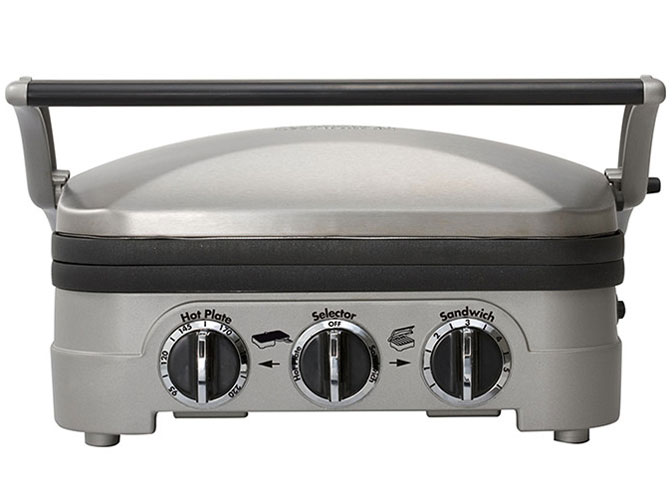
Cuisinart Griddler GR-4N
5-in-1 American griddle-grill hybrid — 1500W, removable plates switch between full grill, full griddle, half-and-half, and panini press. Highest wattage in this list. Marketed as dishwasher-safe but plate non-stick wears noticeably after 12-18 months of machine washing.
Cuisinart's 1500W and interchangeable plate system — full grill, full griddle, half-and-half, panini press — cover more cooking scenarios than any other unit here. The highest wattage in the group means faster preheating and better heat recovery. The plates are marketed as dishwasher-safe and hold up for 12–18 months of regular machine washing before non-stick wear becomes noticeable — a genuine advantage for people who prioritize convenience. The trade-off is that, like the Hamilton Beach, its plates are on the thinner side and lose temperature more quickly when cold food is added, which matters most for fatty cuts that need a hard initial sear.
Pros
- ✓1500W is the highest wattage here — fastest preheat and best heat recovery
- ✓Interchangeable plates: grill, griddle, panini press, half-and-half
- ✓Plates are dishwasher-safe (12–18 months before non-stick shows wear)
Cons
- ✗Thinner plates lose temperature faster when cold food is added
Score breakdown
| Cooking area | 200 sq in (two 11 x 9 in plates) |
| Power | 1500 W |
| Temp range | 200-425 F (griddle); Low-Sear dial (grill/panini) |
| Plate type | Removable, reversible nonstick plates, dishwasher safe |
| Drip tray | Yes (removable drip cup) |
| Item weight | 10.5 lb |
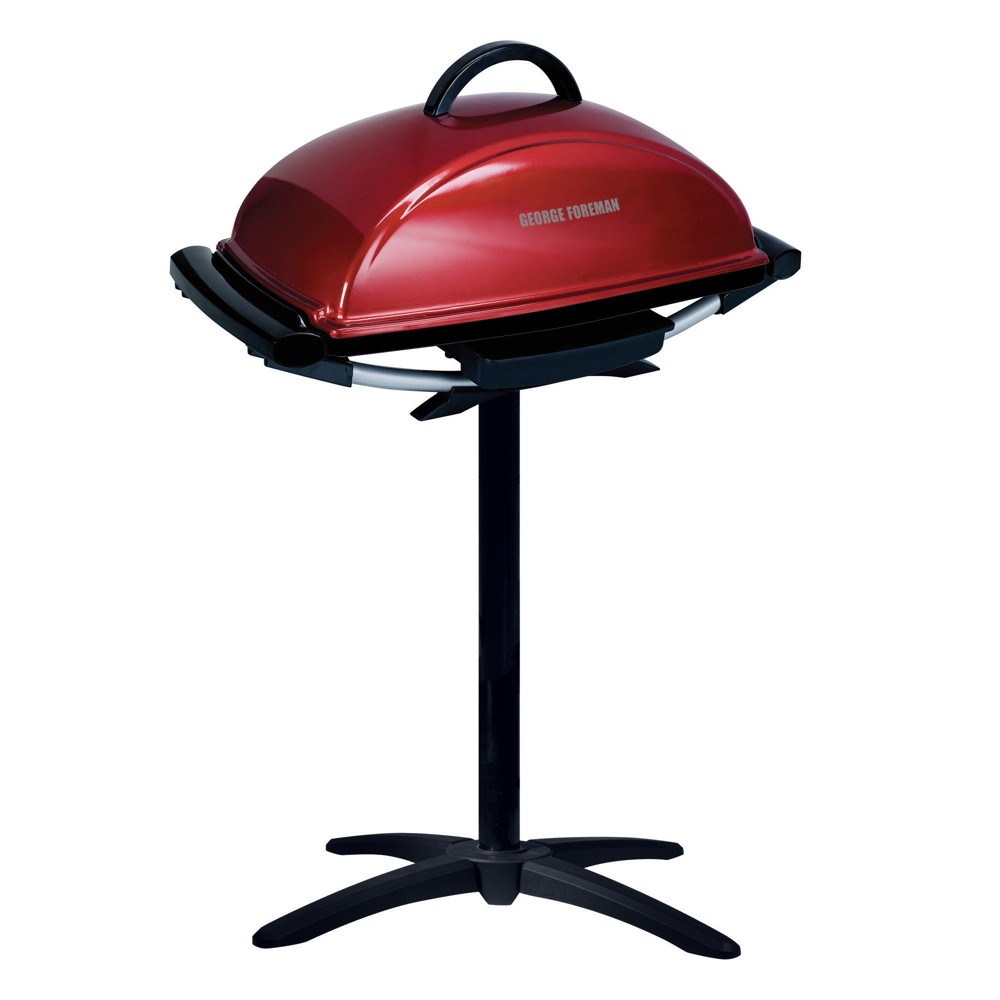
George Foreman 5-Serving Indoor Grill GFO201R
Iconic contact grill — 1360W, clamshell design cooks both sides simultaneously, fastest cook time per portion in this list. Fixed non-removable plates are the main limitation: cleanup requires wiping while warm rather than full rinse.
The clamshell contact design cooks both sides of food simultaneously — a chicken breast that takes 8 minutes on a flat grill takes 4–5 minutes on the George Foreman, and the result is juicier because the sealed steam environment within the clamshell retains moisture that a flat grill loses. At 1360W it competes on wattage with the other electric units here. The fixed non-removable plates are the chronic limitation: every session ends with wiping residue from a surface you can't take to the sink, and baked-on fat from fatty cuts is genuinely difficult to clean. This is the trade-off you accept for the speed advantage.
Pros
- ✓Clamshell contact design cuts cook time roughly in half versus a flat grill
- ✓1360W delivers genuine searing temperatures for beef and chicken
- ✓Compact footprint fits the smallest apartment kitchen counters
Cons
- ✗Fixed non-removable plates make thorough cleanup difficult — baked fat is a chronic issue
Score breakdown
| Cooking area | 200 sq in |
| Power | 1440 W |
| Temp range | Variable temperature probe, 5 heat settings |
| Plate type | Removable nonstick grill/griddle plate, dishwasher safe |
| Drip tray | Yes (sloped surface drains fat to drip tray) |
| Item weight | 15.5 lb |
Which one is right for you?
Everyday indoor grilling with the easiest cleanup
Hamilton Beach Electric Indoor Searing Grill (25361)
Grill plate, lid, and drip tray are all dishwasher-safe, and the adjustable dial reaches a real searing temperature — the lowest-effort electric option here for lean cuts in apartment conditions.
Versatile kitchen — griddle, grill, and panini daily
Cuisinart Griddler GR-4N
Interchangeable plates and 1500W make it the only unit that replaces a griddle, contact grill, and panini press — three appliances in one.
Fast weeknight cooking with minimal fuss
George Foreman 5-Serving Indoor Grill GFO201R
Clamshell contact design cuts cook time in half — the fastest route from raw chicken to done in this comparison, with no flipping required.
The 'smokeless' claim — what it actually means
Every indoor grill in this category markets itself as low smoke output or smokeless. The physics explanation is consistent across brands: keep the cooking surface below the smoke point of cooking fat (around 210-230°C for most animal fats), and you don't get smoke. The design implication is a fat-draining channel or tray that pulls grease away from the hot surface before it combusts. The Hamilton Beach 25361 and George Foreman both use variations of this mechanism. It works as described when you're cooking lean protein at moderate heat.
The smoke happens when fat reaches the cooking surface edges where there's no water-cooling, when you exceed the target temperature (some units don't regulate temperature precisely enough to stay below the fat combustion threshold during preheat spikes), or when food releases more fat than the tray geometry can catch. Chicken thighs, wagyu beef, pork belly, and mackerel all release enough fat that even the best-designed units produce a light haze in still indoor air. This is fine in a ventilated kitchen with the range hood running; it's noticeably unpleasant in a small apartment with the windows closed. The practical takeaway: 'smokeless' is a design goal that these units approach under controlled conditions, not a guarantee that you can grill kalbi at 250°C with the windows shut.
Apartments, open flame, and building rules
Apartment leases and building rules commonly restrict or prohibit open-flame cooking devices on balconies, and some rules extend to indoor-use equipment that burns combustible gas. Electric grills sidestep this category entirely.
The three electric units (Hamilton Beach, Cuisinart, George Foreman) are straightforward: they run on standard household current, produce no open flame, and are legal to use in any indoor space with adequate ventilation. None of them require a building-rule check. This is the primary practical advantage of electric tabletop grills over butane-gas alternatives for apartment residents. The Cuisinart GR-4N in particular was designed for the apartment market and has been used successfully in small kitchens for years.
Wattage, heat, and what temperature actually gets to the food
Wattage determines maximum heat output, but the relationship between rated wattage and actual cooking temperature at the food surface is not linear because of thermal mass, plate material, and temperature regulation design. The Hamilton Beach 25361 runs at about 1200 W with an adjustable dial that climbs to roughly 450°F, giving you direct control over searing temperature rather than a fixed preset. Its nonstick plate preheats quickly and the dial lets you back off the heat for delicate food.
George Foreman GFO201R runs at 1360 W with a pressed-aluminum plate and the classic clamshell contact-grill design — both the top and bottom plates cook simultaneously, which cuts cooking time roughly in half versus a flat griddle for the same food. The rated temperature goes up to 210°C, and the contact design means you need no flipping. Cuisinart GR-4N runs at 1500 W and is the highest-wattage unit in this list, with removable plates that switch between full grill, full griddle, and half-and-half configurations.
The practical implication: for searing-style grilling (beef short rib, pork belly) where you want a surface temperature above 200°C, the Hamilton Beach 25361, Cuisinart GR-4N, and George Foreman GFO201R all deliver.
Removable plates and cleaning
The single most commented-on practical aspect in long-term owner reviews is plate cleaning. Electric grills accumulate rendered fat, protein residue, and caramelized drippings — the cleaning effort per session ranges from 'rinse under the tap for 2 minutes' to 'scrub with a sponge for 20 minutes.' The determining factor is whether the plates are removable and dishwasher-compatible.
The Hamilton Beach 25361 has a removable grill plate, plus a removable lid and drip tray, all of which are dishwasher-safe — this is its standout convenience and the easiest machine cleanup among the electric units. Total post-session cleanup is a matter of pulling the parts and loading the dishwasher. Cuisinart GR-4N has removable plates marketed as dishwasher safe — the long-term reality from reviews is that the non-stick holds up in the dishwasher for 12-18 months of regular use before showing wear spots; after that, hand washing is the right approach anyway. George Foreman GFO201R has fixed non-removable plates — cleanup requires wiping with a damp cloth while the unit is warm (the manufacturer recommends a slightly damp paper towel), and residue that bakes on during cooking is the chronic complaint in owner reviews. This is the direct trade-off for the clamshell contact design's fast cooking speed.
