Best Deep Fryers 2026: Cuisinart vs T-fal vs Breville
The reason most deep fryers end up in a cupboard isn't the frying — it's the aftermath: a vat of used oil to filter, store, and dispose of, and a kitchen that smells of fry oil for two days. The fryers worth owning are the ones that make the cleanup and oil management bearable, not just the ones that fry well.
We compared each deep fryer on oil and food capacity, temperature control and recovery, oil management and cleanup, odour control, build, and price. Fryers were assessed against owner reviews and real-kitchen use, weighting accurate temperature (for crisp results) and manageable oil cleanup — the factors that determine whether a deep fryer gets used or shelved.

Cuisinart Cdf 200
Best Overall: The Cuisinart CDF-200 balances proper capacity, accurate temperature control, and manageable cleanup at a sensible price. It holds a useful ~1L of oil with a generous basket for family-sized batches of chips, chicken, or doughnuts without overcrowding (which would drop the oil temp and make food greasy), and its adjustable thermostat sets and holds the right frying temperature precisely — the key to crisp, non-greasy results.
Top picks ↓Top picks
Related articles
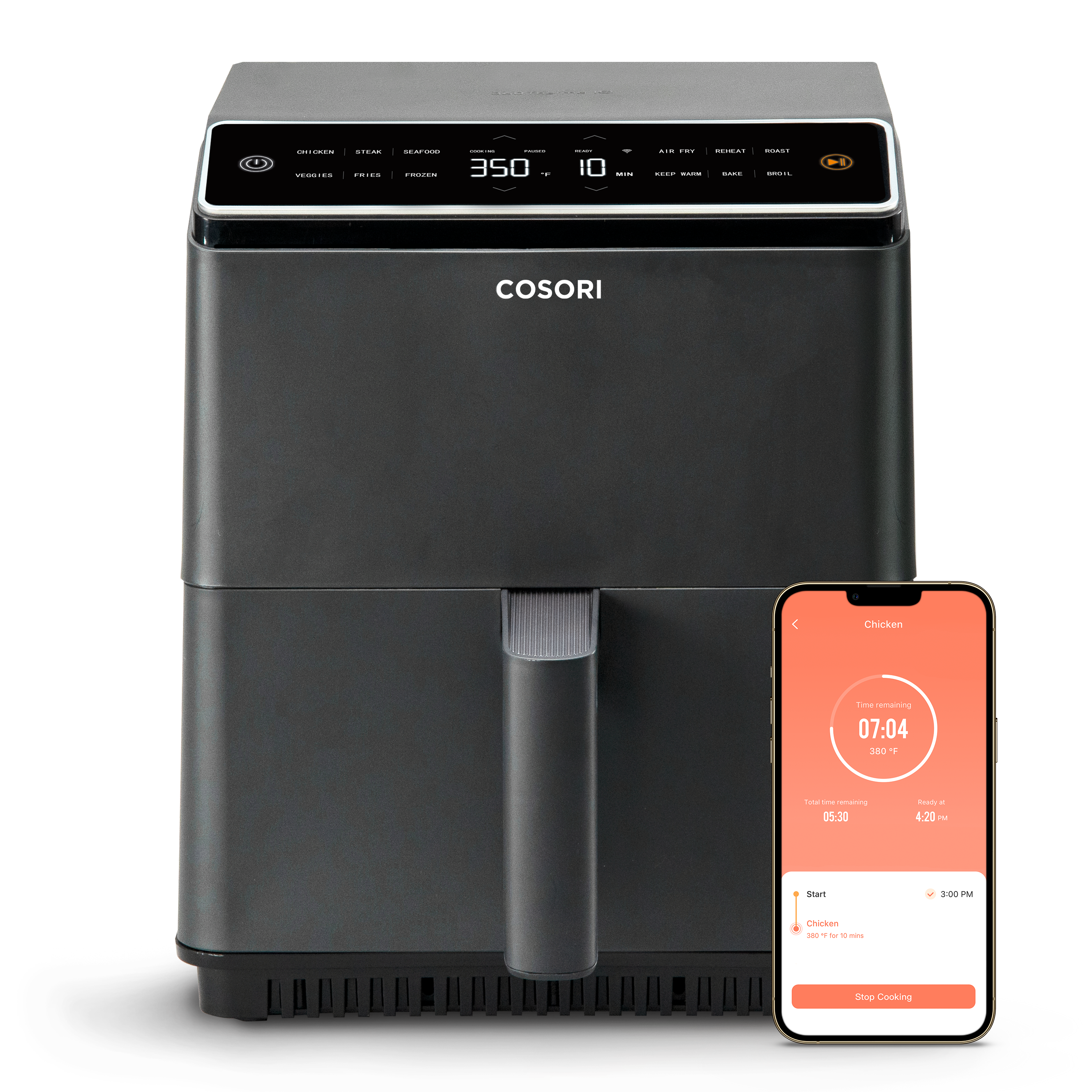


Cuisinart Cdf 200
The best all-rounder — useful ~1L capacity and a generous basket for family batches, a precise adjustable thermostat for crisp results, dishwasher-safe parts, and a brushed-stainless body with a viewing lid and odour filter. The dependable, well-priced choice for regular home deep-frying.
The Cuisinart CDF-200 balances proper capacity, accurate temperature control, and manageable cleanup at a sensible price. It holds a useful ~1L of oil with a generous basket for family-sized batches of chips, chicken, or doughnuts without overcrowding (which would drop the oil temp and make food greasy), and its adjustable thermostat sets and holds the right frying temperature precisely — the key to crisp, non-greasy results. It's well-designed for real use: parts come apart for cleaning with dishwasher-safe components, the brushed-stainless body wipes clean, and a lid with a viewing window and charcoal filter contains splatter and odour. It heats and recovers well between batches for consistency. Like all open fryers it still involves handling ~1L of hot oil to filter and store, and it takes counter space, but for capable, properly-sized, easier-than-most home frying, it's the dependable all-rounder.
Pros
- ✓Useful ~1L capacity and a generous basket
- ✓Precise adjustable thermostat for crisp results
- ✓Dishwasher-safe parts, wipe-clean stainless body
- ✓Viewing lid with a charcoal odour filter
Cons
- ✗Still involves handling ~1L of oil to filter/store
- ✗Takes real counter or cupboard space
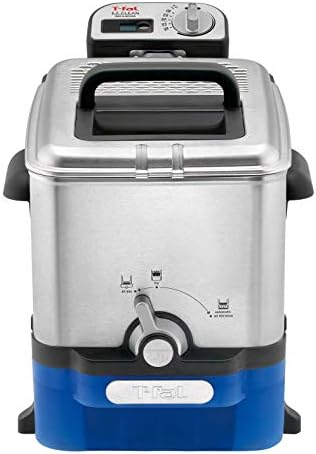
T Fal Ultimate Ez Clean
The easiest cleanup — an automatic oil filtration and draining system that filters and drains used oil into a sealed container for easy reuse or disposal at the press of a button, removing the messiest part of deep-frying. Good capacity, adjustable thermostat, dishwasher-safe parts; the pick for frequent fryers who hate oil cleanup.
The T-fal Ultimate EZ Clean is built around solving the main objection to deep fryers: the oil cleanup. Its standout is an automatic oil filtration and draining system — at the press of a button the used oil is filtered and drained into a sealed, separate container you can store in the fridge to reuse or dispose of cleanly, with no carefully pouring hot oil through a sieve and funnel. Most parts are dishwasher-safe, and the design genuinely makes the worst part of deep-frying far less of a chore. It also has good capacity, an adjustable thermostat, and an odour filter. For frequent fryers who hate oil cleanup, it's the standout — the feature transforms how often you'll actually use it. It's mid-to-premium priced, but the oil-management convenience justifies it if cleanup is what holds you back.
Pros
- ✓Automatic oil filter-and-drain to a sealed container
- ✓Makes oil reuse and disposal far easier
- ✓Dishwasher-safe parts, adjustable thermostat
- ✓Odour filter and good capacity
Cons
- ✗Mid-to-premium price
- ✗The oil system adds some bulk and parts

Presto Frydaddy
The compact budget pick — a tiny, no-frills fryer using minimal oil (4 cups) with a fixed preset temperature, a small footprint, dead-simple operation, and a very low price. Fine for one or two people and occasional basic frying; no adjustable temperature or large batches.
The Presto FryDaddy is the compact, simple, budget pick for small households and occasional frying. It's a tiny, no-frills fryer using a small amount of oil (its '4 cups of oil, 4 servings' design) with no controls — you plug it in and it maintains a preset frying temperature automatically. Its simplicity is the appeal: minimal oil to buy and dispose of, a small footprint that stores easily, a very low price, and dead-simple operation with nothing to set, plus a scoop to lift food out. The trade-offs are no adjustable temperature (one fixed temp, fine for basics but not varied or precise frying) and small capacity (no large batches). But for cheap, simple, small-scale frying — a single person, small kitchen, or occasional chips and doughnuts — it's the easy, inexpensive choice that won't intimidate or take over your kitchen.
Pros
- ✓Tiny footprint, minimal oil to manage
- ✓Dead-simple, no controls — just plug in
- ✓Very low price
- ✓Includes a scoop; great for small households
Cons
- ✗Fixed temperature — no adjustment
- ✗Small capacity, no large batches

Breville Smart Fryer
The premium performance pick — genuinely accurate, consistent temperature control with food presets and excellent recovery between batches for restaurant-quality crispness, plus superb build and good splatter/odour control. For the serious home cook who fries often and wants the best results.
The Breville Smart Fryer is the premium pick for precision and quality results above all. It offers genuinely accurate, consistent temperature control with preset programs for different foods and the ability to dial in exact temperatures, plus excellent temperature recovery between batches so adding cold food doesn't tank the oil temp and ruin crispness. The build quality is superb, the capacity is generous, and it has thoughtful features like a viewing window and good splatter and odour control. It's the choice for the serious home cook who fries often and wants restaurant-quality, consistently crisp results with precise control, and who'll pay a premium for the best frying performance and build. It doesn't have the T-fal's automatic oil system, and it's the priciest here, but for outright frying quality and temperature precision, it leads.
Pros
- ✓Accurate temperature control with food presets
- ✓Excellent recovery between batches for crispness
- ✓Superb build quality, generous capacity
- ✓Good splatter and odour control
Cons
- ✗Priciest option here
- ✗No automatic oil-filtration system like the T-fal

Hamilton Beach Deep Fryer
The high-capacity value pick — a large oil capacity (~2L+) and big or dual baskets for frying bigger batches (or two foods at once) at an affordable price, with an adjustable thermostat and dishwasher-safe parts. Functional rather than premium, but the choice for larger families.
The Hamilton Beach Deep Fryer is the high-capacity value pick for larger households or bigger batches. It typically offers a large oil capacity (~2L or more) and a big basket — or dual baskets on some models so you can fry two foods at once — at an affordable price, with an adjustable thermostat, a viewing lid, and removable dishwasher-safe parts. For a family that fries regularly and needs enough chips or chicken for everyone in fewer batches, the larger capacity is the draw, well below premium-fryer prices. The build is functional rather than premium and it lacks the T-fal's automatic oil system, but for affordable high-capacity frying with proper temperature control, it delivers. It's the pick when you regularly cook for several people and don't want to fry in many small batches.
Pros
- ✓Large ~2L+ capacity, big or dual baskets
- ✓Adjustable thermostat and viewing lid
- ✓Affordable for the capacity
- ✓Removable dishwasher-safe parts
Cons
- ✗Functional rather than premium build
- ✗No automatic oil-filtration system
Which one is right for you?
For regular family deep-frying
Cuisinart Cdf 200
Proper capacity, precise temperature control for crisp results, and easier-than-most cleanup at a sensible price make it the dependable all-rounder.
For hating the oil cleanup
T Fal Ultimate Ez Clean
An automatic system filters and drains used oil into a sealed container at the press of a button, removing the messiest part of deep-frying.
For the best frying results
Breville Smart Fryer
Accurate temperature control with presets and excellent recovery between batches deliver consistently crisp, restaurant-quality results for the serious cook.
For small households on a budget
Presto Frydaddy
A tiny, simple fryer using minimal oil at a very low price is the easy choice for one or two people and occasional basic frying.
For larger families and big batches
Hamilton Beach Deep Fryer
Large capacity and often dual baskets at an affordable price let you fry enough for everyone in fewer batches.
Top pick: Cuisinart CDF-200
The Cuisinart CDF-200 is the best deep fryer for most home cooks because it balances proper capacity, accurate temperature control, and manageable cleanup at a sensible price. It holds a useful amount of oil (around 1 litre) and food, with a generous frying basket that handles family-sized batches of chips, chicken, or doughnuts without overcrowding (overcrowding drops the oil temperature and makes food greasy). Its adjustable thermostat lets you set and hold the right frying temperature precisely — the single most important factor for crisp, non-greasy results, since oil that's too cool soaks into the food.
It's well-designed for real use: the components — basket, lid, and the dishwasher-safe parts including the removable oil container on many models — come apart for cleaning, the brushed stainless body wipes clean and looks good on a counter, and a lid with a viewing window and a charcoal filter helps contain splatter and odour during frying. It heats up reasonably quickly and recovers temperature well between batches, which keeps results consistent. For someone who wants a capable, properly-sized deep fryer that fries well and isn't a nightmare to clean, it's the dependable all-rounder.
The honest caveats: like all open deep fryers it still involves handling about a litre of hot oil that you'll need to filter and store or dispose of (there's no avoiding oil management entirely), and it takes up real counter or cupboard space. But for the best balance of capacity, precise temperature control, easier-than-most cleanup, and value, the Cuisinart CDF-200 is the standout for regular home deep-frying.
Easiest cleanup and the premium pick: T-fal Ultimate EZ Clean and Breville Smart Fryer
The T-fal Ultimate EZ Clean is the pick for anyone whose main objection to deep fryers is the oil cleanup, because it's built around solving exactly that. Its standout feature is an automatic oil filtration and draining system: at the press of a button (or via a built-in mechanism), the used oil is filtered and drained into a sealed, separate container that you can store in the fridge and reuse, or dispose of cleanly — no more carefully pouring hot oil through a sieve and funnel. Most of its parts are dishwasher-safe, and the design genuinely makes the worst part of deep-frying — dealing with the oil afterward — far less of a chore. It also has good capacity, an adjustable thermostat, and an odour filter. For frequent fryers who hate oil cleanup, it's the standout.
The Breville Smart Fryer is the premium pick for someone who wants precision and quality results above all. It offers genuinely accurate, consistent temperature control with preset programs for different foods and the ability to dial in exact temperatures, plus excellent temperature recovery between batches (so adding cold food doesn't tank the oil temp and ruin crispness). The build quality is superb, the capacity is generous, and it has thoughtful features like a viewing window and good splatter and odour control. It's the choice for the serious home cook who fries often and wants restaurant-quality, consistently crisp results with precise control, and who's willing to pay a premium for the best frying performance and build.
Choose between them by your pain point. The T-fal EZ Clean wins decisively if oil cleanup and reuse is what puts you off deep-frying — its automatic filter-and-drain system is genuinely transformative. The Breville wins on outright frying performance, temperature precision, recovery, and build quality for the cook who prioritises results. Both are mid-to-premium priced; the T-fal solves the cleanup problem, the Breville maximises the frying.
The compact and the high-capacity picks: Presto FryDaddy and Hamilton Beach
The Presto FryDaddy is the compact, simple, budget pick for small households and occasional frying. It's a tiny, no-frills fryer that uses a small amount of oil (its '4 cups of oil, 4 servings' design) and has no controls at all — you just plug it in and it maintains a preset frying temperature automatically. Its simplicity is the appeal: minimal oil to buy and dispose of, a small footprint that stores easily, a very low price, and dead-simple operation with nothing to set. It even comes with a scoop to lift food out. The trade-offs are no adjustable temperature (it fries at one fixed temp, fine for basics but not for varied or precise frying) and small capacity (it can't do large batches). But for cheap, simple, small-scale frying — a single person, a small kitchen, occasional chips or doughnuts — it's the easy, inexpensive choice.
The Hamilton Beach Deep Fryer is the high-capacity value pick for larger households or anyone who fries bigger batches. It typically offers a large oil capacity (around 2 litres or more) and a big basket — or even dual baskets on some models so you can fry two foods at once — at an affordable price. It has an adjustable thermostat for temperature control, a viewing lid, and removable, dishwasher-safe parts for cleaning. For a family that fries regularly and needs to cook enough chips or chicken for everyone in fewer batches, the larger capacity is the draw, at a price well below the premium fryers. The build is functional rather than premium, and it doesn't have the T-fal's automatic oil system, but for affordable high-capacity frying, it delivers.
Choose by household size and frequency. The Presto FryDaddy wins for the smallest households and occasional, simple frying with minimal oil and the lowest price. The Hamilton Beach wins for larger families and bigger batches at an affordable price, often with dual baskets. Neither has the premium temperature control of the Breville or the oil-management cleverness of the T-fal, but they bracket the range on size — tiny-and-simple versus large-and-affordable.
How to choose: capacity, temperature control, oil management, and odor
Size the capacity to your household and batch needs. Capacity is measured in oil volume (litres) and basket size, and it determines how much you can fry at once: a small fryer (Presto FryDaddy, ~4 cups oil) suits one or two people and occasional small batches, a mid-size fryer (Cuisinart, ~1 litre) handles a family's chips or chicken, and a large fryer (Hamilton Beach, 2L+, sometimes dual-basket) suits big families and entertaining. Crucially, don't overcrowd the basket regardless of size — adding too much food at once drops the oil temperature and makes everything greasy and soggy, so size up if you regularly fry for several people rather than cramming a small fryer.
Prioritise accurate temperature control, because it's what determines crisp versus greasy results. The key to good deep-frying is getting the oil to the right temperature and keeping it there: oil that's too cool gets absorbed into the food (greasy, soggy results), while the right temperature seals the surface for a crisp exterior. An adjustable thermostat (Cuisinart, T-fal, Hamilton Beach, and especially the precise Breville) lets you set the correct temperature for different foods, and good temperature recovery — how fast the oil reheats after you add cold food — keeps results consistent across batches (the Breville excels here). A fixed-temperature fryer (Presto) is fine for basics but limits you. If you fry varied foods or want the best results, prioritise precise, recovering temperature control.
Weigh oil management and odour, the real-world chores that decide whether you keep using it. Every deep fryer requires handling a quantity of oil — heating it, and then filtering, storing (for reuse), or disposing of it — and this is the single biggest deterrent to using a deep fryer regularly. Fryers that make this easier are worth a lot: the T-fal EZ Clean's automatic filter-and-drain-to-a-sealed-container system is the standout, while removable, dishwasher-safe parts (most here) and a drainable oil container ease cleanup generally. Odour is the other factor — frying smells linger, so a fryer with a charcoal/odour filter and a well-sealing lid (and frying near good ventilation) helps contain it. Be realistic that an air fryer is the cleaner, oil-free alternative for many foods if you mainly want 'fried' texture without the oil hassle; choose a true deep fryer when you genuinely want deep-fried results, and prioritise the one whose cleanup and oil management you'll actually tolerate.