Pickly

Best Dash Cam 2026: 4K Front, 2-Channel, and Parking Mode Compared

Five dash cams priced from roughly 8,000 yen to 70,000 yen, compared on the factors that actually determine whether a dash cam does its job: low-light image quality, parking mode reliability, front-only vs two-channel coverage, and what happens to footage in a collision. Resolution numbers and sensor brand names fill spec sheets, but the questions worth answering before buying are more direct: does the footage hold up as evidence in bad lighting? does the parking mode drain the battery without hardwire? is 4K actually meaningful at dash cam shooting distances and viewing sizes? We cover those honestly before recommending anything. We did not conduct independent sensor calibration testing or independent night-vision measurement. We sourced resolution specs, sensor types, GPS features, and parking mode implementations from manufacturer documentation, cross-referenced against long-term owner reviews on Rakuten Ichiba and Amazon Japan, and drew on reporting from Japanese dash cam specialist media and international sources. Pricing references Japanese market as of May 2026.

Published 2026-05-09

Top picks

  • #1

    Vantrue E1 Lite

    Compact 1080p front-only dash cam at an entry-level price. Discreet form factor, adequate daylight footage. Weakness: low-light trails STARVIS cameras; no GPS; parking mode needs hardwire kit sold separately.

    Compact 1080p front-only dash cam at an entry-level price. Small form factor for discreet mounting, adequate daylight image quality, Sony sensor not confirmed (unspecified in official docs). Clear weakness: low-light performance noticeably trails STARVIS-equipped cameras; no GPS; no parking mode hardwire kit included; recording quality at night or in parking garages is mediocre compared to higher-tier options. Best for budget-conscious buyers who primarily drive in daylight and do not need parking mode.

    Direct affiliate links not yet available in your region.

    Search on Amazon
  • #2

    BlackVue DR970X-2CH

    4K front + 1080p rear two-channel system with cloud connectivity and supercapacitor (superior summer heat tolerance). Weakness: highest price at ¥60,000–¥70,000; cloud advanced features need subscription; more complex installation.

    4K front + 1080p rear two-channel system with cloud connectivity, LTE option (DR970X-2CH LTE variant), and supercapacitor instead of LiPo battery for superior Japanese-summer heat tolerance. BlackVue Cloud enables live remote viewing and crash notification. Clear weakness: the highest price in this comparison at ¥60,000–¥70,000 range; cloud features require a subscription for advanced functionality; installation is more complex than front-only cameras; 4K front resolution advantage over 1080p STARVIS alternatives is meaningful mainly for detail review, less so for basic plate capture at night.

    Direct affiliate links not yet available in your region.

    Search on Amazon
  • #3

    Kenwood DRV-A601W

    4K front with Sony STARVIS sensor — best low-light front-only image quality in this comparison. Built-in GPS. Strong Japanese dealer/service network. Weakness: front-only; parking mode needs separate hardwire kit; rear camera add-on raises total cost significantly.

    4K front with Sony STARVIS sensor — the combination that produces the best night-time and low-light footage of the front-only cameras in this comparison. GPS built-in for speed and location stamping. Popular in Japan with strong dealer and service network presence. Clear weakness: front-only (no rear camera); parking mode requires separate hardwire kit; the companion rear camera add-on increases total cost significantly; Kenwood's parking mode implementation is less sophisticated than BlackVue's cloud-based system.

    Direct affiliate links not yet available in your region.

    Search on Amazon
  • #4

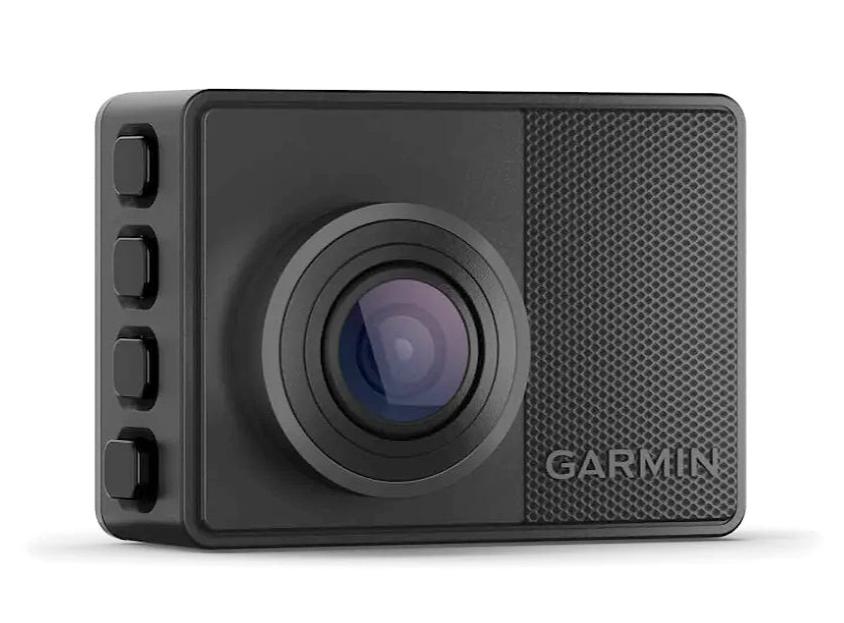
    Garmin Dash Cam 67W

    Wide 180° FOV captures lane-change conflicts and side-impact scenarios. Compact, voice control, GPS, Travelapse mode. Weakness: front-only; 180° wide-angle introduces edge barrel distortion affecting plate readability at sides; no cloud connectivity.

    Wide 180-degree field of view captures lane-change conflicts and side-impact scenarios that narrower cameras miss. Compact design, voice control, built-in GPS, Travelapse mode for journey playback. Clear weakness: 1440p resolution is sharper than 1080p but below true 4K; the very wide 180-degree FOV produces barrel distortion at the edges of the frame that can affect plate readability at the sides; front-only; Garmin Drive app required for GPS log review; no cloud connectivity.

    Direct affiliate links not yet available in your region.

    Search on Amazon
  • #5

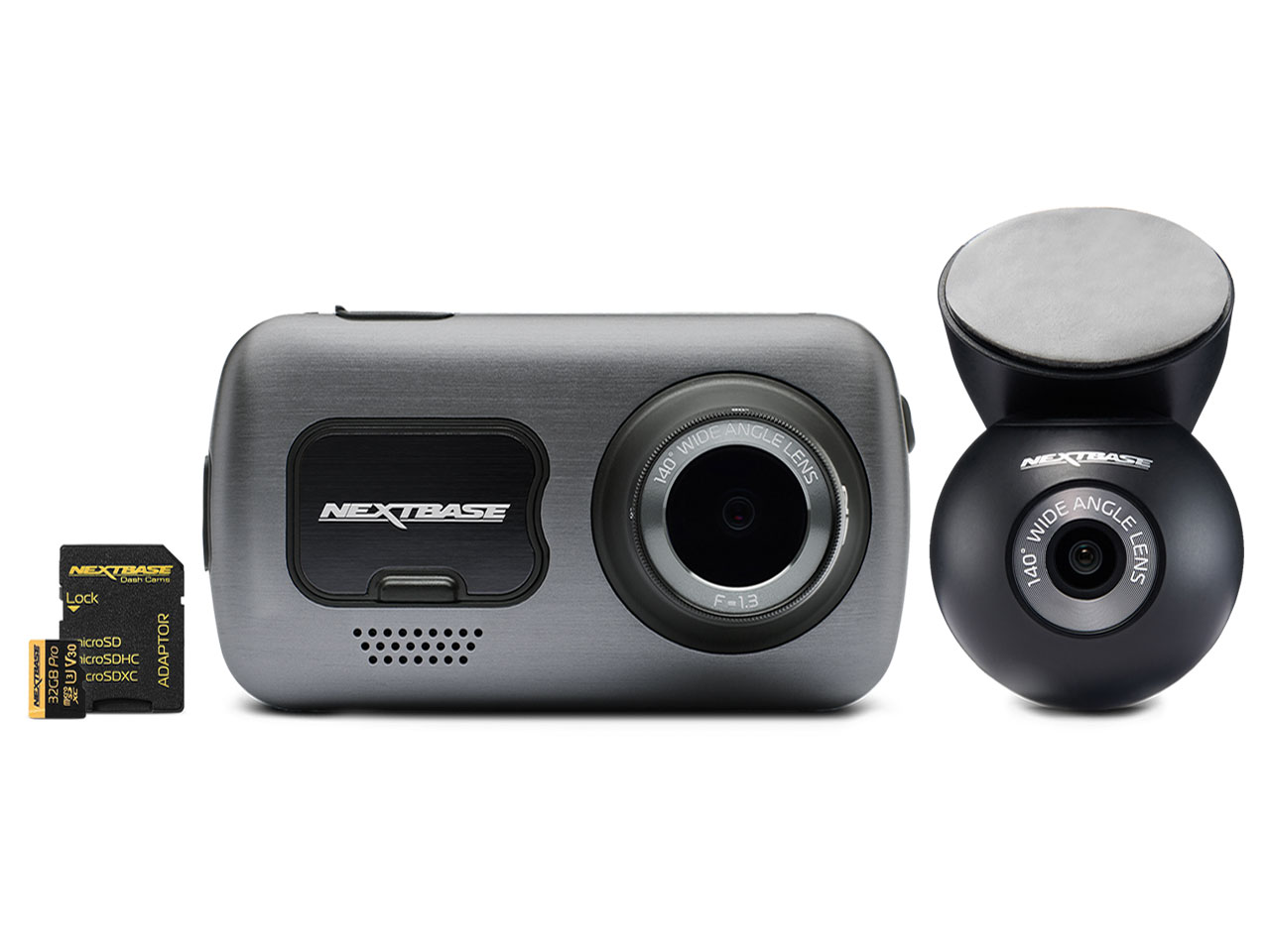
    Nextbase 622GW

    4K with image stabilization and emergency SOS (contacts emergency services on significant unacknowledged impact). Built-in GPS. Weakness: emergency SOS needs Nextbase account and data plan; parking mode needs separate hardwire kit; Click&Go mount is proprietary.

    4K resolution with image stabilization (Nextbase's 'image stabilization' addresses vibration blur in rough-road footage), emergency SOS feature (contacts emergency services on significant impact detection if not acknowledged by driver), built-in GPS. Clear weakness: emergency SOS requires a Nextbase account and active data subscription for full functionality; parking mode implementation requires a separate Nextbase hardwire kit; the Click&Go mount system is proprietary and accessories are Nextbase-specific; image stabilization reduces some but not all vibration blur and does not match a gimbal-stabilized camera in rough conditions.

    Direct affiliate links not yet available in your region.

    Search on Amazon

How we compared

We did not run independent light-sensitivity measurements with calibrated lux meters or independent GPS accuracy testing with RTK-corrected reference equipment. Proper dash cam sensor comparison requires controlled lighting environments, a calibrated photometric setup, and consistent motion profiles — none of which is reproducible at a content-production level. Instead, we reviewed manufacturer technical specifications, cross-referenced with in-depth tests from Japanese dash cam media including minkara, Response.jp, and Autoprove, aggregated long-term owner reviews from Rakuten Ichiba and Amazon Japan, and incorporated reporting from international sources including The Wirecutter and DashCamTalk.

Four real-world factors do most of the useful analytical work in this category. First, low-light sensor performance — the combination of sensor size, aperture (f-number), and whether Sony STARVIS or similar back-illuminated CMOS technology is used, which determines how usable footage is at night and in parking garages. Second, parking mode implementation — whether the camera requires a constant 12V hardwire kit to stay on, whether it uses impact-triggered buffered recording or time-lapse, and how it handles battery protection. Third, front-only vs two-channel decision — rear camera adds both coverage and complexity (cable routing, dual recording quality trade-offs, price). Fourth, storage reliability — loop recording, card endurance, manufacturer-recommended card specifications, and what actually causes dash cam cards to fail.

Resolution vs low-light sensor — the tradeoff that actually matters

The marketing emphasis on 4K resolution in dash cameras is largely misplaced. The primary use case for dash cam footage is incident documentation — reading license plates, recording lane positions, capturing signal states — and for this purpose, a 1080p camera with a good low-light sensor often produces more useful footage than a 4K camera with a small, high-pixel-count sensor that struggles in dim conditions.

The practical limit: a front-facing dash cam typically captures a wide-angle view (120–180 degrees) of the road ahead. Even at 4K, license plate recognition at 15+ meters in poor lighting depends more on sensor sensitivity and aperture than on pixel count. At the 1080p vs 4K level, the relevant question is whether you can read the plate in the footage under typical conditions — and a 1080p Sony STARVIS sensor at f/1.8 routinely outperforms a 4K small sensor at f/2.8 in the drizzly-night and parking-garage scenarios that matter most for insurance claims.

Sony STARVIS is a back-illuminated CMOS (BI-CMOS) sensor architecture used by Sony, originally designed for security camera applications, that delivers significantly better low-light performance than conventional front-illuminated CMOS sensors at the same pixel density. Cameras in this comparison that use STARVIS sensors: Kenwood DRV-A601W (STARVIS confirmed), Garmin Dash Cam 67W (Sony STARVIS in its sensor stack), Nextbase 622GW (similar BI-CMOS architecture). The BlackVue DR970X-2CH uses a Sony sensor but does not explicitly confirm STARVIS grade in official documentation as of May 2026. The Vantrue E1 Lite uses an unspecified 1080p sensor — the trade for the low price point.

Parking mode — power options and what actually works

Parking mode is the most misunderstood feature in dash cam marketing. Three distinct implementations exist, and they behave very differently in practice.

Impact-triggered parking mode activates on G-sensor shock detection. The camera is typically in a low-power standby state, wakes on impact, and records a fixed buffer (usually 10–30 seconds before and after the trigger). This works for obvious hits and scrapes but misses slow-speed brush events below the G-sensor threshold, and false-triggers on rough roads, heavy trucks passing nearby, or door slams from adjacent parked cars. All five cameras in this comparison support impact-triggered mode in some form.

Time-lapse parking mode records a low-frame-rate video of the parking area continuously — typically 1 frame per second — consuming much less power than real-time video. This provides visual documentation of events that impact-mode would miss (shopping cart nudges, the driver who opens their door into your car and walks away), but the 1fps footage is not suitable for reading plates on moving vehicles passing through.

Real-time motion-triggered parking mode records full-frame-rate video triggered by any motion in the field of view. This is the most useful version but consumes significant power — typically 200–400 mA — and cannot run sustainably off the vehicle's main battery without a hardwire kit with low-voltage cutoff protection. Running a dash cam's real-time motion-trigger mode off the OBD port or a simple 12V adapter will drain a typical car battery within 6–12 hours depending on battery capacity, ambient temperature, and camera power draw. A proper hardwire kit with an adjustable low-voltage cutoff (typically settable to 11.8–12.1V depending on battery age) is required for extended parking mode use. Blackvue's Power Magic Pro and Vantrue's equivalent are dedicated battery protection devices. The Nextbase 622GW supports a Nextbase Click&Go mount system that can receive power from a dedicated rear-view mirror mount connection.

Battery temperature note relevant to all parking modes in Japanese conditions: extreme heat (car interiors reaching 70–80°C in summer, which is common in direct-sun parking in Japan) accelerates lithium battery degradation. Most dash cams use a small internal supercapacitor or LiPo battery as a power buffer. Supercapacitor-equipped cameras (BlackVue DR970X-2CH uses a supercapacitor rather than a battery) survive high-temperature parked conditions better than LiPo-equipped cameras. This is a genuine longevity consideration for Japanese summer parking use.

Front-only vs two-channel — decision framework

The rear camera question is straightforward in theory — rear-end collisions are the most common type of accident that involves another vehicle, and having footage from the rear is clearly valuable for insurance claims and fault determination. In practice, the decision involves real trade-offs worth thinking through explicitly.

A two-channel front-rear system adds cable routing through the headliner, a second camera mounted at the rear window or license plate area, and a second recording stream that either shares the front camera's storage card or requires a separate card depending on the system. The BlackVue DR970X-2CH uses a single integrated system with the rear unit connected via a cable — BlackVue's cable routing through the headliner is generally considered clean but is a 30–60 minute installation job. The Kenwood DRV-A601W in this comparison is front-only; users who want Kenwood's sensor quality with rear coverage would need a separate rear add-on.

For city driving in Japan where rear-end collisions are the primary risk, two-channel coverage is the practical recommendation. For highway driving where lane-change disputes are more common, a wide-angle front camera matters more than a rear camera. For parking mode documentation, a rear camera adds value for hit-and-run events on the rear of the vehicle. The cost trade-off: BlackVue DR970X-2CH with integrated 4K+2CH is ¥60,000–¥70,000 range versus Garmin Dash Cam 67W front-only at ¥20,000–¥25,000 — a meaningful price gap for the rear coverage.

Loop recording and storage — what actually causes failures

Loop recording is a fundamental feature of all dash cameras — when the storage card fills, the oldest footage is overwritten. The practical question is not whether loop recording works (it does on all cameras in this comparison) but how reliably the camera handles the card over months of continuous heat, vibration, and write cycles.

MicroSD cards in dash cams fail more often and sooner than in most other consumer applications because the write cycles are continuous, the temperature range is extreme (below-freezing winter starts in Hokkaido to 70°C+ parked interiors in Osaka summer), and the cards are rarely powered down cleanly — a sudden engine cut can interrupt a write cycle and corrupt the card or the filesystem. All manufacturers recommend using U3 (Class 10, UHS Speed Class 3) or higher rated cards, and most now specify high-endurance microSD cards designed for dashcam and security camera use — Samsung PRO Endurance, Western Digital High Endurance, Transcend High Endurance. Standard SanDisk Ultra or low-grade cards from no-name brands fail within 3–6 months in continuous dash cam use.

Card capacity: a 64 GB U3 high-endurance card holds approximately 4–6 hours of 4K footage or 8–10 hours of 1080p footage before loop recording begins overwriting. For parking mode use, capacity matters more — overnight time-lapse generates less data than real-time motion recording, and real-time parking mode at higher resolutions can fill a 64 GB card in under 12 hours at full quality. Most users running parking mode for extended periods prefer 128–256 GB cards.

Formatting note: all dash cams in this comparison benefit from periodic formatting of the storage card (every 2–4 weeks in heavy use) using the camera's own formatting function rather than a PC formatter. Dash cam firmware often uses custom FAT32 or exFAT partitioning that PC-formatted cards do not replicate correctly.

articles.best-dash-cam-2026.conclusion

Frequently asked questions

Is 4K worth it in a dash cam?
For most users, no — and here is the specific reason: 4K resolution provides its clearest benefit in license plate readability at distance, but dash cam mounting positions (windshield mount, forward-facing) mean the plate of the car directly ahead fills a small fraction of the frame, and plate readability at 15+ meters in rain or at night depends more on sensor sensitivity and aperture than on 4K pixel density. A 1080p Sony STARVIS camera at f/1.8 routinely captures more readable plate footage in low light than a 4K camera with a smaller sensor at f/2.8. Where 4K genuinely adds value: if you regularly review footage in detail to document lane markings, sign positions, or multi-vehicle interactions — and you play back on a 4K monitor — the additional detail is real. For basic incident documentation and insurance claims, 1080p with a good sensor is sufficient and produces smaller files for easier reviewing.
Does parking mode need to be hardwired?
For extended real-time motion-trigger parking mode, yes — hardwiring with battery protection is required. Running a dash cam's real-time parking mode from the OBD port or ACC socket will drain a typical 60Ah car battery in 6–12 hours. A hardwire kit with a low-voltage cutoff set to 11.8–12.0V (adjustable by battery age) is the standard solution. For basic impact-triggered parking mode only, the camera can run off the ACC socket — it only wakes on G-sensor trigger and the standby power draw is low enough that typical parking durations (8 hours overnight) do not meaningfully drain the battery. Time-lapse parking mode is similarly manageable on ACC power. The key decision: if you want real-time motion detection during parking to catch slow-speed events like shopping carts and door dings, plan for a hardwire installation.
Should I get front-only or front-and-rear?
In Japan, rear-end collisions are the most common accident type involving another vehicle, so rear footage is genuinely useful for insurance claims. Two-channel coverage is worth the additional cost if: you regularly drive in dense city traffic where rear-end risk is high, you park in busy lots where hit-and-run events are common, or you want complete coverage for any fault dispute. Front-only is adequate if: your primary concern is documenting what happens ahead of you (red-light runners, sudden stops, lane conflicts), you do not frequently park in high-risk areas, or the installation complexity and cost of two-channel routing is not worthwhile. Front-only cameras like the Garmin Dash Cam 67W and Kenwood DRV-A601W offer excellent front-facing image quality at a lower price point than two-channel systems.
How should I manage heat in a Japanese summer?
Car interior temperatures in Japan during July and August can reach 70–80°C in direct sun, which is at or above the rated operating temperature of most lithium-polymer batteries used in dash cams. The practical effects: LiPo batteries degrade significantly faster when repeatedly exposed to temperatures above 60°C — a dash cam that lasted two years with normal battery degradation in mild climates may lose 50% of its battery capacity within 6–12 months in Japanese summer parking conditions. Mitigation approaches: choose a camera with a supercapacitor rather than a LiPo battery (BlackVue DR970X-2CH uses a supercapacitor; this is a genuine summer reliability advantage), use a sun shade to reduce interior temperatures, park in shaded or underground parking when possible, and check the manufacturer's specified operating temperature range. Most manufacturers rate operating temperature to 60°C or 70°C; sustained exposure above that rated range voids warranty coverage.
What memory card should I use?
Use a high-endurance microSD card rated U3 or higher — specifically cards designed for dash cam and security camera applications. Samsung PRO Endurance, Western Digital High Endurance, and Transcend High Endurance are the commonly recommended options. Avoid standard cards (SanDisk Ultra, Lexar standard class 10) — they are not rated for continuous write cycles and typically fail within 3–6 months in dash cam use. Minimum 64 GB for a front-only camera; 128 GB or 256 GB for a two-channel system or if you run parking mode. Format the card using the camera's built-in format function (not a PC) every 2–4 weeks under heavy use.
Can dash cam footage actually help with insurance claims in Japan?
Yes, and increasingly so. Japanese insurance companies and traffic courts now routinely accept dash cam footage as evidentiary documentation for fault determination in accidents. The practical requirements for footage to be useful: the recording must clearly show the time, date, and GPS location of the incident (built-in GPS logging is valuable here — Kenwood DRV-A601W, Garmin Dash Cam 67W, Nextbase 622GW, and BlackVue DR970X-2CH all include GPS); the footage must be legible enough to confirm vehicle positions, signals, and — when possible — license plate numbers. Footage from cameras without GPS can still be used but requires the driver to provide corroborating location information. Some Japanese insurance providers offer premium discounts for policyholders with dash cam installations — verify with your specific insurer.