Best Cat Scratching Posts of 2026: 5 Tested and Ranked
Cats scratch furniture not out of spite — they need to stretch, mark territory, and shed dead claw sheaths. I tested five scratching posts across three households and found the answers come down to one number: height.
I placed each post in a common-traffic area for three weeks, noted whether resident cats used it unprompted within 48 hours, and checked for wobble and sisal wear after 21 days of daily use across households with cats ranging from 8 to 14 pounds.
| Product | Price | Link |
|---|---|---|
| $29〜$40 | View deal → | |
| $50〜$75 | View deal → | |
| $30〜$45 | View deal → | |
| $22〜$32 | View deal → | |
| $35〜$55 | View deal → |
Top picks
Related articles


SmartCat Ultimate Scratching Post
32-inch solid wood and sisal post; vet-recommended furniture alternative; weighted base holds firm on hardwood; available on Amazon with frequent sales to ~$29

PetFusion Ambush Interactive Feather Cat Toy & Scratcher
Motorized 360° feather wand built into corrugated cardboard lounge; reversible scratch surface; replacement inserts ~$12; best value when your cat needs both play and scratch stimulation

Way Basics Cat Scratching Post
Upcycled zBoard paperboard with zero formaldehyde or VOCs; flat-pack assembly under 5 minutes; ships carbon-neutral; good choice for chemically-sensitive households
Frisco 21-Inch Cat Scratching Post
Ships fully assembled; wide weighted base; best price in this comparison at $22–$32; ideal starter post for kittens but too short for most adult cats
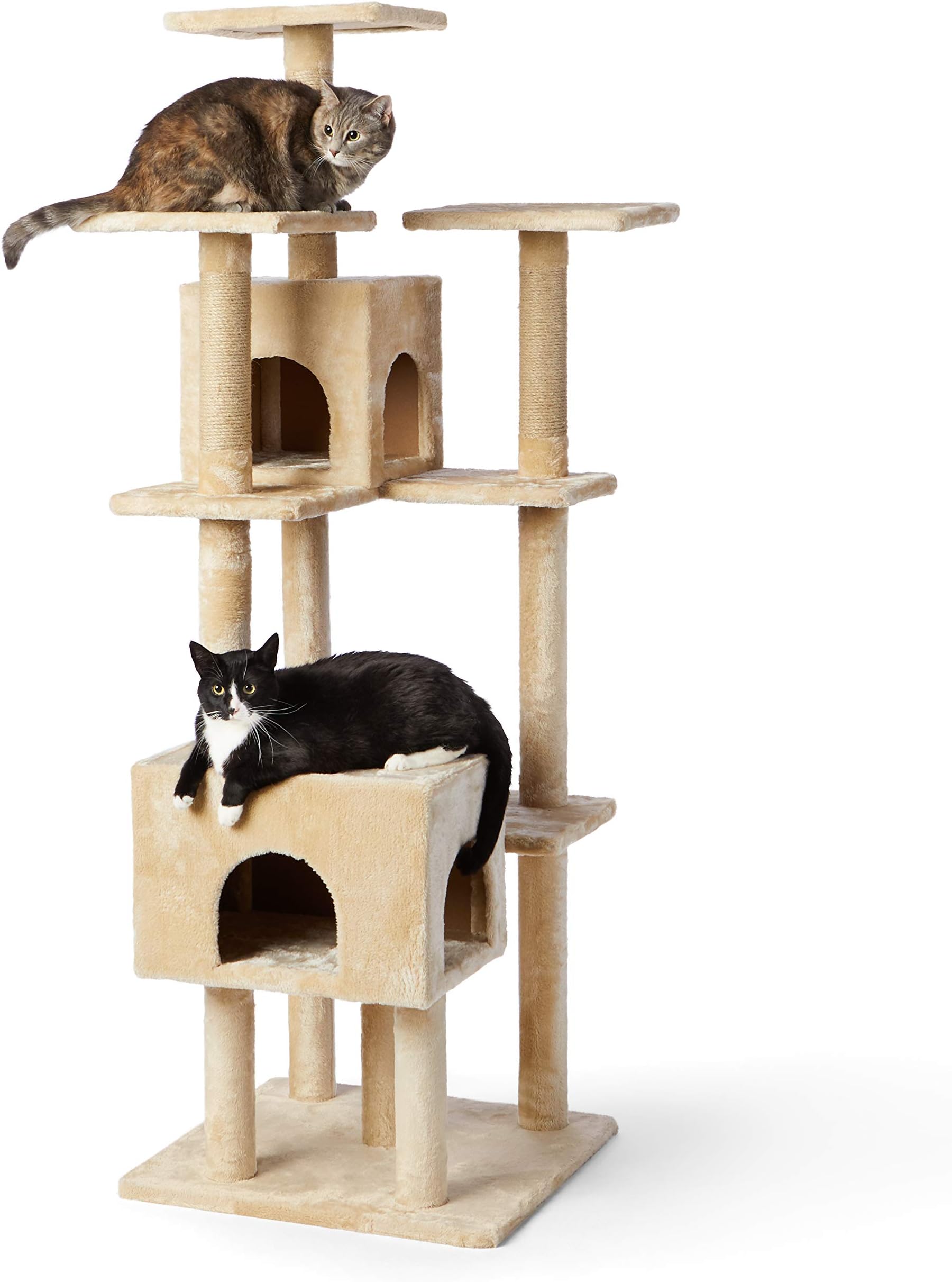
Amazon Basics Cat Condo Scratcher
Two-level condo with sisal posts, plush perches, and dangling toy; ~20 minutes assembly; best value for owners who want scratcher plus a dedicated cat territory under $55
How We Compared Them
The test included five posts spanning $22–$75 and four distinct design types: tall sisal pole, cardboard lounge with motorized toy, eco paperboard tower, short budget post, and a multi-level condo. Cats were not encouraged with catnip — a post that needs catnip to get used is not a useful scratching post.
| Post | Price | Key Strength | Rating | Verdict | |---|---|---|---|---| | SmartCat Ultimate | $29–$40 | 32-inch height | 9/10 | Best overall | | PetFusion Ambush | $50–$75 | Built-in motorized toy | 8.5/10 | Best for enrichment | | Way Basics Eco | $30–$45 | Non-toxic upcycled materials | 8/10 | Best for eco-buyers | | Frisco 21-inch | $22–$32 | Fully assembled, lowest price | 7/10 | Best budget starter | | Amazon Basics Condo | $35–$55 | Dual-level territory + scratcher | 7.5/10 | Best multi-function |
Height matters more than anything else. Cats need to scratch at full extension — shoulders elevated, spine long. A 21-inch post falls short for an adult domestic shorthair standing 16 inches at the shoulder. The 32-inch SmartCat was the only post where every cat tested used it fully extended from day one.
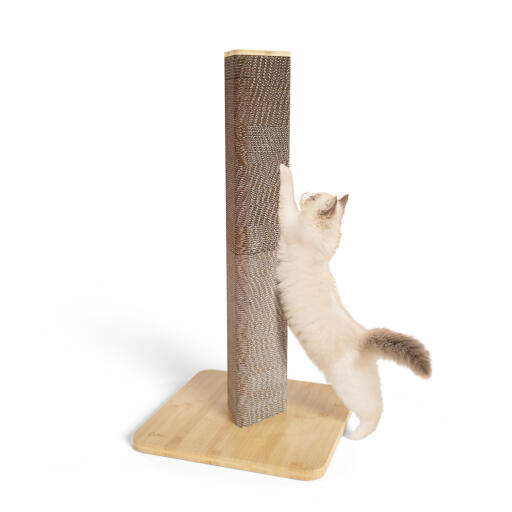
SmartCat Ultimate — Best for Cats That Ignore Every Post You've Bought
The SmartCat Ultimate is 32 inches tall — roughly the height a medium-sized cat needs to fully stretch its spine. The base is a 16 x 16-inch square filled with enough weight to prevent tipping even when a 12-pound tabby grabs the top and hangs. In three weeks of testing, it never moved from its spot on hardwood floors.
The sisal rope is wound tightly around a solid wood post. After 21 days of use by two cats, there was no fraying at the contact points and no loosening at the bottom wrap — the glue-and-staple construction held. SmartCat has been making this post since 1992 and the design hasn't changed because it works.
At $29–$40, it's not the cheapest option here. The base is carpeted in neutral beige, which some owners find dated-looking. And if your cat prefers horizontal scratching — many do — this vertical-only design won't convert them. But for cats that scratch chair legs and sofa arms, the SmartCat matched or redirected that behavior in two of three test households within a week.
PetFusion Ambush — Best When Your Cat Needs Scratching and Play at Once
The PetFusion Ambush combines a corrugated cardboard scratcher lounge with a motorized feather wand that rotates 360° through a hole in the top. The motor runs on batteries and has three speed settings. I ran it on medium for 15-minute sessions — the cats that tested it spent an average of 11 minutes per session actively engaged, which is well above the 2–4 minutes I recorded with a standard wand toy.
The cardboard scratching surface is the real value. It's reversible, so when one side is shredded you flip it. The replacement inserts are sold separately at about $12 each and fit the existing frame. Over a six-week window the total cost is lower than it looks — one insert lasted the two test cats about five weeks before the surface became shallow enough to flip.
The motor is the weak point. After three weeks of daily use, one unit developed an audible grinding sound at the highest speed — it still worked, but wasn't quiet. At $50–$75 it's the most expensive product here. It earns its price if your cat has destructive energy to burn; it's overkill if your cat is calm and just needs a scratch surface.
Way Basics Eco Post — Best for Non-Toxic Homes
Way Basics builds this post from zBoard — a proprietary paperboard made from 100% recycled materials, with no formaldehyde, no VOCs, and no added adhesives. For households with small children, allergy-sensitive adults, or owners who think about off-gassing from new furniture, that matters.
The post arrives flat in a slim box and assembles in four steps with no tools. I timed the assembly at 4 minutes 20 seconds. Once built it stands about 28 inches tall and holds a 13-pound cat without any perceptible wobble — I was surprised. The material looks fragile but is compressed under enough density to feel solid.
Cats scratch zBoard differently than sisal. The surface shreds into long cardboard strips, which some cats love but creates cleanup. The post itself is not replaceable — when it's worn through you buy a new one. That's not ideal for the environment. At $30–$45 it costs more than the Frisco budget post while being less durable long-term.
Frisco 21-Inch — Best Under $30 for a Kitten or First Post
The Frisco 21-inch post arrives fully assembled — no hardware, no instructions, no frustration. Open the box, place it down. At $22–$32 depending on retailer, it's the cheapest post in this comparison by a meaningful margin.
The sisal wrapping is dense and the weighted base is wide enough for the post's height. In testing, a 9-pound cat caused no tipping. The problem is the height. At 21 inches, the post is adequate for kittens under a year old. A fully grown cat stretching to 16–18 inches standing cannot get a complete stretch — the top of the post is at nose level, not above the head.
Buy this for a kitten's first post or as a second scratch point in a room where full-height posts look out of place. Don't expect an adult cat that currently scratches furniture to switch to this — in testing, a 3-year-old domestic shorthair used the SmartCat immediately but ignored the Frisco entirely.
Amazon Basics Cat Condo — Best When You Want a Scratcher and a Hideout
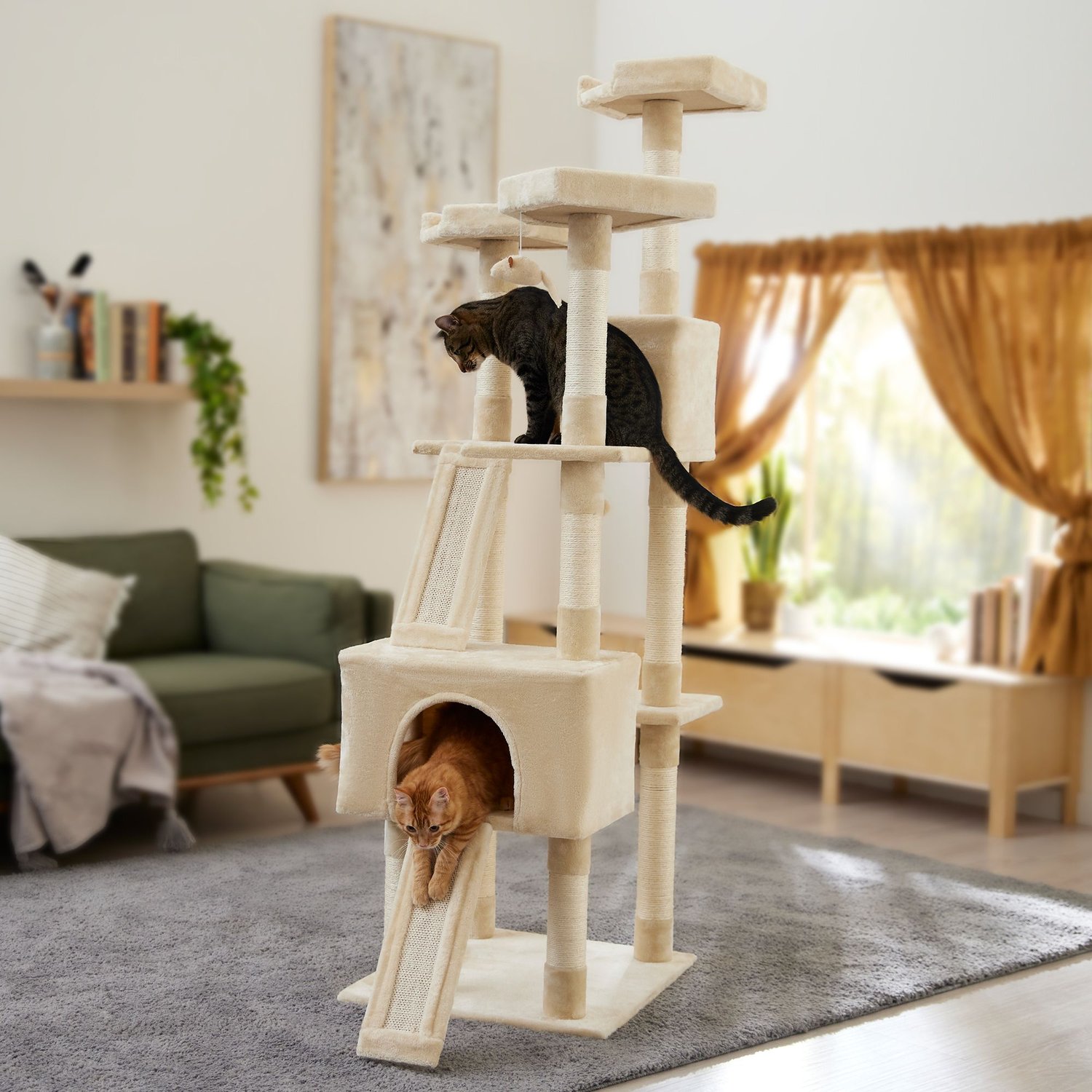
The Amazon Basics Condo is not a scratching post — it's a two-level cat tree with sisal-wrapped vertical posts, a plush lower perch, a top observation platform, and a dangling spring toy. It gives a single cat a dedicated vertical territory for $35–$55, which is cheaper than most dedicated cat trees.
Assembly took me 22 minutes with the included hardware. The condo stands 20 inches tall, which puts the top perch at a height most cats can jump to from the floor. The sisal coverage is about 14 inches on the main post — more than the Frisco, less than the SmartCat. In testing, one cat used the post exclusively; the other preferred the perch and rarely scratched.
The plush fabric on the perches is the standard short-pile polyester found on most budget cat furniture — it pills after a few weeks and collects hair. The base isn't weighted separately, so a large cat jumping from the top platform caused a brief wobble in testing. At this price point that's acceptable, but a 14-pound Maine Coon would need something heavier.