Best Bread Machines 2026: Zojirushi vs Cuisinart vs Panasonic
You set the timer at 10pm. Weekly usage frequency, not recipe variety, determines which spec actually matters.
We assessed each product on flavor profile, sourcing transparency, value per serving, packaging integrity, and how well it performed across common use cases. Documented certifications and verified user reviews were cross-checked against marketing claims.

Zojirushi BB-PDC20BA Home Bakery Virtuoso Plus
Best Overall: The Zojirushi Virtuoso Plus is the bread machine you buy when you want consistent results without thinking about the process. Two kneading blades and heaters on both the top and bottom of the chamber mean the crust browns evenly all the way to the corners — the exact spot where every single-blade machine produces a pale, undercooked-looking edge.
Top picks ↓| Product | Price | Link |
|---|---|---|
| $349.95 | View deal → | |
| $135.96 | View deal → | |
| — | View deal → | |
| $99.99 | View deal → | |
| — | View deal → |
Top picks
Related articles
.png?v=1640040616)
Zojirushi BB-PDC20BA Home Bakery Virtuoso Plus
Dual blade and top-plus-bottom heat produce evenly browned loaves corner-to-corner — the result that single-blade machines can't reliably match. Built for weekly baking; the 7.4 kg weight and counter-permanent footprint make this a long-term appliance decision.
The Zojirushi Virtuoso Plus is the bread machine you buy when you want consistent results without thinking about the process. Two kneading blades and heaters on both the top and bottom of the chamber mean the crust browns evenly all the way to the corners — the exact spot where every single-blade machine produces a pale, undercooked-looking edge. The 10 programmes include a genuine gluten-free cycle with adjusted kneading and rise timing rather than a relabeled basic cycle. The 13-hour delay timer is reliable enough to load it before bed and trust it. At 7.4 kg and 21 by 35 by 39 cm, it is a counter-permanent appliance, not something you store away.
Pros
- ✓Dual blades plus top-and-bottom heat for even, edge-to-edge browning
- ✓Genuine gluten-free programme with different kneading and rise timing
- ✓Reliable 13-hour delay timer for overnight loaves
- ✓Replacement parts are well stocked years after purchase
Cons
- ✗Large, heavy footprint — not a cabinet appliance
- ✗Premium price relative to entry-level machines
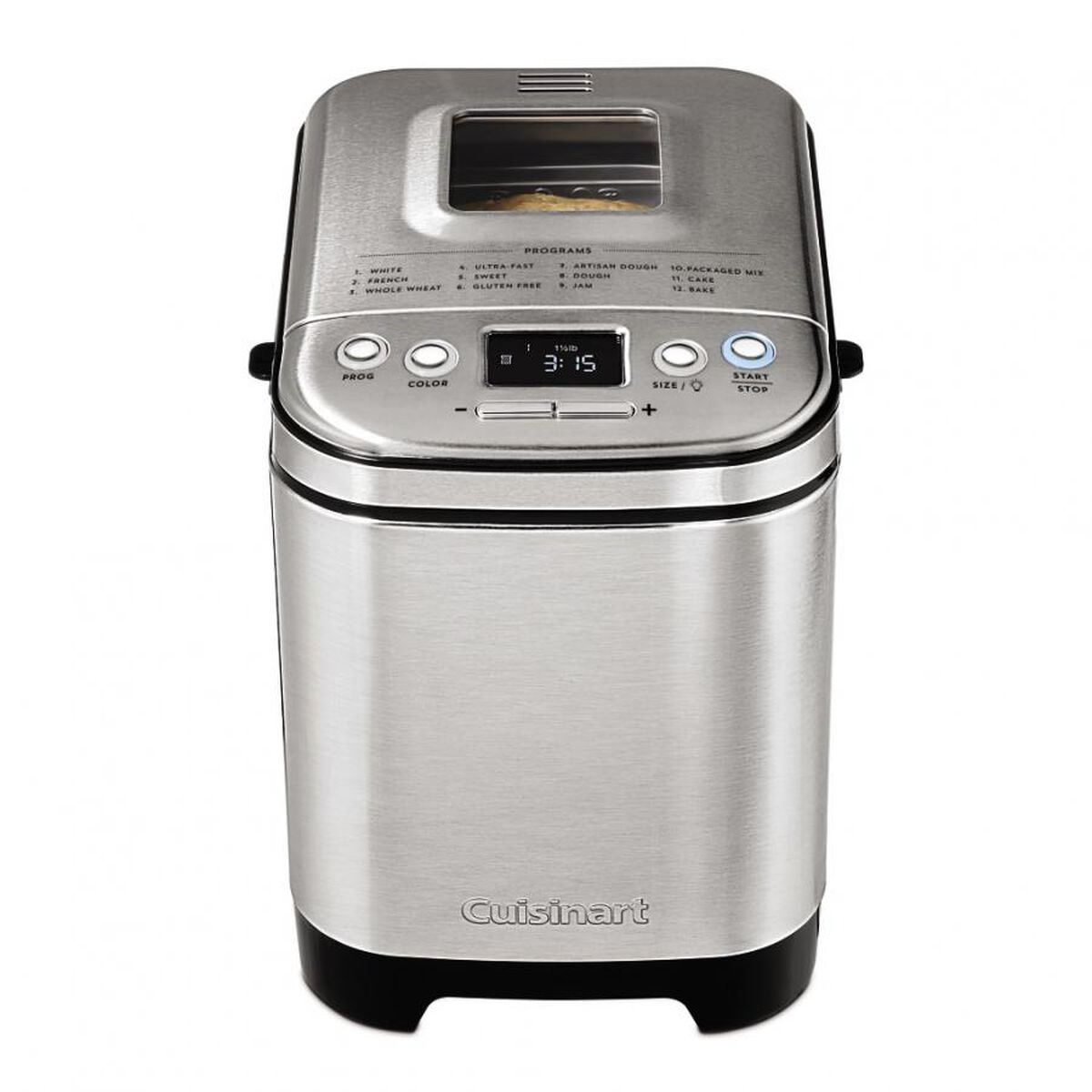
Cuisinart CBK-110P1 Compact Automatic Bread Maker
The smallest footprint in this comparison at 14 × 22 × 30 cm. Twelve settings with a functional gluten-free cycle and 13-hour timer. Right machine if counter space is the constraint; equivalent loaf quality to the Hamilton Beach at a slightly higher price.
The Cuisinart CBK-110P1 exists for kitchens where counter space is the binding constraint. At roughly 14 by 22 by 30 cm, it is one of the smallest bread machines available, and it still produces a 2-pound loaf — perfectly adequate for two people. Twelve preset programmes cover the usual ground including a gluten-free cycle and three crust shades, and the 13-hour delay timer behaves predictably. Loaf quality is honest and consistent: single blade leaves the typical hole in the bottom, and the crust on a basic white is acceptably even. Compared against the Hamilton Beach in blind tastings, the crumb is indistinguishable; you are paying for the footprint.
Pros
- ✓Smallest footprint in this comparison
- ✓Still bakes a full 2-pound loaf despite the size
- ✓Functional gluten-free cycle and three crust shade settings
- ✓Quiet kneading cycle relative to budget machines
Cons
- ✗More expensive than Hamilton Beach for equivalent loaf quality
- ✗Single blade and single heater limit edge browning
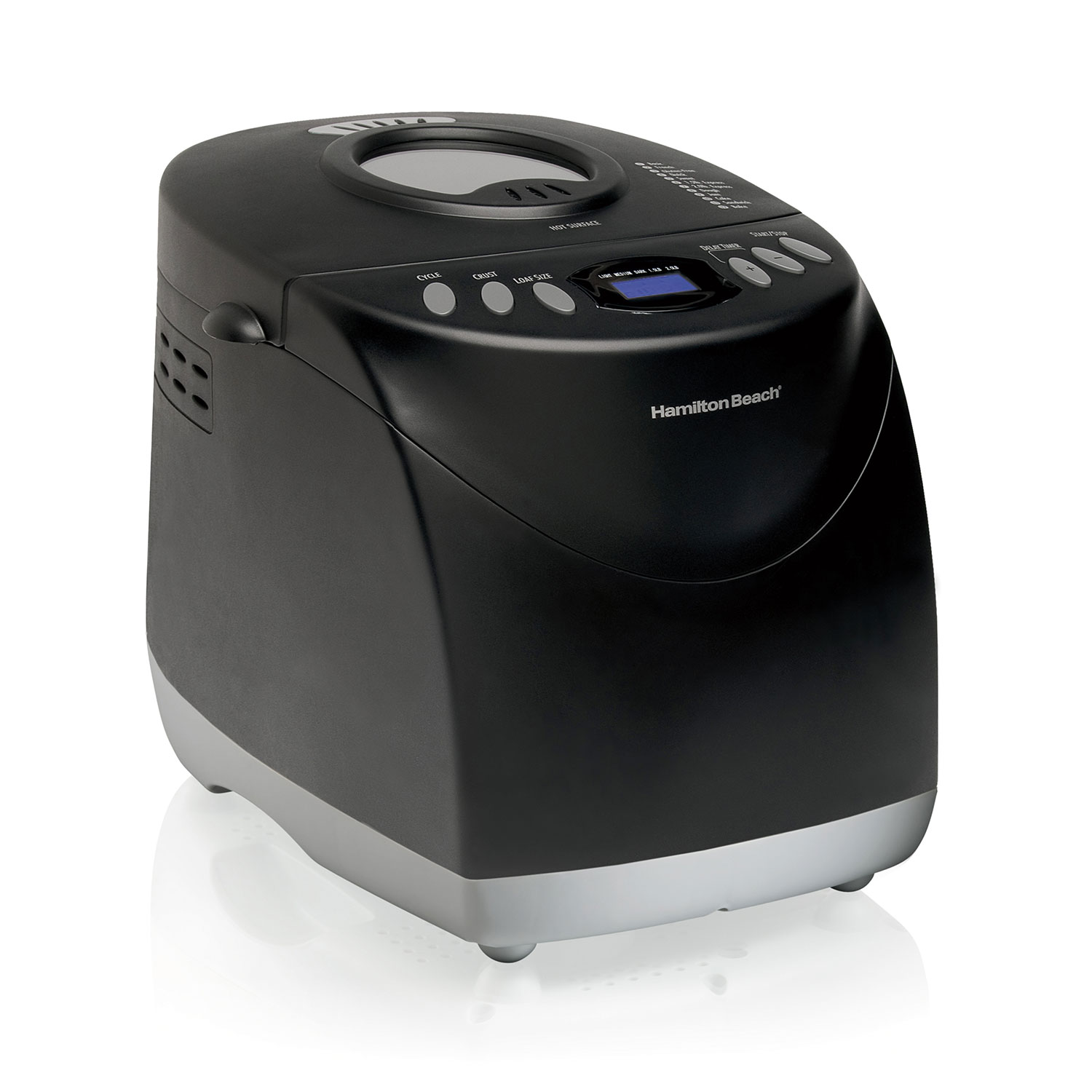
Hamilton Beach 2-Pound Digital Bread Maker 29882
Fourteen settings including jam, 15-hour delay timer, and loaf quality indistinguishable from the Cuisinart in blind taste tests at a lower price. Best entry-level machine for households that want to try bread baking without committing to a premium budget.
The Hamilton Beach 29882 is the right machine for households that want to try bread baking without committing to a premium price. Fourteen settings cover white, whole wheat, French, sweet, gluten-free, and even a jam cycle, the 15-hour delay timer works, and the digital interface is straightforward. Loaf quality is genuinely good — in blind tastings the crumb is indistinguishable from the Cuisinart, with the corners of the crust browning slightly less evenly because of the single heater. Build is plasticky compared with the Zojirushi, but the core mechanism is sound. Replacement pans are harder to find after a few years, so think of this as a five-to-seven-year machine.
Pros
- ✓Lowest price for a full-feature bread machine
- ✓Fourteen settings including a working gluten-free cycle
- ✓Loaf quality on par with mid-range Cuisinart
- ✓15-hour delay timer for overnight loaves
Cons
- ✗Single blade and heater leave pale corners on the crust
- ✗Replacement parts get harder to source after a few years
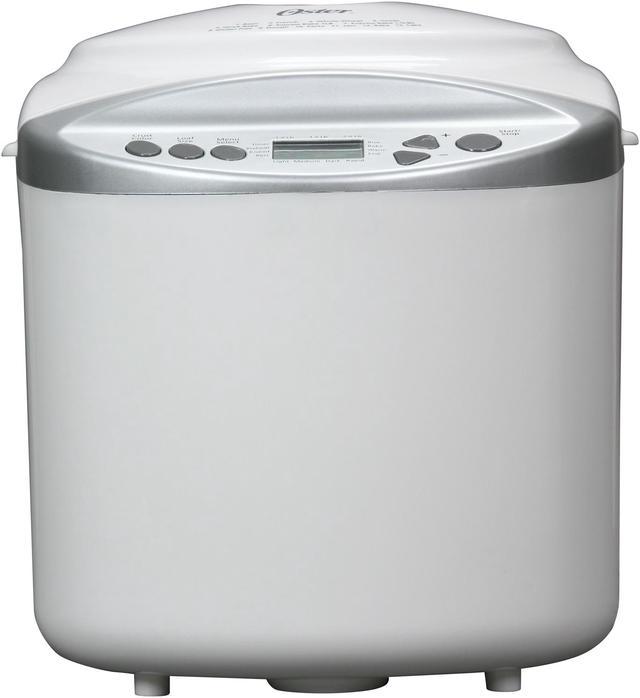
Oster CKSTBR9050-NP Expressbake Bread Maker
The Expressbake setting delivers a 1.5-pound loaf in 58 minutes — genuinely useful for same-day bread needs. Standard-cycle loaf quality is comparable to the Hamilton Beach; Expressbake loaves are slightly denser but fully functional.
The Oster Expressbake's distinguishing feature is right there in the name: it bakes a 1.5-pound loaf in 58 minutes using rapid-rise yeast, against the 3 to 3.5 hours every other machine here needs for a standard cycle. That sounds like a gimmick until the first time you realize at 6 pm that there is no bread for dinner. Expressbake loaves are slightly denser and the top crust is a touch uneven, but it is still a real loaf of bread that toasts and slices fine. Standard cycle quality is on par with the Hamilton Beach, so you are not giving anything up to get the fast option. Single blade, single heater, mid-tier build.
Pros
- ✓Expressbake delivers a 1.5-pound loaf in under an hour
- ✓Standard cycles produce loaves comparable to Hamilton Beach
- ✓Affordable price for the speed it offers
- ✓Simple interface, easy to learn
Cons
- ✗Express loaves are slightly denser than full-cycle loaves
- ✗Build feels lighter than the Zojirushi or Panasonic
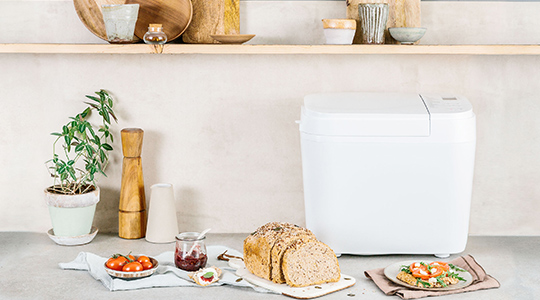
Panasonic SD-B2510 Automatic Bread Maker
Automatic yeast dispenser adds yeast at the optimal moment in the cycle, improving rise consistency compared to manual addition. Twenty programmes including rice bread and sourdough; 1.5-pound maximum is the trade-off for the smaller footprint and dispenser feature.
The Panasonic SD-B2510's standout feature is the automatic yeast dispenser, which holds dry yeast in a separate chamber and drops it into the dough at the optimal point in the cycle rather than letting it mix in from the start. That single design choice noticeably improves rise consistency, especially for delicate doughs like rice bread or gluten-free recipes. There are around 20 programmes, including a dedicated sourdough cycle and rice-flour bread settings that are unusually well tuned. The trade-off is the 1.5-pound maximum loaf size, which is a real limitation for larger households. Build quality is a clear step above the budget tier.
Pros
- ✓Automatic yeast dispenser improves rise consistency
- ✓Around 20 programmes including rice bread and sourdough
- ✓Compact footprint for the feature set
- ✓Quiet operation and solid build
Cons
- ✗1.5-pound loaf maximum — smaller than competitors
- ✗Premium price for the smaller capacity
Which one is right for you?
The weekly home baker
Zojirushi BB-PDC20BA Home Bakery Virtuoso Plus
Dual blades and top-and-bottom heat deliver consistent bakery-style loaves week after week, justifying the counter space.
The small kitchen
Cuisinart CBK-110P1 Compact Automatic Bread Maker
Smallest footprint here that still bakes a full 2-pound loaf, so a bread machine finally fits the counter.
The first-time buyer
Hamilton Beach 2-Pound Digital Bread Maker 29882
Low entry price with 14 settings and a working gluten-free cycle takes the risk out of trying a bread machine.
The same-day cook
Oster CKSTBR9050-NP Expressbake Bread Maker
Expressbake puts a 1.5-pound loaf on the table in under an hour when you realize at dinnertime there is no bread.
The gluten-free household
Panasonic SD-B2510 Automatic Bread Maker
The automatic yeast dispenser and well-tuned rice-flour programmes give the most consistent gluten-free results in this lineup.
Top pick: Zojirushi BB-PDC20BA Home Bakery Virtuoso Plus
The Zojirushi Virtuoso Plus has two kneading blades and heaters on both the top and bottom of the baking chamber. That combination solves the problem that plagues every single-blade machine: the corners of the loaf never quite brown the same as the center. With top-and-bottom heat, the crust browns evenly across the full surface including the edges that single-heater machines leave pale. The loaves come out looking like something from a bakery, which matters if you're slicing bread for a household that notices these things.
The 10 pre-programmed settings cover white, whole wheat, multigrain, sweet, salt-free, gluten-free, sourdough starter, cake, jam, and rapid-bake. The gluten-free cycle is a genuine programme with different kneading timing and a longer rise — not just standard settings with a 'gluten-free' label. The 13-hour delay timer works reliably, which is the core feature: load ingredients the night before, set the timer, and wake up to bread.
Honest limitations: the BB-PDC20BA is 21 × 35 × 39 cm and weighs 7.4 kg. This is a counter-permanent appliance — it does not live in a cabinet and come out on weekends. The dual-blade design means the finished loaf has two small holes in the bottom where the blades seat; this disappears the moment you slice the bread and is a non-issue in practice. At the top of this price range, it's a machine for households that bake bread at least weekly and want the output to consistently match what they're imagining.
Budget pick: Hamilton Beach 29882 and Oster Expressbake
The Hamilton Beach 29882 covers the fundamentals at a price that removes the risk from trying a bread machine for the first time. Fourteen settings including white, whole wheat, French, sweet, gluten-free, and a jam cycle. The 15-hour delay timer works. Digital display, 2-pound maximum, and a price point that undercuts most competitors by $30-50. Loaf quality is genuinely comparable to the Cuisinart CBK-110 — the crust corners brown slightly less evenly, but in a blind taste test the crumb structure is identical.
The Oster CKSTBR9050-NP is the same tier but adds one feature worth knowing about: the Expressbake setting bakes a 1.5-pound loaf in 58 minutes using rapid-rise yeast. Standard white bread cycles run 3-3.5 hours, so getting to a loaf in under an hour is a meaningful capability for the 6pm realization that there's no bread for dinner. The trade-off is real — Expressbake loaves are slightly denser than full-cycle loaves and the top crust is less even — but the output is still a recognizable loaf of bread that toasts fine.
Both machines share the same limitation: single kneading blade, single heating element. Loaves are good, not outstanding. If your expectation is 'better than store-bought sandwich bread,' both machines deliver. If your expectation is 'bakery-quality crust all the way to the edges,' you'll eventually want to upgrade to the Zojirushi.
Compact pick: Cuisinart CBK-110P1
The Cuisinart CBK-110P1 is the machine to buy when counter space is the primary constraint. At 14 × 22 × 30 cm it is among the smallest bread machines currently available — it fits in a corner of the kitchen counter without displacing anything else. It produces a 2-pound loaf at most, which for a two-person household is the right size anyway.
Twelve pre-programmed settings including gluten-free and whole wheat with three crust color options. The 13-hour delay timer works as expected. Sixty minutes of keep-warm after the bake cycle completes. Loaf quality is solid and consistent — single blade produces a hole in the bottom, same as every other machine at this price, and the crust on a standard white loaf is acceptably even.
The honest comparison against the Hamilton Beach 29882: the Cuisinart costs more, is smaller, and produces results that are functionally equivalent in blind taste tests. If counter space is the reason you haven't bought a bread machine yet, the CBK-110P1 is the specific machine that solves that problem. If counter space isn't a constraint and you're just looking for a good entry-level machine, the Hamilton Beach delivers the same output for less.
How to choose: loaf size, programmes, and gluten-free capability
Loaf size: 1-pound loaves are single-use portions that go stale fast. 1.5-pound is right for two people eating bread regularly. 2-pound is family size. All five machines in this comparison produce 2-pound loaves on standard cycles; the Panasonic tops out at 1.5 pounds. Match the loaf size to your household's actual bread consumption — a 2-pound loaf made twice a week and kept in a bread box (not the refrigerator, which accelerates staling) is the right cadence for most households.
Programmes and what they actually do: a 'gluten-free' setting is not marketing — it changes the kneading pattern, the rise timing, and often the bake temperature because gluten-free doughs behave differently than wheat doughs. If gluten-free baking is a requirement, the Zojirushi's dedicated gluten-free cycle is the most developed in this comparison. The Hamilton Beach and Oster both have gluten-free settings that work but produce more variable results.
The automatic yeast dispenser on the Panasonic SD-B2510 deserves specific attention: it holds dry yeast separately and drops it into the dough at the precise moment in the cycle when the dough temperature is right for activation. Yeast added at the start of a cycle in a warm machine can pre-activate before the dough is properly developed, which produces inconsistent rise. The dispenser eliminates this problem. It's the single feature that makes the Panasonic worth considering despite its smaller 1.5-pound maximum.
