Best Baking Sheets 2026: 5 Tested & Compared
A baking sheet's performance comes down to gauge (thickness), material, and surface treatment. Seal integrity and stackability outlast any smart feature after six months of daily use.
We assessed each product on flavor profile, sourcing transparency, value per serving, packaging integrity, and how well it performed across common use cases. Documented certifications and verified user reviews were cross-checked against marketing claims.
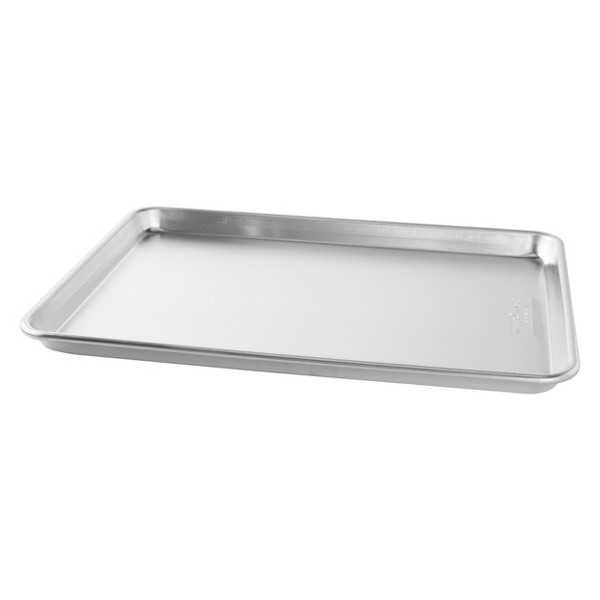
Nordic Ware Natural Aluminum Half Sheet
Best Overall: The Nordic Ware Natural Aluminum Half Sheet is the baseline most professional kitchens compare other sheets to. Heavy-gauge pure aluminum (around 1.3 mm) means the pan does not flex, ping, or buckle when you load it into a hot oven, and the uncoated surface absorbs heat directly so cookies brown evenly across the whole sheet.
Top picks ↓| Product | Price | Link |
|---|---|---|
| $15 | View deal → | |
| $20 | View deal → | |
| $10 | View deal → | |
| $20 | View deal → | |
| $20 | View deal → |
Top picks
Related articles


Nordic Ware Natural Aluminum Half Sheet
Heavy-gauge pure aluminum (1.3 mm), uncoated, 18x13 inch half sheet. $15-20. Best for maximum browning and long-term durability. Used in professional bakeries. Not nonstick — use with parchment. Dishwasher safe but hand wash recommended.
The Nordic Ware Natural Aluminum Half Sheet is the baseline most professional kitchens compare other sheets to. Heavy-gauge pure aluminum (around 1.3 mm) means the pan does not flex, ping, or buckle when you load it into a hot oven, and the uncoated surface absorbs heat directly so cookies brown evenly across the whole sheet. It develops a darker patina over time, which is cosmetic rather than a performance issue. There is no nonstick treatment, so parchment or a silicone mat is a normal part of using it. For the price, the longevity is hard to beat — these sheets routinely outlast cheaper pans by a decade.
Pros
- ✓Heavy-gauge aluminum that resists warping at high oven temperatures
- ✓Even, edge-to-edge browning thanks to the uncoated surface
- ✓Inexpensive given how long it lasts
- ✓Safe with metal spatulas and any oven temperature
Cons
- ✗Not nonstick — you need parchment paper or a silicone mat for most recipes
- ✗Visible discoloration develops with regular use

USA Pan Half Sheet Baking Pan
Aluminized steel with corrugated base, silicone coating. $20-30. Best warp resistance — corrugation adds structural rigidity. Silicone coating rated to 450°F (higher than PTFE). Slight texture effect on flat cookies from corrugation.
USA Pan builds its half-sheet from aluminized steel with a corrugated base and a silicone-based nonstick coating that is rated to a higher temperature than typical PTFE pans. The corrugation is the differentiator: it acts like ribbing on a structural panel and makes the sheet noticeably stiffer than a flat pan of similar weight. That stiffness pays off when you go straight from freezer to oven, where cheaper sheets tend to bow. The silicone surface releases sticky doughs and caramelized vegetables without parchment, although the ribs do leave a faint pattern on the bottom of thin cookies. Build quality is consistent batch to batch.
Pros
- ✓Corrugated base makes it the stiffest sheet in this lineup
- ✓Silicone coating releases well and tolerates higher heat than PTFE
- ✓Aluminized steel resists rust and dents
- ✓Made in USA with reliable seam quality
Cons
- ✗Corrugation leaves a subtle texture on flat cookies
- ✗Coating is durable but not as indestructible as bare aluminum

Wilton Nonstick Half Sheet Baking Pan
Mid-gauge steel with PTFE nonstick. $10-15. Most common budget nonstick option. PTFE degrades above 500°F and with metal utensils. Replace every 2-3 years. Best for occasional baking where nonstick is the priority.
The Wilton Nonstick half sheet is the pan most people start with: cheap, available in any grocery store, and genuinely nonstick out of the box. The steel gauge is on the thinner side, so the pan flexes when you lift it loaded and tends to develop a slight curve after a year of regular use. The PTFE coating works well for cookies and biscuits but degrades above 500°F and scratches if you use metal utensils on it. Treat it as a two-to-three-year consumable rather than a lifetime tool and it makes sense at this price. It is fine for occasional bakers and people who do not want to deal with parchment paper.
Pros
- ✓Lowest price in this comparison
- ✓Reliable nonstick release straight out of the box
- ✓Light enough to handle one-handed
- ✓Widely available in stores and online
Cons
- ✗Thin gauge warps over time and audibly pops in a hot oven
- ✗PTFE coating wears out within two to three years of regular use
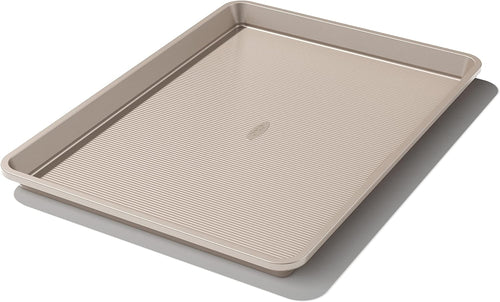
OXO Good Grips Nonstick Half Sheet Baking Pan
Heavier gauge than Wilton, durable nonstick coating, rolled handles. $20-30. Best premium nonstick option — more durable coating than Wilton and better grip. Shorter lifespan than Nordic Ware but genuinely nonstick without parchment.
If you want nonstick without dealing with parchment, the OXO Good Grips sheet is the more grown-up version of the Wilton. The gauge is noticeably heavier, the rolled edges are wider for a more confident grip with oven mitts, and the coating holds up better through dishwasher cycles. It still has the temperature ceiling that comes with any PTFE-based nonstick, so very high-heat roasting will shorten its life. For everyday cookies, sheet-pan dinners with marinades that would weld onto bare aluminum, and bakers who hate scrubbing, this is the easiest sheet to live with. Expect it to last several years, not a decade.
Pros
- ✓Heavier gauge than budget nonstick sheets — much less warping
- ✓Wider rolled rim is genuinely easier to grip with mitts
- ✓Coating holds up well through regular dishwasher use
- ✓Releases sticky glazes and marinades without parchment
Cons
- ✗PTFE coating limits maximum oven temperature
- ✗Won't outlast an uncoated heavy aluminum pan
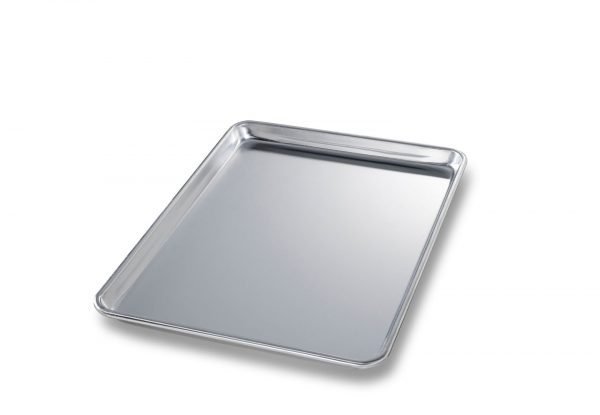
Chicago Metallic Commercial II Half Sheet
Heavy-gauge aluminized steel, uncoated, commercial grade. $20-35. Professional bakery standard — same construction as commercial baking operations. Uncoated surface for maximum browning, structural rigidity of aluminized steel.
Chicago Metallic is what you find stacked under the bench in commercial bakeries, and the home-line half-sheet uses the same heavy-gauge aluminized-steel construction. Surface is uncoated, so it browns like Nordic Ware does, but the aluminized steel adds rigidity that pure aluminum sheets do not have. The trade-off is weight — these are noticeably heavier in the hand. Fit and finish are utilitarian: the seams are clean, the rolled edges are tight, and the pan sits flat on a rack without rocking. For someone who bakes in volume and wants a pan that will absorb decades of abuse, this is the no-drama option.
Pros
- ✓Commercial-grade aluminized steel — extremely rigid
- ✓Uncoated surface gives maximum browning
- ✓Flat-sitting, no rocking on the oven rack
- ✓Built for high-volume use
Cons
- ✗Heavier than pure aluminum equivalents
- ✗Plain finish — no nonstick, requires parchment for sticky doughs
Which one is right for you?
The serious home baker
Nordic Ware Natural Aluminum Half Sheet
Nordic Ware's heavy uncoated aluminum gives the most even browning and will outlast anything else in this lineup.
The freezer-to-oven cook
USA Pan Half Sheet Baking Pan
The corrugated aluminized steel resists warping even with extreme temperature swings, which is exactly when cheaper sheets buckle.
The occasional baker on a budget
Wilton Nonstick Half Sheet Baking Pan
Cheap enough to treat as a consumable, and the PTFE coating handles cookies and biscuits without any technique.
The parchment-hater
OXO Good Grips Nonstick Half Sheet Baking Pan
The durable coating and rolled rim mean you can roast sticky glazes and clean up in the dishwasher without ruining the pan.
The high-volume baker
Chicago Metallic Commercial II Half Sheet
Commercial-grade aluminized steel handles back-to-back batches and stays flat after years of heavy use.
Gauge, material, and surface treatment: why baking sheets vary in performance
Baking sheet gauge (thickness) is the primary determinant of warp resistance. A thin sheet (0.6-0.8 mm aluminum) heats quickly but creates uneven hot spots and warps audibly when placed in a hot oven — the thermal expansion isn't even, so the sheet buckles. A heavy-gauge sheet (1.0-1.5 mm commercial-grade aluminum) conducts heat more slowly but distributes it more evenly and resists warping even at 450°F+. The difference is most noticeable in cookies: thin sheets produce cookies that brown more on the edges (hot spots from warping) and lighter in the center.
Aluminum is the dominant baking sheet material because it heats evenly and doesn't rust. Aluminized steel (steel with an aluminum coating) provides a similar heat profile with added structural rigidity — USA Pan uses aluminized steel for its exceptional warp resistance. Stainless steel is sometimes used but is a poor heat conductor compared to aluminum, resulting in uneven browning. Insulated pans (two layers of metal with an air gap) prevent over-browning on the bottom but also prevent proper crisping of the underside — useful for delicate cookies, counterproductive for roasting.
Surface treatment: raw aluminum gives the most browning because it absorbs infrared radiation efficiently. Nonstick coating (PTFE-based) adds easy release but reduces browning — the coating reflects some infrared radiation back. A silicone-coated pan (like the Goldtouch series) splits the difference. The practical guideline: use an uncoated aluminum sheet when browning matters, use a nonstick when you need easy release for sticky foods. Parchment paper can substitute for nonstick coating on an uncoated sheet.
Nordic Ware Natural Aluminum: the uncoated standard
The Nordic Ware Natural Aluminum Half Sheet is the baking sheet used in professional bakeries and preferred by serious home bakers. The heavy-gauge pure aluminum construction (1.3 mm) is the reason it works: even heat distribution from edge to edge, no warping even after years of heavy use, and the natural aluminum surface provides maximum browning capacity.
Nordic Ware is not nonstick — the aluminum surface requires parchment paper or silicone mats for most baking applications. This is not a limitation but a feature: the surface is safe at any oven temperature, won't scratch, and can be used with metal spatulas. The sheet discolors with use (brown oxidation) which is normal and doesn't affect performance. It's dishwasher safe in principle but the manufacturer recommends hand washing to preserve the natural aluminum surface.
At $15-20 for a half sheet, Nordic Ware is inexpensive relative to its performance. For cookies, roasted vegetables, sheet pan meals, and anything where browning matters, this is the correct baking sheet. Its only limitation is that delicate items (thin cookies, highly sugary glazes) may over-brown on the bare aluminum — parchment paper solves this.
USA Pan and Chicago Metallic: the structured alternatives
USA Pan half-sheet pans use aluminized steel with a corrugated (ribbed) base pattern and a silicone non-stick coating. The corrugation serves a structural purpose: it increases the rigidity of the pan significantly, preventing warping even at very high temperatures. The silicone coating provides easy release without the temperature limitations of PTFE-based nonstick coatings — USA Pan is rated to 450°F, higher than most PTFE nonstick pans.
The corrugated surface does affect baking: the ribs create slightly uneven contact with flat items like cookies. For flat cookies and similar baked goods, this can produce a very subtle texture difference on the bottom surface. For sheet pan vegetables, proteins, and anything that isn't flat, the USA Pan performs identically to the Nordic Ware with the added benefit of easier release.
Chicago Metallic is the professional supply option: heavy-gauge aluminized steel in the same style used in commercial bakeries, available in standard half-sheet and two-thirds sheet sizes. At $20-35, it's in the Nordic Ware price range but with the structural rigidity of aluminized steel. The surface is uncoated, similar to Nordic Ware in performance characteristics.
Wilton and OXO: the nonstick options
The Wilton Nonstick half sheet is a mid-gauge steel sheet with PTFE nonstick coating. It's the most common baking sheet type — inexpensive, widely available, genuinely nonstick for most baking tasks. The limitations: PTFE degrades above 260°C (500°F), so it can't be used for very high-heat roasting; metal utensils scratch the coating, accelerating degradation; the coating gradually loses nonstick properties over 2-3 years of regular use. At $10-15, the Wilton is priced for replacement rather than lifetime use.
OXO Good Grips Nonstick half-sheet is the premium nonstick option. The gauge is heavier than Wilton, and OXO's nonstick coating is more durable — the company claims 'commercial grade' coating, though this is a marketing term rather than a specific standard. The handles are rolled and slightly wider for a better grip when removing from a hot oven. At $20-30, it's in the Nordic Ware price range but with nonstick properties and a shorter expected lifespan.
For bakers who need nonstick without parchment paper management, the OXO is the correct choice over the Wilton. For bakers who prioritize maximum browning and long-term durability, Nordic Ware with parchment paper beats both.