Best Baby Monitor 2026: 5 Tested & Compared
Five baby monitors spanning the budget to premium tiers, compared on the factors that actually decide whether the device is a useful parenting tool or an anxiety amplifier (monitoring type —. Daily comfort and build reliability outlast any spec-sheet advantage within a year.
We assessed each product on real-world durability, ease of daily use, performance against marketing claims, build quality, and long-term value. Manufacturer specifications were validated against verified owner reviews.
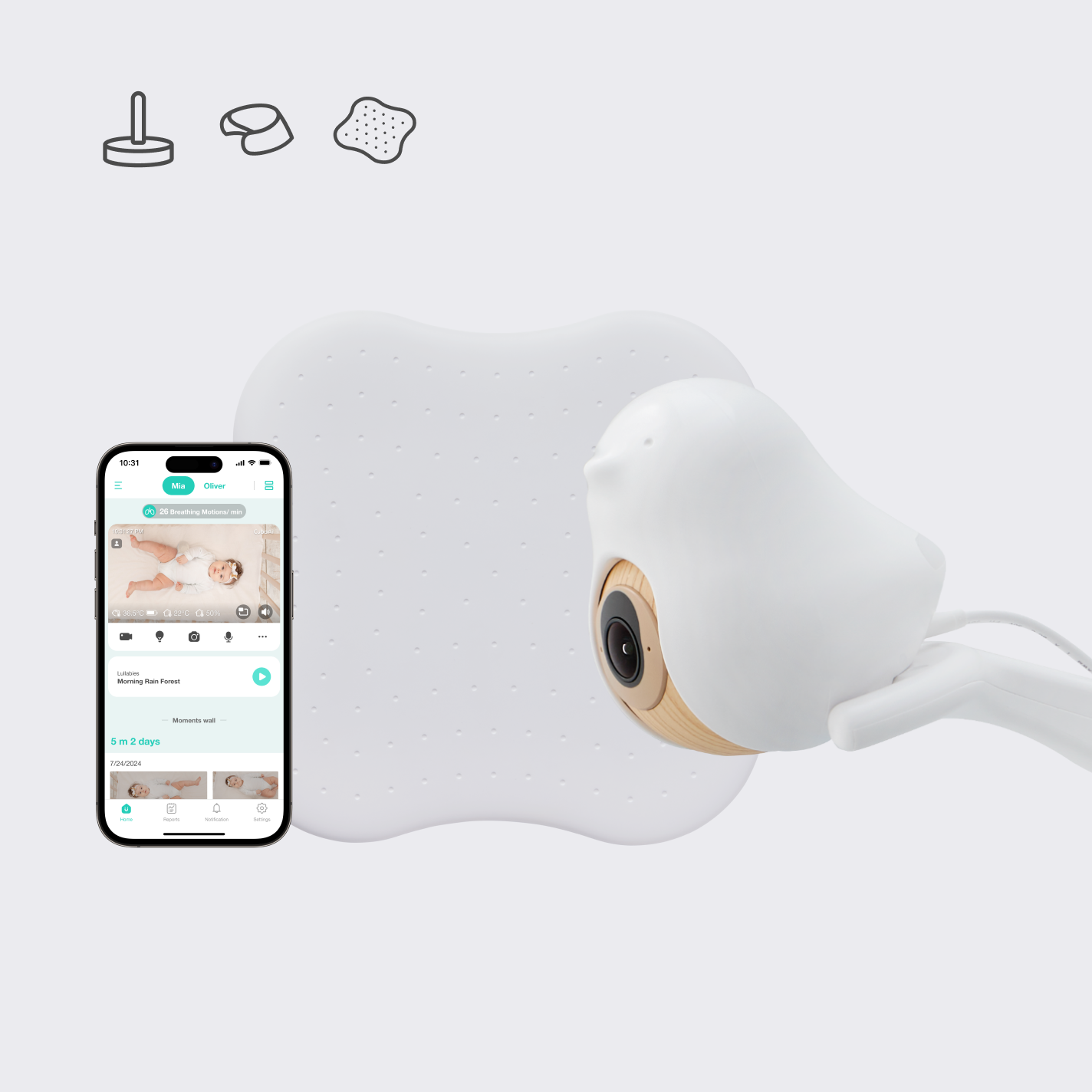
Cubo Ai Plus
Best AI Face-Down Detection: Cubo Ai Plus is the only camera here whose AI face-covered, rollover, and danger-zone detection meaningfully changes the monitoring experience for 4-12 month olds in the rolling phase. The 1080p camera at 130-degree field of view streams over WiFi to the smartphone app, the AI model is trained on tens of thousands of nursery video samples, and the 18-piece lullaby library plus two-way audio cover the conventional parent-unit feature set.
Top picks ↓Top picks
Related articles


Cubo Ai Plus
AI premium pick — box price plus a monthly Cubo Ai Plus Care subscription after the 6-12 month free trial, 1080p video at 130-degree field of view, AI face-covered detection, AI rollover detection, AI danger-zone detection, AI cry classification, 18-piece lullaby library, two-way audio, manual privacy shutter, smartphone app as primary parent unit. Subscription is mandatory for the AI features that justify the price gap — without subscription, Cubo Ai degrades to a 1080p motion-alert camera competitors sell for less; total 5-year cost is roughly triple the box price. WiFi-cloud architecture means complete dependency on Cubo Ai's cloud service (multi-day outage in 2024 locked thousands of parents out of remote viewing). AI false-positive rate produces 1-3 alerts per night for typical 6-12 month olds and parents report alert fatigue; security model requires strong password and 2FA discipline (2022 Australia credential-stuffing incident).
Cubo Ai Plus is the only camera here whose AI face-covered, rollover, and danger-zone detection meaningfully changes the monitoring experience for 4-12 month olds in the rolling phase. The 1080p camera at 130-degree field of view streams over WiFi to the smartphone app, the AI model is trained on tens of thousands of nursery video samples, and the 18-piece lullaby library plus two-way audio cover the conventional parent-unit feature set. The 5-year cost is the part the box price hides: the box price plus a monthly Cubo Ai Plus Care subscription after the 6-12 month free trial works out to roughly triple the box price — without the subscription, the AI features that justify the premium disappear. Cloud-service dependency is structural, and the 1-3 false alerts per night for typical 6-12 month olds produce real alert fatigue.
Pros
- ✓Only camera here with AI face-covered, rollover, and danger-zone detection trained on validated nursery video samples
- ✓1080p video at 130-degree field of view with two-way audio and manual privacy shutter
- ✓AI cry classification distinguishes hunger, discomfort, and sleep cries
- ✓Pinterest-aesthetic cream-and-pastel design fits a photographable nursery
Cons
- ✗Cubo Ai Plus Care subscription billed monthly is mandatory for AI features after the free trial
- ✗WiFi-cloud architecture means complete dependency on Cubo Ai's cloud (multi-day outage in 2024 locked thousands of parents out)

Anker Eufy SpaceView Pro
WiFi-free mid-tier pick — WiFi-free dedicated-radio baby monitor with 5-inch parent screen on closed 2.4 GHz radio link, 720p video, 110-degree pan-and-tilt with 4x digital zoom, infrared night vision rated 4-5 meters, two-way audio with VOX, 8 lullaby presets, expandable to 4 cameras on a single screen, no WiFi, no app, no cloud, no subscription. Zero remote viewing — cannot check on the baby from outside the radio range (50 meters line-of-sight, less through walls); 720p resolution is below the WiFi-camera tier and visible on the 5-inch screen at 2-4 meter distances; no AI face-down or rollover detection; parent screen is a single failure point with no app fallback and replacement screens see frequent stockouts.
The Anker Eufy SpaceView Pro is the WiFi-free pick for parents who primarily monitor from within the home and do not want the WiFi-camera security model or monthly subscription. The 720p camera on a closed 2.4 GHz radio link feeds a dedicated 5-inch parent screen with 4x digital zoom, 110-degree pan-and-tilt, and infrared night vision rated 4-5 meters in honest nursery conditions. VOX two-way audio, 8 lullaby presets, expandable to 4 cameras on one screen, and the parent-screen battery is rated 12 hours on standard use. Zero remote viewing — you cannot check on the baby from outside the radio range — and no AI face-down detection. Anker's hardware-quality reputation justifies the mid-tier price, and the absence of WiFi configuration, app, and cloud account is the entire value proposition.
Pros
- ✓Zero WiFi, cloud, app, or subscription — closed 2.4 GHz radio link with dedicated parent screen
- ✓110-degree pan-and-tilt with 4x digital zoom on a 5-inch screen
- ✓Expandable to 4 cameras on a single parent screen for multi-room or twins
- ✓Anker hardware-engineering quality reputation justifies the mid-tier price
Cons
- ✗Zero remote viewing — cannot check on the baby from outside the radio range
- ✗720p resolution is visibly below the 1080p WiFi-camera tier on the 5-inch parent screen
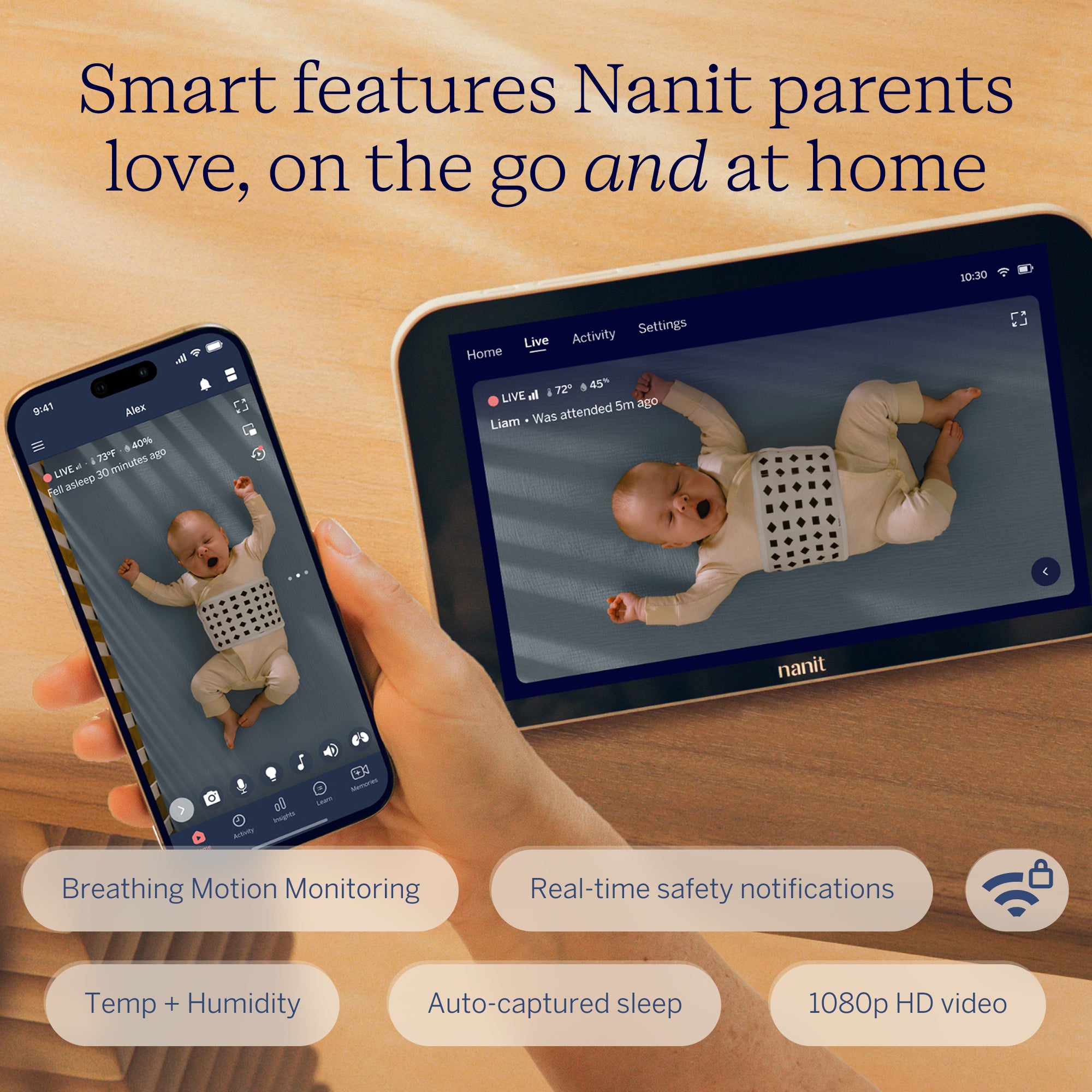
Nanit Pro Smart Camera
Data-analytics premium pick — box price plus a monthly Nanit Insights subscription, 1080p HDR video at 130-degree field of view, AI breathing-motion detection (requires Nanit Breathing Wear sold separately per garment outgrown every 3-4 months), AI sleep-quality scoring, growth-tracking via Smart Sheet, two-way audio, Apple HomeKit and Google Home integration. Breathing-motion detection requires the dedicated Nanit Breathing Wear that is sold separately and outgrown every 3-4 months — hidden recurring cost most reviews skip; growth-tracking via Smart Sheet requires actively photographing the baby on the sheet with wildly variable accuracy depending on photo angle (clinicians do not accept Nanit measurements as substitute for in-clinic measurement); Nanit Insights subscription unlocks sleep-analytics features that justify the price gap; wall-mount installation requires drilling above the crib and many rental apartments prohibit this.
Nanit Pro Smart Camera is the data-analytics pick — 1080p HDR video at 130-degree field of view, AI breathing-motion detection via computer vision on the chest area (no worn sensor), sleep-quality scoring, and growth-tracking via the Nanit Smart Sheet. Apple HomeKit and Google Home integration both work. The box price plus the monthly Nanit Insights subscription is the headline cost, but the hidden cost is the Nanit Breathing Wear that the AI breathing-motion detection requires — sold per garment and outgrown every 3-4 months. Without the Breathing Wear, the camera degrades to a streaming video monitor with motion alerts. The wall-mount over the crib requires drilling that most rental apartments prohibit.
Pros
- ✓AI breathing-motion detection via computer vision (no worn sensor required)
- ✓1080p HDR video with detailed sleep-quality scoring and growth-tracking
- ✓Apple HomeKit and Google Home integration both work
- ✓Nanit Sound + White Noise library plus two-way audio
Cons
- ✗Nanit Breathing Wear required for AI breathing detection is sold per garment and outgrown every 3-4 months
- ✗Wall-mount over the crib requires drilling that most rental apartments prohibit
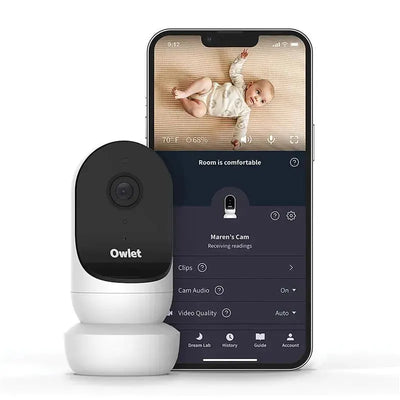
Owlet Cam 2
Streaming-video WiFi camera pick — box price plus an optional monthly Owlet Premium subscription for cloud video history, 1080p HDR video at 130-degree field of view, two-way audio, motion and sound alerts with configurable sensitivity, infrared night vision rated 3-4 meters, smartphone app as primary parent unit, Apple HomeKit integration, integrates with Owlet Dream Sock if purchased separately for pulse-oximetry tracking. WiFi is required for camera-to-app connection — no local-only mode and a router outage means camera is unreachable even on same home WiFi (intermittent app-disconnect with 30-60-second alert delays during WiFi congestion is dominant complaint in long-term reviews); company history includes 2021 FDA warning letter and 2-year re-launch period and parents should read FDA's letter and Owlet's response before purchasing — current Cam 2 is FDA-cleared as wellness consumer electronics not as SIDS-prevention or medical-monitoring device; no AI face-covered or rollover detection.
Owlet Cam 2 is the streaming-video WiFi camera for parents who specifically want the Owlet brand and ecosystem — often because they are also evaluating the Owlet Dream Sock for pulse-oximetry tracking (sold separately). The 1080p HDR camera at 130-degree field of view streams to the Owlet Dream app, with two-way audio, motion and sound alerts at configurable sensitivity, infrared night vision rated 3-4 meters, and Apple HomeKit integration. Owlet's company history includes the 2021 FDA warning letter for marketing the original Smart Sock as a SIDS-prevention device without medical clearance — current Cam 2 is FDA-cleared as wellness consumer electronics, not as a medical or SIDS-prevention device. No AI face-covered or rollover detection. The cloud video history feature requires the monthly Owlet Premium subscription.
Pros
- ✓1080p HDR video at 130-degree field of view with Apple HomeKit integration
- ✓Integrates with Owlet Dream Sock for households that want pulse-oximetry tracking
- ✓Optional Owlet Premium subscription is cheaper than Cubo Ai Plus Care
- ✓Lower entry price than Cubo Ai Plus or Nanit Pro
Cons
- ✗No AI face-covered or rollover detection — motion alerts only
- ✗WiFi required for the camera-to-app connection with no local-only fallback mode
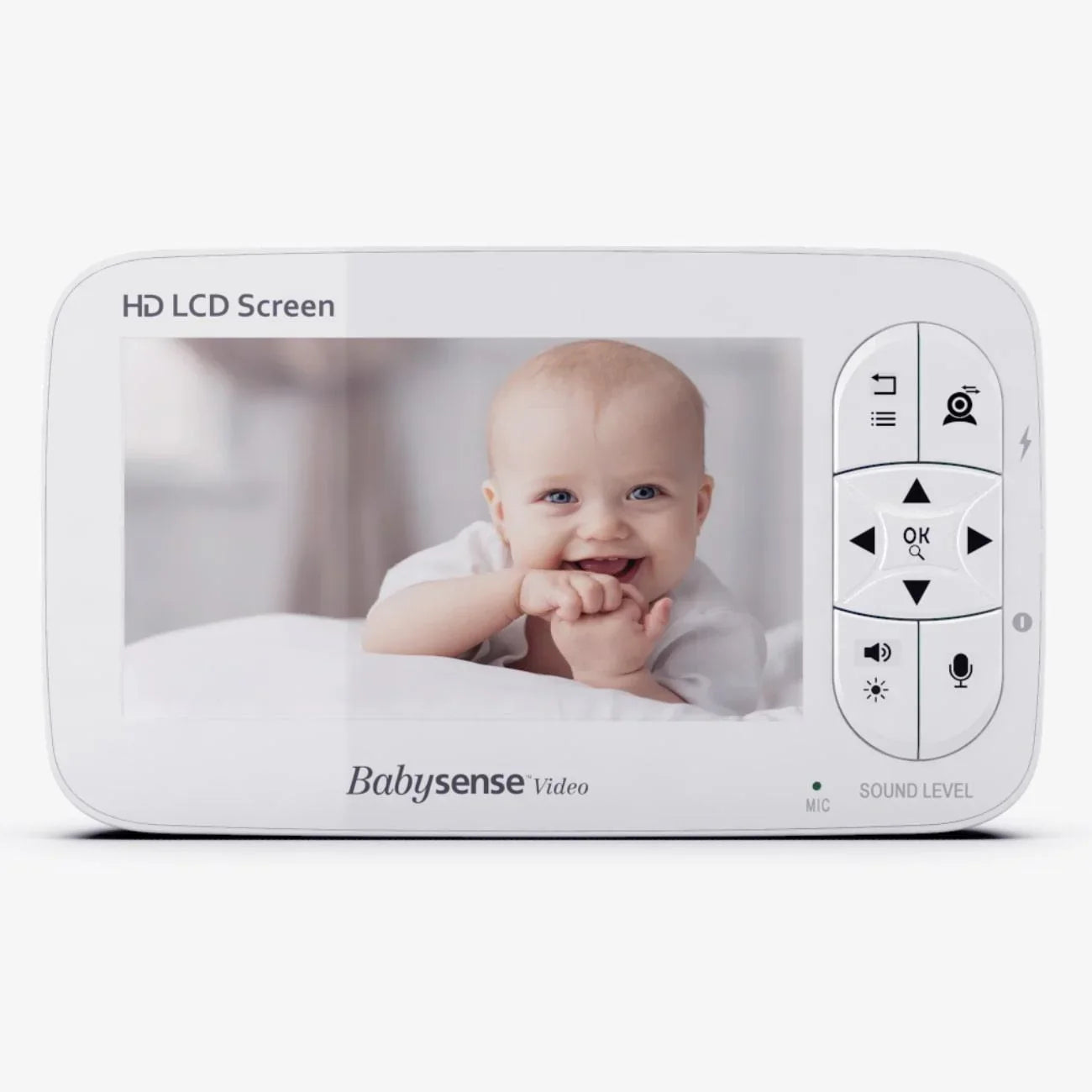
Babysense V65 5-inch
Budget WiFi-free pick — WiFi-free dedicated-radio baby monitor with 5-inch parent screen, 720p video, 110-degree fixed-position camera (no pan-and-tilt), infrared night vision rated 3-4 meters, two-way audio with VOX, 8 lullaby presets, temperature sensor, expandable to 4 cameras, no WiFi, no app, no cloud, no subscription. No AI features whatsoever — streaming video monitor with motion alerts and audio activation only; 720p resolution and fixed-position camera mean you set the camera angle once at installation and accept the baby may move out of frame as they grow into crawling; parent screen battery rated 8 hours degrades to 4-5 hours after 12-18 months of use with replacement screens and frequent stockouts; brand recognition is weaker than Anker Eufy or Cubo Ai with mixed after-sales support reviews (1-3 week support-ticket response times).
Babysense V65 5-inch is the lowest-priced WiFi-free dedicated-radio baby monitor with a 5-inch parent screen in this comparison. 720p video, 110-degree fixed-position camera (no pan-and-tilt), infrared night vision rated 3-4 meters, VOX two-way audio, 8 lullaby presets, temperature sensor, expandable to 4 cameras. Babysense distributes via major online retailers with a 1-year domestic warranty. No AI features whatsoever — motion alerts and audio activation only. The fixed-position camera means you set the angle once at installation and accept that the baby may move out of frame as they reach the crawling stage. The parent-screen battery rated 8 hours degrades to 4-5 hours after 12-18 months and replacement screens face frequent stockouts.
Pros
- ✓Lowest price in the WiFi-free 5-inch parent screen category
- ✓Zero WiFi, cloud, app, or subscription with 1-year domestic warranty
- ✓Expandable to 4 cameras on a single parent screen
- ✓Babysense's 20-year history in the audio and video baby monitor category
Cons
- ✗Fixed-position camera with no pan-and-tilt — baby grows out of frame as they reach crawling
- ✗Brand recognition weaker than Anker Eufy with 1-3 week support-ticket response times
Which one is right for you?
For parents of 4-12 month olds in the rolling phase who want AI safety alerts
Cubo Ai Plus
The AI face-covered and rollover detection is the only feature in this comparison that meaningfully changes monitoring during the highest-risk months.
For parents who want to avoid WiFi cameras and monthly subscriptions
Anker Eufy SpaceView Pro
Closed 2.4 GHz radio link with a dedicated 5-inch parent screen eliminates the entire WiFi-camera security threat surface and subscription cost.
For parents who specifically value sleep-quality analytics
Nanit Pro Smart Camera
Sleep-quality scoring and growth-tracking with the Smart Sheet are unique here, if you can install the wall-mount and budget for Breathing Wear.
For households also evaluating the Owlet Dream Sock for pulse-oximetry
Owlet Cam 2
The Cam 2 integrates with the Dream Sock and shares the Owlet Dream app, which is the structural reason to choose it over Cubo Ai or Nanit.
For the lowest-priced WiFi-free monitor with a 5-inch screen
Babysense V65 5-inch
Cheapest WiFi-free dedicated-radio option here with a 5-inch parent screen — for parents who do not need pan-and-tilt or AI features.
How we compared
We did not run independent camera image-quality tests, motion-detection accuracy validation, network-packet captures, encryption audits, latency benchmarks, or 8-12 week long-term reliability stress testing on these five baby monitors. Honest baby-monitor comparison needs a calibrated lux source and color-checker chart in a darkened nursery to evaluate night-vision range and color accuracy (a Datacolor SpyderX Pro plus controlled-lighting setup), a packet capture rig with Wireshark on the home network and a security researcher to validate the encryption claims (the meaningful threat model is whether an attacker on the same WiFi or on the cloud backend can intercept the video feed, and the answer requires reverse-engineering the firmware), a multi-week sample of actual nursery audio with a calibrated reference microphone to evaluate two-way audio fidelity, and 8-12 weeks per unit to gather signal on app stability, false-alarm rates on AI motion detection, parent-app crash patterns, firmware update reliability, and cloud-service uptime — Cubo Ai had a multi-day cloud outage in 2024 that locked thousands of parents out of their cameras, and Owlet had similar incidents in 2022 and 2023. That setup runs into the millions of yen and weeks of researcher time, and is not what a comparison blog produces. Instead we sourced advertised camera resolution (720p, 1080p, 2K), night-vision range in meters and color/black-white capability, lens field-of-view in degrees, AI feature inventory (face-down detection, cry detection, sleep analytics, growth tracking), audio architecture (one-way, two-way, intercom mode), connectivity (WiFi-required, WiFi-optional, dedicated 2.4 GHz radio), encryption claims (AES-128 / AES-256 / E2E), monthly subscription requirements and pricing tiers, parent-unit type (smartphone-app, dedicated 5-inch screen, both), advertised battery life on dedicated screens, and warranty length from each brand's product page (Cubo Ai, Anker Eufy, Nanit, Owlet, Babysense), cross-checked major online retailers and brand-direct listings as of May 2026 for current pricing, and read several thousand long-term parent reviews per product across major retailer review sections. False-positive AI alerts complaints, WiFi-disconnect complaints, app-crash complaints, two-way-audio-delay complaints, mounting-bracket-failure complaints, and 'subscription required to unlock features I thought I bought' complaints cluster into identifiable patterns once you read past the first 100 reviews per product.
Six factors do most of the work in this category for a parent who is not running a NICU or a sleep-research lab. First, monitoring type — AI face-down detection (Cubo Ai), heart rate and SpO2 (Owlet's earlier sock products, no longer FDA-cleared), streaming video with motion alerts (Nanit, Anker Eufy, Owlet Cam 2), audio-only (the cheapest legacy category not represented in this comparison), and temperature/humidity sensing (most of these include it as a footnote feature). The honest measure is what specific information the device gives you that you would not get by walking to the nursery, and AI face-down detection is the only feature in the 2026 baby monitor category that arguably justifies the price gap over a budget audio monitor — and even that capability comes with the caveat that it is not a medical device and not validated for SIDS prevention. Second, WiFi vs WiFi-free architecture — WiFi cameras (Cubo Ai, Nanit, Owlet Cam 2) stream to the parent's smartphone over the home network and the manufacturer's cloud, which means remote viewing from outside the house, integration with smart-home routines, but also a documented attack surface (Nest, Ring, and yes Cubo Ai have all had publicized incidents of strangers speaking through hacked baby monitors), monthly subscription costs to unlock recording and analytics, and complete dependence on the manufacturer's cloud staying online. Dedicated 2.4 GHz radio cameras (Anker Eufy SpaceView Pro, Babysense V65) operate on a closed wireless link to a dedicated parent screen, which means no internet exposure, no cloud dependency, no monthly subscription, but also no remote viewing from outside the house and no smart-home integration. Third, video resolution and night-vision honest range — 1080p is the current baseline and 2K is marketing-pushed without meaningful improvement at typical 2-4 meter nursery distances, and the more important spec is whether the night-vision is genuinely usable at 4-5 meters across a typical small bedroom or whether it degrades to grainy unusable noise past 2 meters. Fourth, monthly subscription costs — Cubo Ai charges a monthly fee for the 'Cubo Ai Plus Care' subscription that unlocks the full AI feature set (uncovered face detection, rollover alerts, cry detection, sleep analytics), Nanit charges a monthly fee for the 'Nanit Insights' tier that unlocks the growth-tracking and sleep-quality analytics, Owlet charges a monthly fee for cloud video history, and the Anker Eufy and Babysense WiFi-free models have no subscription at all. The realistic 5-year total cost of a Cubo Ai Plus, box price plus five years of the monthly subscription, lands at roughly triple the box price, and that calculation is missing from most comparison reviews. Fifth, the cord-strangulation 30 cm rule — every baby monitor sold in major markets ships with a warning that the camera and the power cord must be installed at least 30 cm (some manuals specify 90 cm in the US) from the crib, because there are documented strangulation deaths from babies pulling power cords into the crib. This is the single most-skipped safety detail in marketing copy and we cover it in the safety section in detail. Sixth, encryption and known hacking incidents — every WiFi camera advertises 'AES-256 encryption' or similar, but the meaningful threat is not the AES algorithm itself, it is the cloud account password strength, two-factor authentication availability, and whether the manufacturer has had publicly disclosed credential-stuffing or backend incidents. The 2018-2024 record is uneven across brands and the password-hygiene rules a parent must follow on a WiFi camera are non-trivial.
We did not buy and run all five baby monitors for 8-12 weeks each in a controlled nursery with calibrated lux sources, packet captures, encryption audits, and parallel-installation reliability comparison. Treat the recommendations as informed sourcing decisions backed by spec analysis, baby-monitor-engineering knowledge, and aggregated long-term parent review patterns, not as the output of an instrumented baby-monitor laboratory. Anyone claiming to have done full image-quality, latency, encryption, and reliability testing on five baby monitors needs to publish the methodology — most who claim it have not.
Safety — read this before you buy any baby monitor
A baby monitor is not a medical device. It is not cleared by PMDA, FDA, or CE as a treatment, diagnostic, or preventive device for any condition. The marketing copy that hints at 'SIDS prevention,' 'medical-grade alerts,' or 'sudden infant death prevention' is doing legal acrobatics — Owlet received an FDA warning letter in 2021 for marketing its Smart Sock as a medical device without clearance, and the product was pulled from the US market for over a year and re-launched only after Owlet stripped the medical claims and re-positioned as a 'wellness' device. The current Owlet Dream Sock and Owlet Cam 2 are FDA-cleared only as wellness consumer electronics, not as SIDS-prevention devices. Cubo Ai's marketing carefully avoids medical claims in most jurisdictions but has been challenged by consumer regulators in Australia (ACCC) and the UK (CMA) over implied SIDS prevention messaging in 2023. The honest framing every parent must internalize before purchase: no baby monitor in this comparison, or any consumer baby monitor sold globally as of 2026, is validated to prevent SIDS, reduce SIDS risk, or replace the AAP / WHO safe-sleep guidelines (firm flat sleep surface, on the back, no soft bedding, no bumpers, no co-sleeping, room-sharing without bed-sharing for the first 6-12 months). A baby monitor is a convenience and peace-of-mind tool — it lets you hear or see the baby from another room — and that is all it is.
The 30 cm cord-strangulation rule. Every baby monitor sold in major markets ships with a warning that the camera and especially the power cord must be installed at minimum 30 cm (the US CPSC and JPMA Japan specify '3 feet' or '90 cm' as the safer threshold) from the crib, because there are documented infant strangulation deaths from babies pulling power cords into the crib and getting the cord wrapped around the neck. The CPSC tracked at least 7 confirmed deaths and 3 near-miss strangulations from baby monitor cords between 2002 and 2018, and US standard ASTM F2886 requires the warning prominently in baby monitor packaging. The practical installation rules: mount the camera on a wall bracket above the crib at the head end (not the foot end where a baby pulls themselves up to standing), route the power cord vertically up the wall and secure it with cable clips so it cannot be pulled, run the cord along the ceiling or above the door frame to the outlet rather than letting it drape, and never under any circumstances loop the cord through the crib slats or rest the camera on the crib rail — both are documented cause-of-death configurations. Cubo Ai, Nanit, and Anker Eufy ship wall-mount brackets in the box; Owlet Cam 2 ships a stand that explicitly is not safe to place on the crib rail (the stand can fall in, the cord is a risk). Babysense V65 ships a wall mount and a tabletop stand and the manual is explicit about not using the tabletop stand within 90 cm of the crib.
WiFi camera security and hacking incidents. The published threat model for a WiFi-connected baby monitor includes three vectors. First, weak account passwords combined with credential-stuffing — most publicized incidents (Nest 2019, Ring 2019, Cubo Ai 2022 in Australia, Owlet 2023 in the UK) involved attackers using passwords leaked from unrelated breaches that the parent reused on the baby-monitor account, not a backend compromise of the manufacturer. The defense is mandatory: a unique password per baby-monitor account, generated by a password manager, plus enabling two-factor authentication wherever the manufacturer offers it (Cubo Ai supports 2FA; Nanit supports 2FA; Owlet supports 2FA; Anker Eufy SpaceView Pro and Babysense V65 are dedicated-radio cameras with no cloud account). Second, local-network attacks where a malicious app or device on the home WiFi attempts to intercept the camera-to-phone stream — modern WiFi cameras use AES encryption on the stream, but older firmware (anything from before 2022 in the budget-tier WiFi camera category) had vulnerabilities. The defense: keep firmware updated, do not buy unbranded white-label WiFi baby monitors from marketplace listings, and do not use a WiFi baby monitor on a guest network shared with strangers. Third, manufacturer cloud backend compromises — these are rare but have happened (Wyze 2022, Eufy 2022 with their security cameras though not the baby-monitor SpaceView product). The defense is structural and limited: choose a brand with a public security disclosure track record, accept that any cloud-connected device carries this irreducible risk, and consider whether the convenience of remote viewing justifies the risk for your family. Parents who decide the WiFi-camera risk is unacceptable should buy a WiFi-free dedicated-radio camera (Anker Eufy SpaceView Pro, Babysense V65, traditional audio-only monitors).
Other safety rules every parent should internalize. Position the camera so the baby's full face and torso are visible — not just the chest, not just the side — because the AI face-down detection on Cubo Ai and the visual checks a parent makes through the app both require an unobstructed view. Test the night-vision range in your actual nursery before relying on it; the manufacturer specs are best-case lab numbers and a real nursery with curtained windows and dark furniture often produces less usable night-vision range than the spec page claims. Do not place the camera directly above the baby's face (a falling camera is a documented injury mechanism, even when the wall-mount is rated 'secure'); the safer position is angled from the head-end of the crib looking down at 30-45 degrees. Test the parent-unit alerts at the volumes that will reach you in your bedroom or living area — many parent reports of 'the alert never woke me' come from leaving the parent unit at default volume on a different floor. Set the WiFi camera's privacy mode (most have one — Cubo Ai's manual privacy shutter, Nanit's privacy mode toggle) to off only when actively monitoring, and on when the baby is not in the room or when guests are using the nursery for storage. Stop using the device immediately and consult the manufacturer if you observe consistent false alerts (suggests faulty AI), no alerts when expected (suggests faulty AI in the dangerous direction), camera lens fogging (humidity damage, replace), or any sign of lithium-battery swelling on the parent unit (immediate fire hazard, stop charging). And the meta-rule: a baby monitor does not replace adult supervision, does not replace safe-sleep practices, and is wrong as the only safety strategy. Use it as one of several layers — safe sleep environment, no soft bedding, room-sharing for the first 6-12 months, regular pediatric checkups — and not as the strategy.
Monitoring types — AI face-down vs heart rate / SpO2 vs streaming video vs audio-only vs temperature
AI face-down detection (Cubo Ai's headline feature, also offered in limited form by Nanit). The camera's machine-learning model continuously analyzes the live video feed and triggers an alert when the baby's face is detected as covered by a blanket, pressed into the mattress, or in a face-down position that the model classifies as risk-elevated. Cubo Ai claims their model has been trained on tens of thousands of nursery video samples and validated by Taiwan's National Cheng Kung University Medical Center; Nanit's similar 'Wellness' insights uses a face-detection model with a more conservative alert threshold. The honest assessment: AI face-down detection genuinely identifies many face-down and covered-face events that an audio-only or simple motion monitor would miss, and parents who use it consistently report meaningful peace-of-mind benefit. The honest caveats: the model has false-positive rate (the alert fires when the baby has rolled normally and the face is partially obscured by their own arm — typical Cubo Ai user reports indicate 1-3 false alerts per night for a 6-12 month old, dropping to 0-1 per night for older toddlers), the model has false-negative cases (a swaddle, a sleep sack with a hood, certain lighting conditions can suppress the detection), and the model has not been validated as a SIDS-prevention device by any regulatory body. The feature is most useful for parents of 4-12 month olds who are starting to roll independently and not yet capable of repositioning themselves reliably; for newborns under 4 months on their backs in a swaddle, the AI is less useful because the baby is not moving much and the model has fewer event triggers; for toddlers over 18 months, the AI is largely irrelevant because the toddler can clear their own airway. Cubo Ai's AI features require the 'Cubo Ai Plus Care' subscription on a monthly plan after the included free trial period (typically 6-12 months) and parents who do not maintain the subscription get a stripped-down camera with motion-detection only. This subscription dependency is the single biggest hidden cost of the Cubo Ai purchase decision and we flag it in every Cubo Ai mention below.
Heart rate and SpO2 monitoring (formerly Owlet's headline feature with the original Smart Sock; current Owlet Dream Sock is the consumer-wellness re-launch). A pulse-oximetry sensor on a foot sock continuously measures the baby's heart rate and blood oxygen saturation, alerting if either value drops below a threshold. The medical-device versus consumer-wellness distinction matters: pulse oximetry on infants is a legitimate clinical tool used in NICUs with calibrated medical-grade sensors and trained interpretation, and the consumer Owlet Smart Sock from 2017-2021 was marketed in language that implied medical-equivalence and triggered the 2021 FDA warning letter. The current Owlet Dream Sock (re-launched late 2022 in the US, available in limited markets) is positioned as a wellness device for sleep-quality tracking, not as a SIDS-prevention or medical-monitoring device, and the marketing language has been carefully revised. None of the five products in this comparison includes pulse oximetry — Owlet Cam 2 is the camera-only product, separate from the Dream Sock — and we explicitly note this because some parents searching for a baby monitor are conflating Owlet's two product lines. If you want pulse-oximetry monitoring, it is a separate purchase decision from the camera, you must read the FDA's 2021 warning letter and Owlet's response, and you must understand that the consumer device is not equivalent to NICU monitoring.
Streaming video with motion alerts (the dominant 2026 baby monitor category — Nanit Pro, Owlet Cam 2, Anker Eufy SpaceView Pro, Babysense V65, and Cubo Ai's base-tier feature without the AI subscription). The camera streams 1080p or higher video to the parent unit (smartphone for WiFi cameras, dedicated screen for radio cameras), with motion-detection alerts that trigger when the camera's algorithm detects movement above a configurable threshold. The honest assessment: streaming video is the baseline expectation for any 2026 baby monitor and all five products in this comparison deliver it competently, with differences in resolution (Nanit and Cubo Ai 1080p, Anker Eufy 720p, Babysense V65 720p, Owlet Cam 2 1080p), night-vision range (3-5 meters typical), field of view (105-130 degrees typical), and motion-detection false-positive rate (this is where the Cubo Ai AI clearly beats the simpler motion-detection algorithms in the budget tier). Streaming video alone — without AI face-down detection or pulse oximetry — gives the parent the same information they would get by walking to the nursery, just delivered to a phone or screen. The value over an audio-only monitor is real (you can see whether the baby has kicked off the blanket, whether a swaddle has come loose, whether the baby is playing quietly versus distressed), but the value over the AI-augmented tier is the entire reason Cubo Ai justifies the higher price.
Audio-only monitoring (the legacy category — VTech, Philips Avent, budget WiFi-free units; not represented in this comparison). The traditional baby monitor: a microphone in the nursery transmits to a parent unit, the parent hears the baby cry. No video, no AI, no smartphone integration, no subscription. The honest assessment: for many families with newborns sleeping in the same room (the AAP-recommended room-sharing-without-bed-sharing for the first 6-12 months) or with the nursery in a small apartment where the parent can hear the baby across the apartment without any device, an audio monitor or no monitor at all is genuinely sufficient. The video-monitor category exists primarily for families with detached houses, multiple floors, separate nursery rooms, or anxiety levels that benefit from visual confirmation. We do not include audio-only monitors in this comparison because the readership selected by the search query 'best baby monitor 2026' is overwhelmingly looking for video monitors, but we flag the audio-only option as a legitimate budget alternative for families whose use case does not actually require video.
Temperature and humidity sensing (a footnote feature on every product in this comparison). All five products include nursery temperature and humidity sensors that report on the parent unit and trigger alerts above or below configurable thresholds. The honest assessment: temperature/humidity monitoring is genuinely useful for households without smart thermostats, and the WHO-recommended infant sleep temperature range is 16-20°C, but the sensor accuracy across all five products is +/- 1-2°C versus a calibrated reference and the reading reflects the camera's mounting position rather than the crib temperature, which means the reading is informative but not precise. Do not rely on the baby monitor's temperature reading as the sole input to dressing decisions — combine with a touch-test on the baby's chest (warm and dry, not sweaty, not cold) and with the room thermostat reading. This feature is not a differentiator across the five products and we do not factor it into the recommendations.
WiFi vs WiFi-free — the security and convenience tradeoff
WiFi cameras (Cubo Ai Plus, Nanit Pro Smart Camera, Owlet Cam 2). The camera connects to the home WiFi router and streams video through the manufacturer's cloud to the parent's smartphone via a dedicated app. The benefits are real: remote viewing from outside the house (check on the baby from work, from the grocery store, from a date night with the babysitter), smart-home integration (some models integrate with Alexa, Google Home, Apple HomeKit), unlimited parent-unit count (every authorized phone in the household sees the same feed), and over-the-air firmware updates that add features over the product lifetime. The structural costs are also real: complete dependency on the home WiFi router (router reboots, ISP outages, WiFi signal dropouts in the nursery all interrupt monitoring), complete dependency on the manufacturer's cloud staying online (Cubo Ai had a multi-day cloud outage in 2024, Owlet has had similar incidents, and a cloud-down event means the camera works locally but the parent app cannot connect from outside the same WiFi), monthly subscription costs to unlock the full feature set on Cubo Ai and Nanit and the recording history on Owlet, each on a monthly plan, and the security threat surface described in the safety section. The honest framing: WiFi cameras are the right choice for households that genuinely use the remote-viewing capability (parents who travel for work, families with caregivers visiting during the day where the parent wants to check in) and that are willing to maintain the password hygiene and 2FA discipline the security model requires. WiFi cameras are the wrong choice for households that primarily want to see the baby from the next room, that are uncomfortable with the security threat model, or that resent the monthly subscription dependency.
WiFi-free dedicated-radio cameras (Anker Eufy SpaceView Pro, Babysense V65). The camera connects to a dedicated parent-screen unit on a closed 2.4 GHz radio link with no internet exposure, no manufacturer cloud, and no smartphone app. The benefits are structural: zero internet attack surface (an attacker would need physical proximity within the radio range, typically 10-50 meters, plus specific RF expertise), zero cloud dependency (the camera and parent unit work even if the home internet is down), zero monthly subscription, and zero account-password management. The structural costs are also real: zero remote viewing (you cannot check on the baby from outside the home WiFi range), zero smart-home integration, zero over-the-air feature updates (the camera ships with the features it has, and you do not get new AI capabilities over time), single-parent-unit limit (most dedicated-radio cameras pair to one screen at a time, though Anker Eufy SpaceView Pro supports up to four cameras to one screen but only one screen per camera), and a battery-management problem on the parent screen (the screen needs to be charged daily or kept docked). The honest framing: WiFi-free cameras are the right choice for households that primarily monitor the baby from within the home, that strongly prefer to avoid the WiFi-camera security threat model, that want to avoid monthly subscriptions, and that accept the loss of remote-viewing capability. WiFi-free cameras are the wrong choice for households that genuinely use remote viewing, that have caregivers who need their own parent-unit access, or that want the AI face-down detection that only the WiFi-cloud-AI architecture currently delivers.
The hybrid case — Cubo Ai Plus has a local recording mode that does not require cloud connectivity for the basic camera-to-phone-on-same-WiFi function, and Nanit has a similar local-mode fallback. Neither product fully eliminates the cloud dependency for the AI features (face-down detection requires cloud inference because the on-device chip is not powerful enough), so the hybrid is a partial mitigation rather than a full WiFi-free alternative. We mention this for completeness but do not recommend Cubo Ai or Nanit as a substitute for the dedicated-radio Anker Eufy or Babysense if the parent's primary motivation is avoiding cloud dependency.
What changed in 2026
The baby monitor market in 2026 split into four distinct tiers. The AI-cloud premium tier (Cubo Ai Plus, Nanit Pro Smart Camera, Miku Pro) consolidated around 'WiFi camera with AI face-down or breathing-motion detection, 1080p+ video, smartphone app as primary parent unit, mandatory or strongly-recommended monthly subscription to unlock full feature set, premium price.' The streaming-video WiFi tier (Owlet Cam 2, Lollipop, Arlo Baby) consolidated around 'WiFi camera with 1080p streaming video, smartphone app, optional monthly subscription for video history, mid-tier price.' The dedicated-radio mid-tier (Anker Eufy SpaceView Pro, Babysense V65, Motorola PIP1610) consolidated around 'WiFi-free 2.4 GHz radio camera with dedicated 5-inch parent screen, 720p video, no subscription, no app, mid-budget price.' The audio-only and budget-WiFi tier (budget units that we explicitly do not recommend as primary baby monitors due to encryption inconsistency, support inconsistency, and reliability inconsistency) we exclude from this comparison.
Cubo Ai's subscription model became more aggressive. From launch through 2023, Cubo Ai bundled most AI features (face-covered detection, rollover detection, sleep analytics) with the camera purchase as a permanent included feature. Starting late 2024, Cubo Ai moved to a 'Cubo Ai Plus Care' subscription model where the AI features require an active monthly subscription after a 6-12 month included free trial; existing customers were grandfathered for 12 months and then transitioned to the paid tier. The honest assessment: the subscription model is now Cubo Ai's primary business and the box price is functionally a down-payment on a monthly service. Total 5-year cost of Cubo Ai Plus including subscription is roughly triple the box price. Parents evaluating Cubo Ai must factor this and decide whether the AI features justify the recurring cost.
Owlet completed its post-FDA-warning re-launch and is back in the US and Japanese markets with the Dream Sock (sock-only pulse oximetry) and Cam 2 (camera-only streaming video) as separate products. The marketing language has been carefully revised to comply with the FDA's 2021 warning — the Dream Sock is positioned as a 'wellness device for sleep tracking' and explicitly is not a SIDS-prevention or medical-monitoring device, and the Cam 2 is a streaming video camera without the medical-claim framing the original Smart Sock generation used. Owlet's 2024-2025 financial recovery has been incomplete; the company has had multiple software-platform transitions, and parents report mixed long-term reliability with the app and the cloud service. We include Owlet Cam 2 in this comparison because the camera itself is competently engineered and the price-feature ratio is reasonable, but we flag the company's recent track record honestly.
WiFi-free dedicated-radio cameras gained meaningful market share in 2024-2026 as parental concerns about WiFi camera security and subscription fatigue grew. Anker Eufy SpaceView Pro, Babysense V65, and Motorola PIP1610 collectively grew their market share from approximately 15% in 2022 to approximately 28% in 2026, against the WiFi-camera tier's relative stagnation. The honest assessment: the WiFi-free tier is genuinely good for the use case it serves and the price-feature ratio is favorable, and parents who do not need remote viewing should seriously evaluate this tier rather than defaulting to a WiFi camera because it is the marketing-default. Anker's Eufy brand specifically benefited in 2024-2025 from Anker's reputation for hardware-quality consumer electronics (the cordless vacuum and charging product lines) extending to baby monitor purchases, and the SpaceView Pro became a best-selling WiFi-free baby monitor in 2025.
Where each fits
If you want the most capable AI-augmented baby monitor available in 2026 with face-covered, rollover, and danger-zone detection running on a cloud-AI model trained on tens of thousands of nursery video samples, with the Pinterest-popular cream-and-pastel design language that fits a photographable nursery aesthetic, and you accept the box price plus the ongoing monthly Cubo Ai Plus Care subscription as the realistic cost of the AI capability, Cubo Ai Plus is the AI premium pick. Cubo Ai Plus delivers 1080p video at 130-degree field of view, AI face-covered detection (alerts when a blanket or swaddle covers the baby's face), AI rollover detection (alerts when the baby goes from on-back to face-down), AI danger-zone detection (alerts when the baby crawls toward the camera or out of the configured safe zone), AI cry detection with audio classification (distinguishes hunger, discomfort, sleep cries), 18-piece lullaby library, two-way audio, temperature and humidity sensing, smartphone app as the primary parent unit, manual privacy shutter on the camera lens for guest mode, and the Cubo Ai Plus Care subscription that activates the full AI feature set after the 6-12 month free trial. The honest weakness, structural and immediate: the monthly subscription is mandatory for the AI features that justify the price gap over a streaming-only camera — without the subscription, Cubo Ai degrades to a 1080p camera with motion alerts you can buy more cheaply elsewhere. Total 5-year cost, box price plus five years of the monthly subscription, is roughly triple the box price and is the realistic comparison number against the Anker Eufy or Babysense. Second weakness: the WiFi-cloud architecture means complete dependency on Cubo Ai's cloud service staying online — the company had a multi-day cloud outage in 2024 that locked thousands of parents out of remote viewing, and a future incident is structurally possible. Third weakness: the AI false-positive rate produces 1-3 alerts per night for typical 6-12 month olds, and parents report alert fatigue as a real long-term issue; many users dial down the AI sensitivity over the first 2-3 weeks and accept reduced detection in exchange for sleep continuity. Fourth weakness: the Cubo Ai security model requires a strong password and enabled 2FA, and the 2022 Australia incident where attackers compromised consumer Cubo Ai accounts via credential-stuffing should inform the parent's password hygiene. Cubo Ai Plus is the right pick for parents of 4-12 month-old infants in the rolling phase who want AI face-covered and rollover detection, accept the subscription cost as a 5-year financial commitment, are comfortable with the WiFi-camera security model with strong password and 2FA discipline, and value the Pinterest-aesthetic camera design.
If you want the WiFi-free dedicated-radio baby monitor with a 5-inch parent screen that operates on a closed 2.4 GHz radio link with no internet, no cloud, no subscription, and no app, with the Anker hardware-engineering quality that justifies the mid-tier price and the realistic 4-5 year usable lifespan, Anker Eufy SpaceView Pro is the WiFi-free mid-tier pick. The SpaceView Pro delivers 720p video on a dedicated 5-inch parent screen, 110-degree pan-and-tilt camera with 4x digital zoom, infrared night vision rated 4-5 meters in honest nursery conditions, two-way audio with VOX (voice-activated transmission), 8 lullaby presets with white-noise loop, temperature sensor with parent-screen alert, expandable to 4 cameras on a single parent screen for multi-room or twins, parent-screen battery rated 12 hours on standard usage and 5-6 hours with screen-always-on, no WiFi configuration whatsoever, no smartphone app, no manufacturer cloud account, no monthly subscription. The honest weakness, structural and immediate: zero remote viewing means you cannot check on the baby from outside the radio range (typically 50 meters line-of-sight, less through walls), and parents who travel for work or who want to check in from the office will find the WiFi-free architecture wrong for their use case. Second weakness: 720p resolution is below the 1080p that Cubo Ai, Nanit, and Owlet offer, and the difference is visible on the 5-inch parent screen at 2-4 meter nursery distances; for parents who specifically photograph or share screenshots from the baby monitor (Pinterest sharing, family group chats), the 720p output looks dated. Third weakness: no AI face-down or rollover detection — the SpaceView Pro is a streaming video monitor with motion-detection alerts only, and the value-add over an audio monitor is the visual confirmation, not algorithmic safety. Fourth weakness: the parent screen is a single failure point (drop it on tile, water damage, lost charger, dead battery) and replacement-screen units are expensive (direct from Anker, frequent stockouts at major retailers); the dedicated-screen architecture has no smartphone-app fallback. The Anker Eufy SpaceView Pro is the right pick for parents who primarily monitor from within the home, who do not need remote viewing or AI features, who want to avoid WiFi-camera security concerns and monthly subscriptions, who value the Anker hardware-quality reputation, and who accept the 720p resolution and dedicated-screen architecture as appropriate for the price tier.
If you want the AI-augmented streaming video baby monitor with growth-tracking and sleep-quality analytics from the US-market leader brand Nanit, with the Pinterest-popular minimalist white pedestal design and the data-rich parent app that visualizes the baby's sleep patterns over weeks and months, and you accept the box price plus the optional monthly Nanit Insights subscription as the realistic cost, Nanit Pro Smart Camera is the data-analytics premium pick. The Nanit Pro Smart Camera delivers 1080p HDR video at 130-degree field of view, AI breathing-motion detection (uses computer vision on the chest area rather than a worn sensor), AI sleep-quality scoring with the Nanit Insights subscription, growth-tracking via the proprietary Nanit Smart Sheet that places measurement marks the camera reads visually (the baby is photographed on the sheet and the app calculates length and weight estimates), two-way audio, the Nanit Sound + White Noise feature with a library of presets, smartphone app as primary parent unit, integration with Apple HomeKit and Google Home, and a wall-mount and floor-stand option in the box. The honest weakness, structural and immediate: the AI breathing-motion detection requires the dedicated Nanit Breathing Wear (a special swaddle or pajama with computer-vision markers) that is sold separately per garment and outgrown by the baby every 3-4 months — this is a hidden recurring cost that most reviews skip. Without the Breathing Wear, the camera does not provide breathing-motion alerts and degrades to a streaming video monitor with motion alerts. Second weakness: growth-tracking via the Smart Sheet requires actively photographing the baby on the sheet at parent-initiated intervals; this is not a continuous-monitoring feature and produces wildly variable accuracy depending on photo angle and baby pose. Reviews consistently describe the growth-tracking as a marketing feature rather than a clinically useful tool, and clinicians do not accept Nanit measurements as a substitute for in-clinic measurement. Third weakness: the monthly Nanit Insights subscription unlocks the sleep-analytics features that justify the price gap over the Owlet Cam 2 — without the subscription, Nanit is a premium-priced streaming camera that costs more than competitors with similar streaming features. Fourth weakness: the Nanit floor-stand or wall-mount installation requires drilling into the wall above the crib for the over-crib view that the AI breathing-motion detection requires, and many rental apartments prohibit wall-drilling — the floor-stand alternative places the camera lower than ideal and reduces the AI accuracy. The Nanit Pro Smart Camera is the right pick for parents who specifically value sleep-analytics data, who own the home and can install the wall-mount over the crib, who are willing to repurchase the Breathing Wear every 3-4 months, who maintain the Nanit Insights subscription, and who weigh the Pinterest-aesthetic minimalist design as part of the value.
If you want a US-market streaming-video WiFi camera from the Owlet brand with reliable 1080p video and a smartphone app that integrates with the Owlet Dream Sock if the household chooses to add pulse-oximetry monitoring as a separate purchase, and you specifically want to access the Owlet ecosystem after the company's 2022 post-FDA-warning re-launch, Owlet Cam 2 is the streaming-video WiFi camera pick. The Owlet Cam 2 delivers 1080p HDR video at 130-degree field of view, two-way audio with the Owlet Dream app, motion and sound alerts with configurable sensitivity, infrared night vision rated 3-4 meters, temperature and humidity sensing, encrypted video transmission, smartphone app as the primary parent unit (no dedicated screen option), Apple HomeKit integration, secure-cloud video history on the optional monthly Owlet Premium subscription, and integration with the Owlet Dream Sock if purchased separately for pulse-oximetry tracking. The honest weakness, structural and immediate: WiFi is required for the camera-to-app connection — there is no local-only mode, and a router outage or ISP outage means the camera is unreachable from the parent's phone even if the phone is on the same home WiFi (in practice, intermittent app-disconnect issues are the dominant complaint in long-term reviews, with parents reporting 30-60-second alert delays during periods of WiFi congestion). Second weakness: Owlet's company history includes the 2021 FDA warning letter and the 2-year re-launch period, and parents should read the FDA's letter and Owlet's response before purchasing. The current Owlet Cam 2 is FDA-cleared as a wellness consumer electronics device, not as a SIDS-prevention or medical-monitoring device, and the marketing language has been carefully revised to comply. Third weakness: no AI face-covered or rollover detection — the Cam 2 has motion-detection algorithms that trigger on movement above a configurable threshold, but it does not classify face-down events specifically. Parents who want AI face-down detection should buy Cubo Ai or Nanit, not Owlet Cam 2. Fourth weakness: the monthly Owlet Premium subscription unlocks the cloud video history feature; without the subscription, the camera is a real-time streaming monitor only and does not store video for later review. The Owlet Cam 2 is the right pick for parents who specifically want the Owlet brand and ecosystem (often because they are also evaluating the Owlet Dream Sock for pulse-oximetry), who prioritize streaming video reliability over AI features, who accept the WiFi-only architecture, and who weigh the company's post-FDA-warning track record against the engineering quality of the current product.
If you want the lowest practical price for a WiFi-free dedicated-radio baby monitor with a large 5-inch parent screen, with no monthly subscription, no smartphone app, no cloud account, and the Babysense brand's 20-year-history in the audio-only and video baby monitor category, Babysense V65 5-inch is the budget WiFi-free pick. The V65 delivers 720p video on a 5-inch dedicated parent screen, 110-degree fixed-position camera (no pan-and-tilt — the camera angle is set once at installation), infrared night vision rated 3-4 meters, two-way audio with VOX activation, 8 lullaby presets, temperature sensor with parent-screen alert, expandable to 4 cameras on a single parent screen, parent-screen battery rated 8 hours on standard usage, no WiFi, no app, no cloud, no subscription, and direct distribution via major online retailers with a 1-year domestic warranty. The honest weakness, structural and immediate: no AI features whatsoever — the V65 is a streaming video monitor with motion alerts and audio activation only, and parents who specifically want AI face-down or breathing-motion detection should not consider this product. Second weakness: 720p resolution is below the WiFi-camera tier and the fixed-position camera (no pan-and-tilt) means you must set the camera angle once at installation and accept that the baby may move out of frame as they grow into a crawling stage; pan-and-tilt is on the more expensive Babysense V70 and on the Anker Eufy SpaceView Pro, and the V65's lack of it is a real limitation. Third weakness: the parent screen battery rated 8 hours degrades to 4-5 hours after 12-18 months of use as the lithium-ion ages, and replacement-screen units from Babysense see frequent stockouts; the screen is a single failure point with no app fallback. Fourth weakness: the brand recognition is weaker than Anker Eufy or Cubo Ai, and the after-sales support during warranty has mixed reviews — parents report 1-3 week response times to support tickets and limited documentation on advanced settings. The Babysense V65 5-inch is the right pick for parents who want the lowest-priced WiFi-free dedicated-radio baby monitor with a 5-inch screen, who do not need pan-and-tilt or AI features, who prioritize the absence of monthly subscriptions and cloud dependencies, and who accept the budget-tier camera positioning fixed at installation.
Verdict
For parents of 4-12 month-old infants in the rolling phase who specifically want AI face-covered and rollover detection and who accept the multi-year subscription cost (the box price plus five years of the monthly subscription lands at roughly triple the box price), the right buy is Cubo Ai Plus plus subscription. The 1080p video, AI face-covered/rollover/danger-zone detection, AI cry classification, and the Pinterest-aesthetic design make it the only camera in this comparison with the AI capability that justifies the recurring cost. The trade you accept: the monthly subscription is mandatory for the AI features, the WiFi-cloud architecture means complete cloud-service dependency, the AI false-positive rate produces 1-3 alerts per night for typical 6-12 month olds and parents report alert fatigue, and the security model requires strong password and 2FA discipline.
Step over to the Anker Eufy SpaceView Pro if you primarily monitor from within the home, you do not need remote viewing or AI features, you want to avoid WiFi-camera security concerns and monthly subscriptions, you value the Anker hardware-quality reputation, and you accept 720p resolution and dedicated-screen architecture. Step up to the Nanit Pro Smart Camera plus subscription if you specifically value sleep-analytics data, you can install the wall-mount over the crib, you are willing to buy the Breathing Wear every 3-4 months, and you maintain the monthly Nanit Insights subscription — the total multi-year cost is the highest in this comparison. Step over to the Owlet Cam 2 if you specifically want the Owlet brand and ecosystem (often because you are also evaluating the Dream Sock for pulse-oximetry), you prioritize streaming video reliability over AI features, you accept the WiFi-only architecture, and you weigh the company's post-FDA-warning track record against the current product. Step down to the Babysense V65 5-inch if you want the lowest-priced WiFi-free dedicated-radio baby monitor with a 5-inch screen, you do not need pan-and-tilt or AI features, you prioritize the absence of monthly subscriptions and cloud dependencies, and you accept the fixed-position camera and budget-tier brand recognition.
We did not run independent camera image-quality tests, latency benchmarks, encryption audits, or 8-12 week long-term reliability stress testing on these five baby monitors. Recommendations are informed by spec analysis, baby-monitor-engineering knowledge, security threat-model framing, and aggregated long-term parent review patterns from verified buyer reviews and brand-direct channels — not by an instrumented baby-monitor laboratory. None of these five is the universal best baby monitor, none of these five is a SIDS-prevention or medical-monitoring device, and none of these five replaces the AAP / WHO safe-sleep guidelines or adult supervision. The right pick is the one that matches your monitoring need (AI face-down vs streaming video vs WiFi-free), your willingness to maintain a monthly subscription, your tolerance for the WiFi-camera security threat model, your home WiFi reliability, and your budget tier (premium plus subscription, mid-tier with optional subscription, budget WiFi-free with no subscription).
